


Out past the last fence, a discarded bottle explains more about systems than any expert ever could.
Australia is huge.
The outback is out the back for thousands of kilometres of dry and challenging country. Land that is brutal to farm, with livestock the primary activity for vast areas before the desert takes over.
In the late 1990s, I was part of a research team interested in biodiversity, specifically whether it could be used to say something about the environment. Did the biological diversity of a landscape tell us about how it was going and how it was managed?
We assembled a dozen keen nerds to answer these questions and went to Sturt National Park in the far northwest of New South Wales. This vast and remote protected area is renowned for its diverse arid landscapes, rich Aboriginal heritage, and significant conservation initiatives.
It is over 1,000 km from the nearest ocean, and the closest towns are Broken Hill, some 330 km to the south, and Bourke, about 700 km east. It truly is ‘the back of Bourke’.
We sampled insects, plants, and microbes in grids of sample plots across the heart of the park, taking a sizable walk away from any roads or tracks. The idea was to get as far away from human influences as possible before sampling the biodiversity.
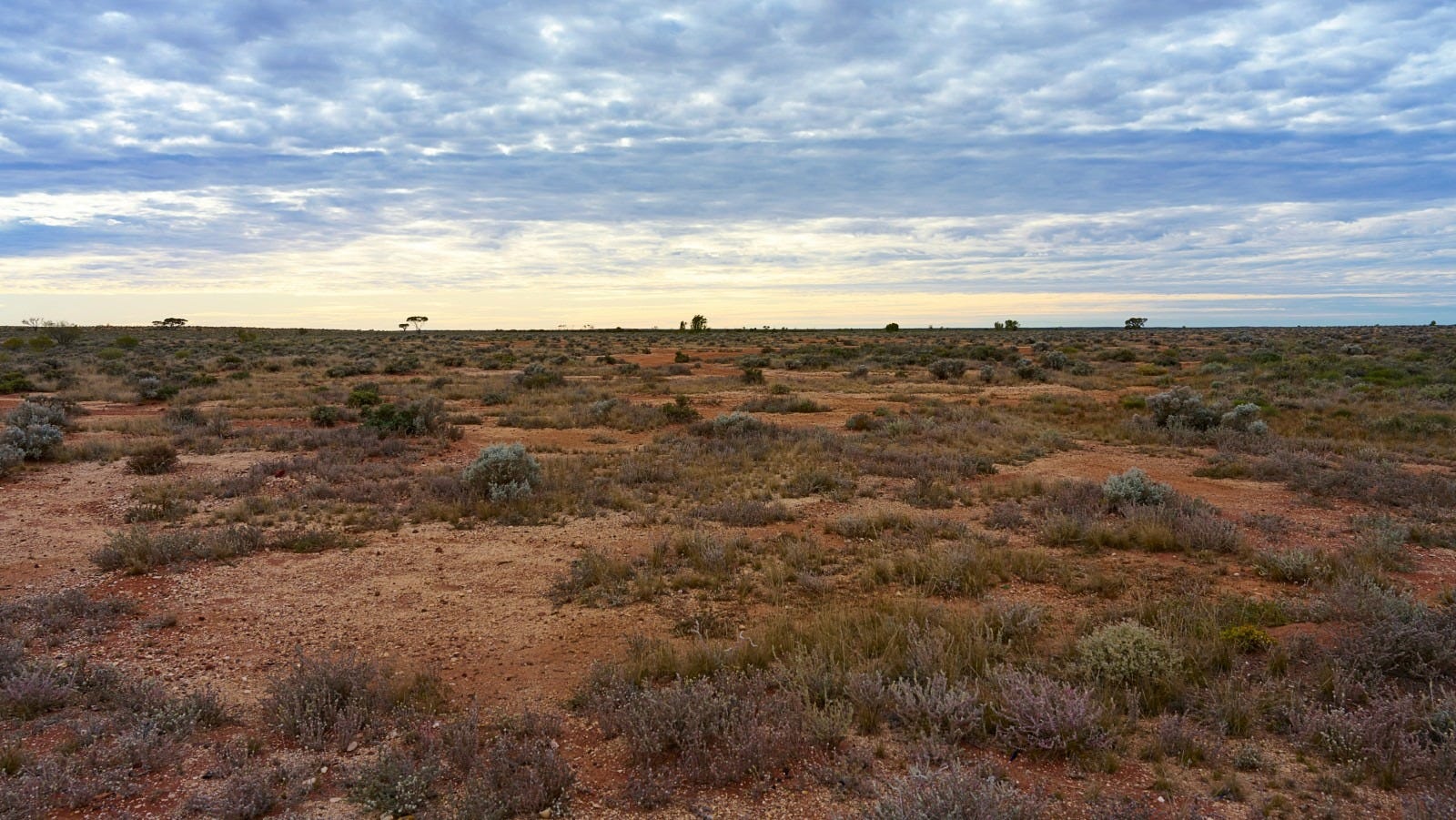
So there I am, stumbling across a stony gibber plain in the middle of nowhere. On the ground is an ancient brown beer bottle, faded and battered by the weather. Years ago, some grazier must have stopped for refreshment.
At the following plot, even further from any obvious track, are droppers and rusted wire with no obvious sign of a fence. Again, relics of a time when there might have been a fence to contain the sheep.
I remember this from that fieldwork in a remote corner of the outback.
People had been there before me, no matter how remote the part—aboriginals with light feet and modern people with heavy boots, metal, and drinking habits.
So what does this have to do with polycrisis?
What even is that?
The Polycrisis
A polycrisis occurs when multiple, interconnected crises—such as climate change, geopolitical instability, economic disruption, and technological upheaval—interact in ways that amplify their impacts, creating a complex, systemic global challenge.
Beer bottles and fence droppers in the middle of nowhere are the signals of the polycrisis, the one that you feel when you doomscroll, the one the media beats up, and the conservationists hang their hats on.
Unlike singular crises, a polycrisis involves numerous simultaneous challenges that are deeply intertwined. For example, a geopolitical conflict can drive energy shortages, exacerbating inflation and social unrest, while climate change further strains food systems and public health.
Seeing the human system this way increases awareness that global economic, environmental, political, and social systems are now so interdependent that shocks in one domain rapidly cascade into others.
It also tells us that such complexity makes traditional problem-solving approaches insufficient. A single crisis might have been addressed through targeted interventions; a polycrisis demands cross-sectoral coordination, anticipatory governance, and systems thinking. It challenges the assumptions of linear causality and siloed expertise, urging policymakers and institutions to understand the non-linear, often unpredictable interactions between threats.
Good luck with that.
Climate change, for instance, is not just an environmental issue—it interacts with migration patterns, economic inequality, infrastructure resilience, and even the spread of diseases. It exacerbates biodiversity loss from the altered landscape and raises fire and flood risk.
The term “polycrisis” also conveys the urgency and scale of the challenges without reducing them to a single root cause.
We need some examples.
Koala Conservation
The rhetoric is that koalas face rapid population declines due to habitat destruction, disease, and climate extremes, all of which are symptomatic of broader planetary stress.
Urban expansion, logging, and agriculture fragment eucalyptus forests, reducing food availability and safe corridors for movement. Simultaneously, climate change intensifies droughts, bushfires, and heatwaves, directly killing koalas or degrading their already reduced habitat. What appears to be a “koala crisis” is, in truth, a localised symptom of the broader ecological destabilisation embedded in the global polycrisis, where multiple environmental thresholds are breached.
Efforts to conserve koalas often falter due to conflicting incentives and institutional inertia. Economic priorities (e.g., development approvals, property speculation, and logging revenue) consistently override environmental safeguards, even when species are officially endangered. Regulations are fragmented across jurisdictions, and enforcement is weak or inconsistent.
Entrenched legal, political, and economic systems poorly equipped to manage integrated challenges are a feature of the polycrisis.
Koala conservation, like climate action, is caught in path dependency and bureaucratic silos that prevent holistic, precautionary responses.
Koalas evoke empathy in theory, but their reported suffering is often abstract or sanitised by distance from daily life. Moreover, the public may experience compassion fatigue from successive crises (fires, floods, extinctions) or cling to comforting myths (e.g., “koalas are safe in national parks”) that delay urgency.
Koala conservation is further hindered by the lack of a compelling systems narrative that connects their plight to broader environmental integrity, climate justice, and the future of human-nature coexistence.
Then there is the reality that, in truth, they are doing quite well.

Here is another, more serious example.
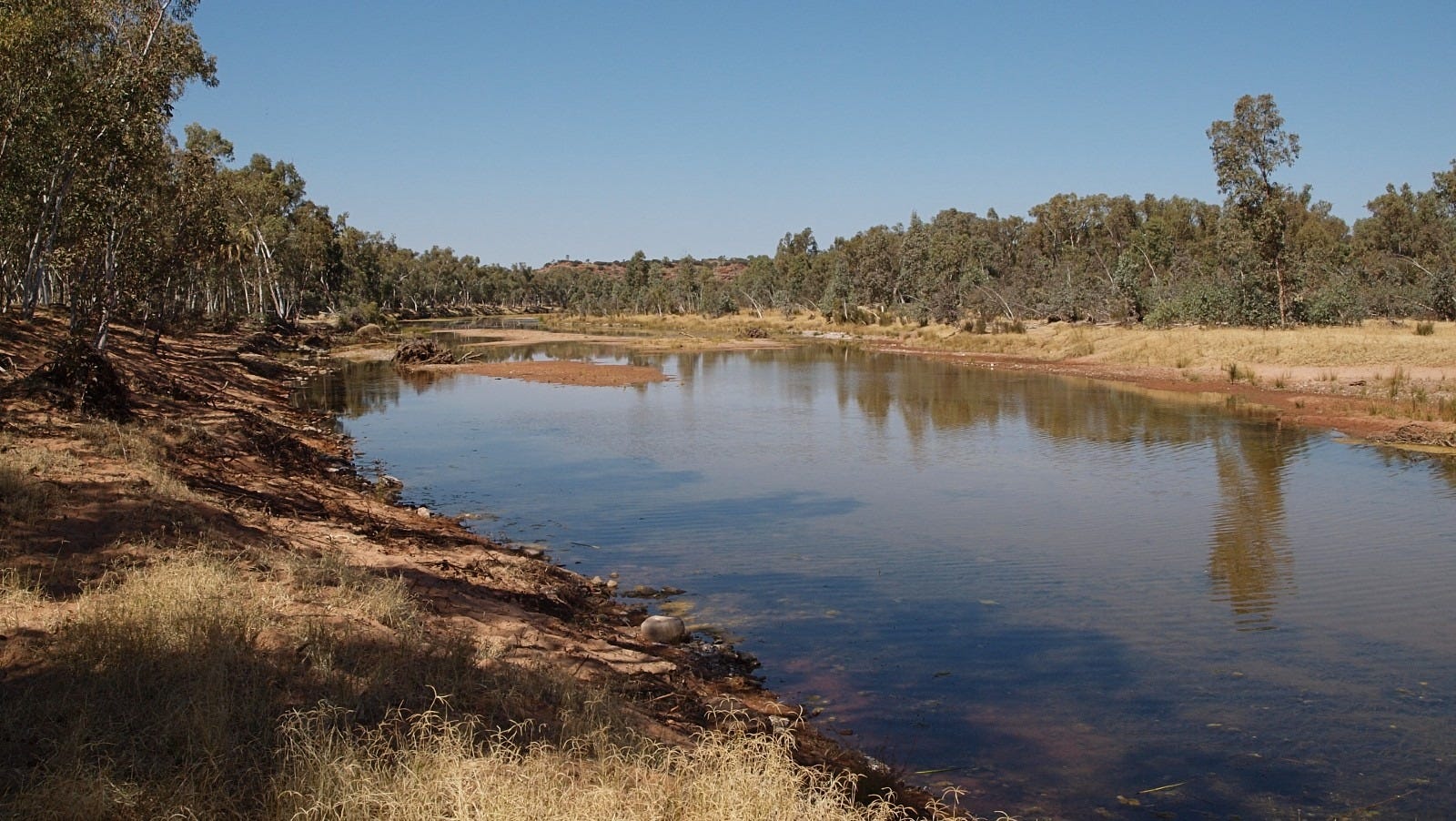
Not enough freshwater
Water is life.
Water must be fresh, clean, and available to sustain life. It is not enough to have potable water to drink; there must be enough water for the plants to grow and for the livestock that eat them. It’s so basic that we never even notice it.
Freshwater availability is shaped by natural cycles of rainfall, snowmelt, river flows, and aquifer recharge, and all are disrupted by global climate change. Droughts are intensifying, glaciers are shrinking, and precipitation patterns are becoming more erratic.
Simultaneously, widespread deforestation, wetland loss, and soil degradation reduce the landscape’s ability to retain and filter water. Due to over-extraction, many major rivers, including the Colorado, the Indus, and the Murray–Darling, are being pushed beyond their ecological limits.
But that is only part of it.
Industrial agriculture accounts for about 70% of global freshwater withdrawals, yet much of it is used inefficiently or subsidised unsustainably. Water-intensive crops are grown in arid regions; groundwater is mined faster than it can recharge; and leaking urban infrastructure wastes vast volumes daily. Entrenched subsidies, outdated irrigation systems, and political resistance to pricing reform help keep these practices in place.
Water rights are commodified or politicised in many places, making reform contentious. The freshwater crisis thus embodies the polycrisis principle that system-level fragility often results from the accumulation of rational decisions made within dysfunctional or fragmented governance structures.
Water scarcity triggers social unrest, migration, and in some regions, violent conflict. But while the risks are escalating, collective responses remain slow and inadequate. Present bias, denial, and invisibility (you don’t see a depleted aquifer until it’s too late) reduce public and political urgency.
Moreover, in an increasingly urbanised world, water systems are largely hidden from view, weakening emotional engagement.
Water access, quality, and affordability, which are issues of social justice, disproportionately affect marginalised communities, compounding inequality and resentment.
Like other aspects of the polycrisis, the freshwater crisis exposes psychological and political limits to long-term, inclusive decision-making under pressure.
All this means that the freshwater crisis is not a discrete environmental issue. It is an integrated systems failure involving climate disruption, economic irrationality, ecological overreach, and social fragmentation.
Like the koala crisis, it is both a symbol and a symptom of deeper structural dysfunctions in humanity’s relationship with the biosphere.
Why the Polycrisis is a Problem
A single crisis, such as climate change, economic inequality, biodiversity loss, geopolitical instability, or technological disruption, is complex and profound. Many of us feel overwhelmed, powerless, and alienated in the face of each complex, converging global disruption.
However, in polycrisis, these issues interact, amplifying one another through feedback loops.
Drought worsens food insecurity, fueling migration and straining political systems, which in turn drives extremism. Financial shocks ripple through fragile supply chains, affecting access to basic needs and eroding trust in institutions.
Feedback alone increases the severity of each crisis. Worse still, these dynamics often produce nonlinear outcomes with recognisable tipping points, cascading failures, and emergent risks that are not foreseeable from analysing any single crisis.
This unpredictability makes the polycrisis fundamentally more dangerous than the sum of its parts. It also explains the feeling of angst in your stomach.
It is also a problem because human systems are poorly prepared.
Most governments, markets, and international bodies are designed for siloed problems and linear solutions. Bureaucracies are fragmented, decision-making cycles are short-term, and incentives often favour economic growth over systemic resilience.
When problems overlap, the institutions meant to solve them often paralyse rather than adapt. For example, climate policy conflicts with economic goals; pandemic preparedness may be cut to save money; water rights may be contested across jurisdictions.
The polycrisis reveals the institutional brittleness of modern civilisation.
Then we have the people.
Our brains are not wired for slow, abstract, complex risks. We prefer single narratives, clear villains, and short-term rewards.
Multiple problems, interactions and cascades quickly overwhelm even the psychologically robust. Many prefer to disengage, deny, or focus on more immediate and comprehensible issues, like saving the koala.
Meanwhile, our cultural stories make us believe in progress, technology, markets, or human dominion over nature, and we readily fail to account for limits, feedbacks, and collapse dynamics, the very issues the polycrisis creates.
Societies become fractured and reactive without compelling new narratives to inspire cooperation and shared sacrifice. Consequently, the polycrisis is as much a crisis of meaning, attention, and imagination as it is of material conditions.

How does a mindful sceptic respond to the polycrisis?
Everyone is affected by the polycrisis because we are all in the midst of it.
It is a problem because it overwhelms the capacity of our coping mechanisms and systems. It also challenges the very assumptions of modern civilisation, including the big ones, like growth is sustainable, problems are solvable in isolation, humans are separate from nature, and the future will resemble the past.
This is a fundamentally new kind of predicament that humanity has not faced before. It demands holistic thinking, systemic redesign, and a profound cultural transformation toward resilience, humility, and planetary responsibility.
If you are familiar with ‘Being a Mindful Sceptic’, then you will know that…
mindful scepticism balances curiosity, critical thinking and evidence with open-minded awareness.
A mindful sceptic cultivates refined discernment toward evidence, carefully sifting through claims about crisis severity and interconnections rather than accepting packaged narratives. This intellectual care becomes a commitment to understanding systems as they exist rather than as they’re portrayed in apocalyptic or dismissive framings.
The mindful sceptic develops a calibrated concern that neither minimises genuine systemic threats that require collective attention nor amplifies every disturbance into an existential emergency. This balanced perspective allows us to prioritise our limited cognitive and emotional resources toward areas where meaningful intervention is possible; a crucial response to the polycrisis.
Next, the mindful sceptic embraces epistemological humility. There is stuff we don’t know, and what we do know might not apply in the future. Our knowledge has limits.
The mindful sceptic uses this uncertainty as a reminder to remain flexible, attentive, and open to emerging data. This has at least two significant outcomes. Rather than becoming fixated on grand solutions optimised for a single predicted future, we can build robust approaches that deliver benefits under various conditions. We can also identify spheres of meaningful influence—local, professional, or civic—where their particular knowledge and skills can contribute to resilience without becoming overwhelmed by global challenges.
By following curiosity, the mindful sceptic can choose when to engage with crisis information and when to redirect attention toward regenerative activities and relationships.
And there is one more thing.

Back to the Outback
Remember that beer bottle I found in the remote Australian outback? That weathered glass remnant, sitting incongruously on a stony gibber plain far from any road, wasn’t just litter or an intriguing relic. I see it now as evidence of the polycrisis that has been building for generations.
Human impact reaches the world’s most remote corners as attempts are made to fence it in and use its resources. The polycrisis isn’t coming; it’s been unfolding gradually, visible even in the most minor artifacts of human presence.
I might despair at this, but some critical thinking and open-minded awareness remind me that our presence on this planet comes with responsibility.
Next time you find yourself overwhelmed by converging global crises, remember that understanding the interconnectedness of problems is the first step toward meaningful action. Start by applying curiosity rather than judgment to what you observe. Ask questions about systems rather than symptoms.
Perhaps most importantly, recognise that while polycrisis is everywhere, so is our capacity for thoughtful response.
Mindful Momentum
The “Systems Journal” Practice
Start a dedicated notebook to track one everyday item (takeaway coffee, smartphone, bottled water) through its cradle-to-grave lifecycle for a month.
Each week, research one new connection—where it comes from, energy required to produce it, social impacts, and waste streams generated.
By deliberately following these threads, you’ll develop a “systems vision” that helps you see interconnections everywhere. This practice transforms abstract polycrisis concepts into tangible realities you encounter daily, while building the mental muscles needed to understand complex systems.
As one journal keeper noted,
“I started tracking my morning coffee and ended up understanding global trade, climate impacts, and labour systems in ways textbooks never taught me. Now I see systems everywhere.”
Key Points
The polycrisis concept describes how multiple global challenges—climate change, biodiversity loss, resource depletion, and social instability—interconnect and amplify each other, creating complex systemic challenges that exceed the sum of their parts. This interconnectedness explains why beer bottles and fence remnants appear even in the most remote corners of the Australian outback.
Traditional problem-solving approaches fail to address polycrisis dynamics because they’re designed for siloed issues rather than interconnected systems. Single-crisis thinking leads to solutions that merely shift problems elsewhere, while our institutions remain fragmented and our psychological makeup struggles with complexity.
Mindful scepticism offers a balanced approach to navigating the polycrisis. It combines critical evaluation of evidence with open-minded awareness and intellectual humility. This perspective helps individuals avoid paralysis and complacency.
Want more mindful scepticism
Check out the Insight Vault, a growing collection of compact, contrarian challenges designed to dismantle one myth, expose one oversight, and sharpen one perception at a time.
Need some clear thinking for the Long Emergency? Browse the deeper, reflective Uncomfortable Essays, contrarian investigations into the systems shaping our future.
Does the mindful sceptic accept that modernity is unsustainable? If not, why not? I ask because you mentioned "meaningul action" and it wasn't clear what meaningful action would look like, what goal it would attempt to achieve.