


TL;DR
Western education was calibrated for a story of continuous growth and narrowing specialisation. Energy shocks, resource constraints, technological upheaval and sever geopolitical instability are breaking that calibration. More useful learning of systems thinking, emotional resilience, and ethical reasoning can be taught at any level, but getting there requires structural redesign. AI is commodifying technical knowledge fast, which makes education’s real job the human capacities machines find difficult, especially moral judgement and evaluation under uncertainty. The hard part is that reform requires abandoning a paradigm built for a world that no longer exists.
Back in 1987, I was a usurper.
Standing in front of the class I had taken as a student two years earlier, I was bright-eyed with a bushy tail of enthusiasm, and immediately became an advocate for radical student-centred learning. Without formal training, and before I finished my PhD, I was teaching ecology to undergraduates.
As a novice lecturer, I abandoned structured lessons for open-ended inquiry, breaking educational rules by asking students to design experiments from scratch with minimal context and relying only on their wits. I intuitively knew, and then demonstrated in the ten weeks that the students spent observing woodlice in various combinations of contrived conditions, that curiosity-driven learning creates a more profound understanding than traditional, structured teaching ever could. I was so excited that I described the experience in my first peer-reviewed scientific paper, published in the Journal of Biological Education.
Dangerfield J.M., Boar R.R., Montgomery P.S. (1987) Teaching ecology to undergraduates: a practical course using projects. Journal of Biological Education 21(4): 251-258
I went on to teach ecology and biodiversity at three other universities before ending my academic career prematurely to try my hand at ecological advice in the real world of commerce and consulting.
And that was a lot harder.
What my naive enthusiasm gave me in the ivory tower did little for the hard-nosed, conservative and siloed people who were expecting me to advise them on science. These good folk were not interested in radical, innovative, or self-centred ideas, especially because free thinking invariably impeded their career advancement and put their comfort at risk. They also balked at having to think for themselves.
Most only gave me the time of day because their company or government agency had an obligation to know some ecological detail or to gather some environmental data for compliance reporting. Naturally, I explained to them how such knowledge benefited the bottom line in terms of cost savings, risk reduction, and a competitive edge in a crowded market, but this barely registered.
Why was this? These environmental officers, sustainability managers, policy experts, and analysts were highly educated and intelligent individuals. Many had completed a modern education system that conventional wisdom told me was designed to prepare individuals to participate productively in society by gaining knowledge, developing skills, and cultivating responsible citizenship.
What had the education system done to them? Perhaps, not enough.
The thing is, and now more than ever, education isn’t mainly about transferring knowledge; it’s about building the human capacities we’ll need to navigate a world that’s getting less predictable.
And so we arrive at the first premise…
Current educational systems prepare students for a world of continued growth and specialisation.
Modern education was built during a strange, temporary boom time. Fossil fuels let economies expand without hitting the usual brakes, technology kept patching over scarcity, and the environmental bill was treated as someone else’s problem. So we trained students for a world that could keep growing forever.
That logic sits inside the whole pipeline from school curricula and university programs to vocational training. The job is to produce roles that keep the growth machine fed through ever-increasing specialisation. Engineers build more infrastructure, finance manages ever-larger portfolios, marketing turns attention into demand. The specialised expert became the ideal.
Ironically, the marketers, finance people, engineers, and tech bros this system was built for are also the easiest to swap out. When complexity can be outsourced to LLMs, specialisation stops looking like security.
But initially, specialism wasn’t easy.
After thousands of years of accumulation, a great depth of knowledge had developed across many subjects. Plumbing to the bottom of them was difficult unless you learned a great deal about a little. You specialised at school, and when you reached higher education, you found academics divided into increasingly narrow disciplines, each with its vocabulary, methodologies, and perspectives that you had to learn just to join in. You went to universities organised into departments that rarely communicated with each other. And just like in school, college assessment systems rewarded depth of knowledge in particular subjects rather than understanding connections between fields.
I will spare you the pain I experienced when, later in my career, I briefly returned to academia as an adjunct professor at a major Australian university, where the worst aspects of all the above gave me, an outsider with weird ideas, the cold shoulder in the corridor.
Funnelling students into increasingly narrow fields of expertise, through standardised testing, rewards depth over breadth and predictability over adaptability, assuming a future in which technical mastery and career stability remain viable goals. This was the world of my parents, which emerged from the world wars into a period of rapid economic expansion in the West. It was also my world, and that’s why my attempt at student-centred learning was radical, even for a modern university with the motto Do Different.

How does specialisation that was useful for a time stack up today?
The accelerating pace of technological change, climate disruption, geopolitical instability, and economic volatility are reshaping the nature of work and life, not to mention the sheer volume of candidates for every role. Jobs are being automated, industries are being disrupted, and traditional career paths are fragmenting. The core skills most needed today, from critical thinking, adaptability, collaborative problem-solving, to emotional resilience, are not consistently emphasised in conventional schooling.
Likewise, systems thinking, which enables individuals to understand and respond to complex, interconnected challenges, remains a peripheral rather than central component of most curricula.
All this means that the premise generally holds. Preparation assumes a post-war boom carries on indefinitely.
Current educational systems are primarily designed around assumptions of continued economic growth, technological advancement, and occupational specialisation. Only this is not the future, which is already uncertain, complex, and rapidly shifting.
The assumption behind the premise is wrong. The future is not one of continuous growth and endless specialisation into narrow silos, which prompts the second premise…
Future generations will face fundamentally different challenges, requiring different skills.
It’s trite, but true. The future will be nothing like today or yesterday. Yet, I present it here as a premise because it is worth the confirmation that future generations will face novel challenges unprecedented in human history.
While humans have always adapted to change, declining EROI, the breaching of multiple planetary boundaries, technological disruption, and social transformations will be disruptive at best, and more likely catastrophic to the status quo. Young people will need new technical skills and enhanced capacities in systems thinking, adaptability, and psychological resilience, which our current educational models typically undervalue.
The reality is that 8 billion people are still increasing at 8,000+ per hour, and already face genuine biophysical constraints at a global scale. Unlike previous generations who could expand into untapped resources and energy, tomorrow’s adults will contend with diminishing conventional energy returns, accelerating climate instability, and biodiversity decline that combine to undermine ecosystem services we’ve taken for granted.
The food system is instructive.
Today’s students study agriculture primarily as a technological domain, learning to maximise yields through industrial methods. But tomorrow’s farmers will operate in a world where nitrogen fertiliser is increasingly expensive, phosphorus supplies are dwindling, climate patterns are destabilised, and pollinators are disappearing. The tractors will not run on diesel and the Haber-Bosch fertiliser production process will decline, forcing much rapid innovation in intensive agriculture, which will have to persist at least through a demographic transition. Understanding and addressing this situation requires fundamentally different skills, not just sustainable farming techniques, but also all the complex ecological relationships and resilience strategies necessary for highly variable conditions.
And it is happening already.
In 2025, Bolivia’s agricultural sector grappled with a severe diesel fuel crisis that threatened to undermine food security across the region. In Santa Cruz, the country’s agricultural heartland, farmers received only 700,000 litres of diesel daily—barely 21% of the 3.3 million litres needed for normal operations. This dramatic shortfall created kilometre-long queues at fuel stations, with farmers sometimes waiting days for limited supplies.
The 2025 Bolivian diesel crisis serves as a brutal energy reality check, marking the definitive end of the nation’s era of subsidised, cheap growth. What began as a paralysing diesel shortage caused by depleted foreign reserves and falling gas production, evolved by early 2026 into a structural cost-of-living crisis following the government’s decision to end long-standing fuel subsidies. While this shock therapy successfully restored fuel availability by allowing market prices to take hold, it replaced kilometre-long queues with massive inflation and razor-thin agricultural margins. Bolivia has essentially transitioned from a system defined by waiting in line to one defined by paying the true price, forcing its economy to finally reckon with the high cost of energy that it can no longer afford to externalise. And I suspect they didn’t teach any of this in school.
Challenges usually get back to energy, but there is also the rapid technological evolution restructuring how we work, communicate, and organise society.
When I began teaching at university, computers were dumb terminals connected to a mainframe. The first desktop word processors only arrived in the last year of my PhD. Today’s students not only carry supercomputers in their pockets that can access most of human knowledge, but they also come with an AI assistant that can do all the heavy lifting.
The traditional education approach views technology as merely a skill set to master, rather than a force reshaping cognition and social structures. Today’s five-year-olds will graduate into a world where artificial intelligence has transformed knowledge work, virtual and augmented reality have blurred physical and digital realms, and biotechnology has redefined our relationship with natural systems. A virtual world might be the only safe one.
It’s happened before, perspective has merit. People have always needed to communicate effectively, solve problems collectively, and adapt to changing circumstances. The Industrial Revolution dramatically transformed society, yet humans adjusted. We may overstate the uniqueness of current challenges.
Critical thinking, creativity, and social intelligence have always been valuable because the capacity to find meaning amid difficulty remains a fundamental human capability, regardless of the technological or environmental context. Yet most educational models implicitly assume a stable, predictable future in which knowledge accumulates linearly, and career paths follow predictable trajectories. Students are taught to master existing knowledge rather than navigate profound uncertainty.
Future-relevant education would foster capacities for psychological flexibility, comfort with ambiguity, and the ability to find purpose amid changing circumstances. These aren’t soft, nice-to-have skills, but essential foundations for functioning in a world of discontinuity.
Without spending days assessing the literature or naming every study, I will establish this premise…
Educational reform focuses on content updates rather than structural transformation, and yet systems thinking and complexity are teachable at all academic levels.
When I wrote about my experience as a novice ecology lecturer for the Mindful Sceptic newsletter, a commenter put me onto the studio school model, an innovative educational approach that integrates academic learning with real-world work experiences through project-based learning.

Studio schools are deliberately small (typically around 300 students), emphasising personalised learning, strong relationships between teachers and students, and the integration of academic subjects with hands-on, real-world projects. Exactly the training for innovative problem-solving we are going to need. The curriculum combines core qualifications in English, maths, and science with applied learning and extended work placements that are central to the school experience rather than supplementary.
According to the latest available data for 2025, 27 Studio Schools operated in England. These schools had a combined capacity of approximately 8,100 students. However, enrolment figures indicate that they were operating at about 54% capacity. Given that there are around 10 million pupils in schools in England, students in Studio Schools represent approximately 0.05% of the total student population. They are training a tiny fraction of each cohort in the systems thinking needed.
Similarly, Montessori education, which emphasises self-directed learning and mixed-age classrooms, is primarily offered at the early years and primary levels in the UK. There were about 700 Montessori schools and nurseries nationwide in 2025, serving an estimated 30,590 children. Montessori students constitute a similarly tiny 0.3% of the student population.
So what about the premise?
It is mainly true. Educational reforms over the past several decades have been modest. Coding, climate science, and digital literacy classes might have entered schools, but without fundamentally altering how education is structured or delivered. What modernisation there is has been within existing institutional frameworks that emphasise standardised assessment, age-based progression, and subject silos. And while curricula evolve incrementally, the overarching structure often prioritises discrete knowledge acquisition over integrative, transdisciplinary thinking.
This is a critical limitation. We are not teaching kids to think.
But we could.
Research demonstrates that systems thinking is not only teachable but also deeply engaging for students from early primary school through to tertiary education. Project-based learning, inquiry-based science, and interdisciplinary thematic units have demonstrated that even young learners can grasp systems concepts, such as cause-and-effect chains, interdependence, and leverage points, especially when connected to real-world contexts like ecosystems, communities, or global challenges.
And if a pushy postgrad usurper can teach it in the 1980s, why not trained professionals in the 2020s?
Maybe it’s structural inertia, or it’s policy constraints, or it’s something more nefarious. Either way, education systems still default to linear instruction, content coverage, and individual performance metrics. And those defaults actively fight the complex, relational, often collaborative work that systems thinking requires.
A structural shift would mean changing more than the wallpaper. It would mean school organisation, teacher training, assessment strategies, curriculum integration and a host of other structural changes. The stuff that decides what gets taught, what gets rewarded, and what gets dropped when time runs out.
Until this level of reconstruction happens, most reform will keep arriving as add-ons. Well-intentioned, perhaps, but ultimately piecemeal.
But it is possible.
Finland, Singapore, EL Education offer three different contexts for a change in the educational structure towards systems thinking.
Finland does it by breaking the silo. Phenomenon-based learning starts with a real-world topic and has students examine it through multiple disciplinary lenses—science, humanities, arts—so the interdependencies are the point. Teachers have high autonomy and professional trust, which lets them adapt to the classroom in front of them. Assessment follows suit, leaning on formative feedback over high-stakes testing, so depth wins over memory.
Singapore approaches it through science and technology, with systems design thinking embedded in the national curriculum. The Applied Learning Programme (ALP) brings in interdisciplinary challenges of sustainability, robotics, and health to build problem framing, stakeholder analysis, iteration, and evaluation. Teacher development and partnerships with universities and industry help anchor the shift, connecting classroom learning to broader social and ecological systems.
EL Education in the US makes the project the unit of learning. Each project uses long, interdisciplinary expeditions on complex topics, often ending in public presentations or real-world products. The structure rewards curiosity, perspective-taking, and feedback loops, guided by ten design principles, including the primacy of self-discovery and the having of wonderful ideas. Those are systems thinking muscles, and also happen to be solid, mindful sceptic skills.
Schools in the EL network also adopt collaborative leadership models and invest heavily in teacher training to sustain structural alignment with their educational philosophy.
These innovations from around the world are far more ambitious and successful than my little woodlouse practical. The question isn’t whether systems thinking can be taught at all levels because the evidence confirms it can. The real question is whether we will transform educational structures that no longer serve a world of accelerating complexity.
What if modern schooling, even these reformed versions, systematically undercut the cognitive flexibility it claims to build?
In many documented hunter-gatherer societies, early childhood learning was all about autonomy and exploration. Ethnographic studies of the !Kung in Southern Africa, the Hadza in Tanzania, and various Indigenous Australian groups describe young children with wide latitude to play, mimic adults, and mix with peers without formal instruction. That kind of free-range environment let them develop cognitive, social, and environmental skills through immersion in community and landscape.
Then, somewhere between ages 6 and 8, many children started taking on more responsibility through tasks that echoed adult roles. Not in the structured way we think of modern apprenticeships, but through assisting older siblings or parents in gathering, hunting, tool-making, or caregiving. It was informal learning-by-doing but woven into the daily rhythms of life. And a key feature was instructional restraint. Adults didn’t typically give direct instruction; they modelled tasks and let children learn through observation and practice.
Whilst all this sounds like a romantic notion and not transferable to the modern day, it does tell us that we don’t have to be so dependent on institutional validation.
Our Western educational pipeline, from elementary school through high school, creates a dependency on institutional validation and external direction, precisely what you don’t want in a world requiring rapid adaptation.
So, what is the reimagining? What design of teaching will prepare youngsters to participate productively in society? What knowledge, skills, responsible citizenship, and resilience education will they need to cope with unprecedented change?
The best reimagining of education is to design teaching around emotional resilience and ethical reasoning, partly because the AI tools can cover most of the technical knowledge. And that the best way to achieve this is to recognise that intergenerational knowledge transfer goes both ways in times of rapid change.
Perhaps the most meaningful reimagining of education centres on cultivating emotional resilience and ethical reasoning, but before we go there, there is the elephant to consider… Artificial Intelligence.
The accelerating capabilities of AI to absorb, synthesise, and deliver technical knowledge is the greatest challenge to traditional education for generations. Content is condensed on a voice command; you don’t need to remember it. From coding assistance to personalised tutoring in mathematics or science, AI tools are making technical knowledge more accessible and commodified. Education must go beyond training students on what to know and focus instead on how to think, relate, and act. In short, how to evaluate. These skills are more challenging to automate and are even more critical for human flourishing.
AI is excellent at instruction-as-delivery, like explaining concepts in ten different ways, giving unlimited practice, and providing instant feedback without embarrassment or delay. It can compress whole technical domains into something a motivated student can work through quickly. But it is unreliable at the parts of education that are not technical, such as resolving value conflicts, earning epistemic trust, and navigating messy social coordination where legitimacy and accountability matter. It can generate reasons, but it can’t authorise them. It can propose answers, but it can’t carry responsibility for what those answers do to a real community. So AI is a really handy tutor. Just don’t outsource judgement.
Emotional resilience matters here, too.
It’s what lets learners stay functional in the face of uncertainty, failure, and complexity. And ethical reasoning is the partner skill. Ambiguous, value-laden situations show up all the time in a world increasingly shaped by thinking algorithms and need considered decisions.
Traditionally, education runs top-down, as older generations pass wisdom and skills to younger ones. But in periods of rapid change, that flow isn’t one-way. Younger generations often carry real insight, especially around technology, digital culture, and emerging worldviews. A reciprocal model of learning builds mutual respect, speeds adaptation, and strengthens social cohesion. Older generations contribute historical perspective, contextual wisdom, and moral frameworks; younger ones bring agility, novel thinking, and intuitive familiarity with disruptive technologies.
As AI reshapes work and knowledge, schools and universities that prioritise dialogue, empathy, and cross-generational exchange are better positioned to cultivate systems-aware, emotionally grounded citizens. The goal becomes less about outpacing machines and more about doubling down on the human strengths machines can’t replicate.
The Wisdom Exchange Project (UK/US) is one example. School-aged students and older adults (often retirees) collaborate on shared inquiries into life experience, ethics, and community history. Sessions include storytelling, mutual interviews, and collaborative problem-solving around ethical dilemmas or contemporary challenges. The emphasis isn’t just elders teaching youth; it’s mutual enrichment as students offer digital skills or emerging cultural insights in return. Emotional resilience develops through reflective dialogue and real-world role modelling, while ethical reasoning deepens through multigenerational perspectives on values, justice, and responsibility.
Operating in several Australian states, Generation Connect is an intergenerational program that pairs high school students with elderly citizens in aged care facilities. Originally designed to reduce loneliness, it has evolved into a reciprocal learning platform. Students often train older adults in digital literacy, while elders share life experiences and coping strategies. Joint projects, such as digital biographies or oral history archives, help students build empathy, patience, and a more profound understanding of the ethical issues surrounding ageing, memory, and dignity. Teachers report measurable improvements in students’ emotional awareness and communication skills. The ABC documentary series Old People’s Home for 4-Year-Olds, and Old People's Home For Teenagers, brought the idea to a broader audience, bringing together elderly residents of retirement communities with preschool-aged children to explore the transformative power of intergenerational relationships.
The Center for Human Technology Education Initiatives (Global/US-led) backs school-based programs that teach Digital Wisdom by combining ethics, media literacy, and emotional intelligence in the age of AI. Their curriculum includes modules on moral decision-making in tech design, digital empathy, and understanding feedback loops in social platforms. Some pilot programs add intergenerational roundtables, bringing students and adults together to reflect on the moral implications of technology use. That blend of systems thinking, and ethical inquiry shows how different generations can co-create norms for emerging challenges, reinforcing emotional resilience and shared responsibility.
Traditional education assumes knowledge moves one way, from elders to youth. ‘Teacher knows best’ made sense when change was slow and experience reliably predicted the next set of challenges. Why not learn from the wise elders? Older generations do carry hard-won wisdom about enduring human problems, historical patterns, and ethical frameworks shaped through lived experience.
But once core literacy, numeracy, and communication skills are absorbed, the advantage can flip in periods of rapid change, when the future isn’t predictable from the past. Younger generations often move faster through emerging technological landscapes, social reorganisations, and shifting environmental conditions than their elders. Here, Gran, your phone does this now.

Transformation thrives in the spaces where generations connect and wisdom flows in multiple directions. When we create environments where elders and youth solve authentic problems, whether nurturing community gardens or navigating digital landscapes, we tap into a natural exchange of perspectives that enriches everyone involved.
An intergenerational approach is compelling.
What all this boils down to is this. Education’s most profound purpose isn’t information transfer but cultivating the reflective capacity to engage meaningfully with an uncertain future.
This isn’t simply adding emotional skills to existing curricula or creating occasional intergenerational exchanges. It’s reconceiving education’s fundamental purpose and process, shifting from knowledge acquisition to capacity development, from hierarchical transmission to ecological exchange, and from predetermined outcomes to emergent understanding.
And how to do this?
The Mindful Sceptic framework, which combines curiosity, critical thinking, and awareness, is a good starting point because it strikes a balance between unflinching realism about current challenges and openness to creative possibilities. It acknowledges the evolutionary drivers that shape human behaviour and honours both traditional wisdom and emerging knowledge rather than privileging either. Such is a sceptic.
Most importantly, a mindful sceptic recognises that resilience emerges from relationships rather than isolation, diversity rather than uniformity, and adaptation rather than rigid preservation in complex living systems—whether ecosystems, social systems, or learning communities.
What I know is that, back in the 1980s, my undergraduates didn’t seem to mind that I was a usurper and gave me strong positive responses in student appraisal. And I kept it up throughout my career, including an equally audacious biodiversity class. Macquarie University honoured me with an Outstanding Teacher Award, yet I still have no formal teacher training.
Dangerfield, J. M., & Pik, A. J. (1999). The educational value of an all taxa biodiversity inventory. Journal of Biological Education, 33(2), 76-83.
Many are wiser, more experienced than I in pedagogy and may not like this last, audacious premise.
Failure to radically transform the educational system from the one that worked before AI in times of continuous economic growth is a huge risk.
Education is how a society trains itself. It’s the primary mechanism for preparing people to participate in civic life, economic systems, and collective decision-making. The problem is that the current model is industrial-era by design, optimised for economic expansion, specialisation, and predictable career pathways. It is drifting out of alignment with the world it’s supposed to serve, even the one of command and control.
What we need instead is education that builds the human capacities machines can’t easily replicate: evaluation, systems thinking, moral judgment, collective reasoning, emotional resilience, and the ability to navigate uncertainty.
If education systems don’t make this deep structural shift, then inequality widens as elites adapt and others get left behind. Trust in institutions erodes. Politics destabilises as disillusioned citizens lose faith in the future. And our ability to solve shared global challenges, like climate change and ethical AI governance, starts to break down.
Those aren’t just educational outcomes. They’re existential because they hit the social, environmental, and technological systems human survival depends on.
Education is foundational. It’s intensely personal, and yet, in aggregate, it defines our collective capacity to respond wisely and cooperatively to major existential risks from nuclear war to climate collapse to runaway AI.
A failure to reform it may not directly endanger survival in the short term. But it does something almost as dangerous. It weakens our capacity for coordinated, ethical, resilient adaptation in an uncertain future.
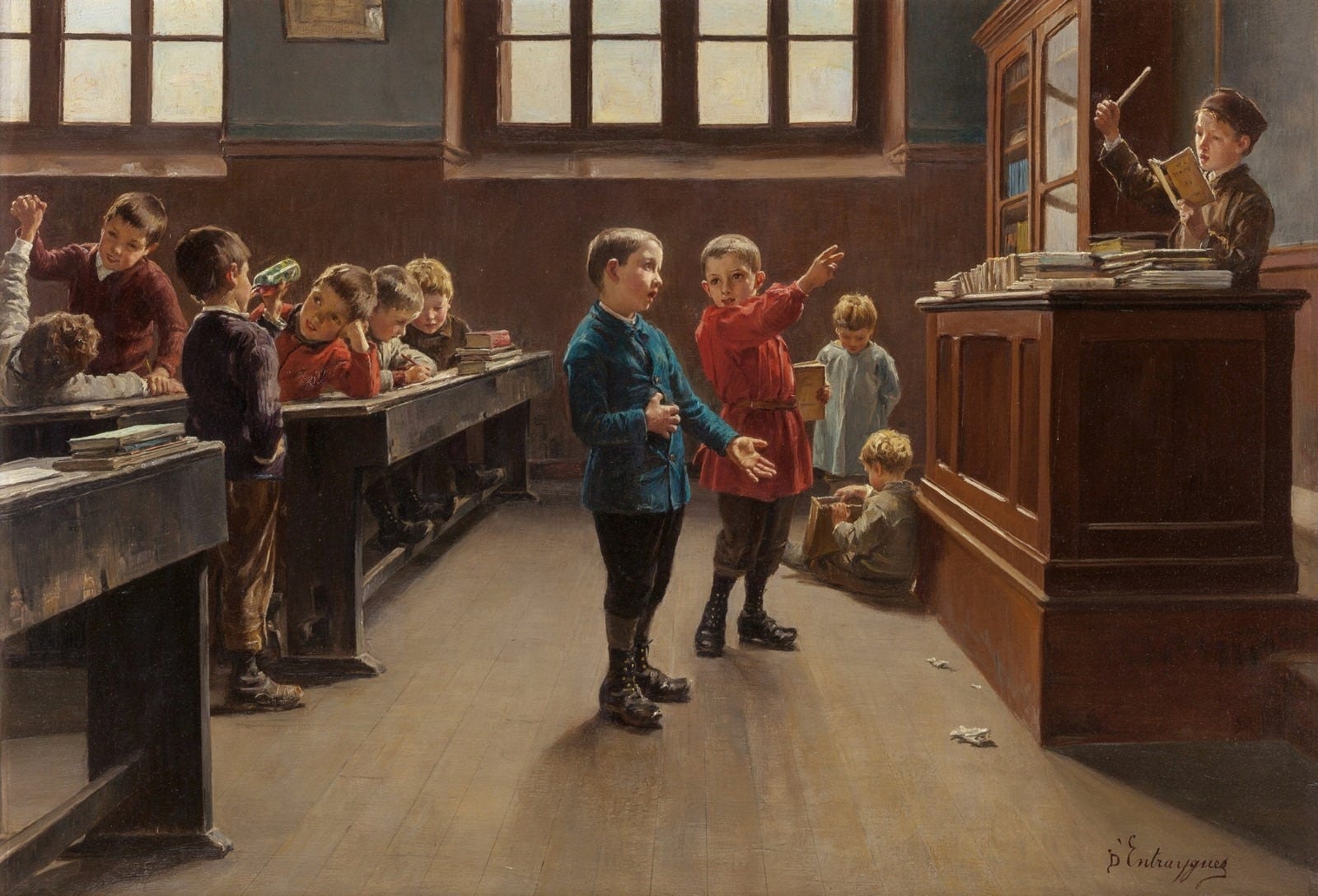

The conventional narrative of education is that we prepare young people for the future by transmitting knowledge from the past. This story feels quaint in a world where AI systems can rapidly access and synthesise vast knowledge repositories, environmental disruption creates unprecedented challenges, and social systems are undergoing rapid reorganisation.
Simply knowing more isn’t enough.
Knowing what happened yesterday is not enough either. Every genuinely transformative period in human history required young people to reject elder wisdom en masse. The Aboriginal Australians had 65,000 years of accumulated wisdom, but it couldn’t prepare them for European contact. Climate disruption and AI represent similar discontinuities. What if honouring traditional wisdom and the new tradition of the market may be precisely the wrong approach?
What if Finland’s educational success is correlated with ethnic homogeneity and resource abundance, rather than pedagogical innovation? When elites promote 21st-century skills, they’re ensuring their children learn meta-cognitive advantages while working-class kids get vocational training dressed up as systems thinking.
Similarly, what if, in periods of genuine discontinuity, older generations become net liabilities rather than wisdom sources, and attempts at intergenerational exchange hinder necessary adaptation?
These are uncomfortable thoughts.
As mindful sceptics, we can acknowledge both the profound challenges of educational transformation and the tangible evidence that such transformation is possible. We can recognise that while perfect solutions don’t exist, meaningful progress does. And then, we pause, take a breath and ask the awkward questions.
The most significant risk isn’t that we’ll attempt transformation and fall short, but that we’ll cling to educational models designed for a world that no longer exists. Even the trendy ones we currently think are an improvement on cramming content.
When I ditched the script and let my ecology class run wild and loose with the scientific method, I knew I was doing something different. Now we need something different again.
Maybe the reimagining of education we have to hand is a category error that assumes predictability that doesn’t exist. The novel educational models mentioned in this essay might be utopian fantasies existing at the margins for the moment, even if they have a track record of benefiting students in diverse contexts. But they show it can be done.
Complex systems are fundamentally unpredictable. No educational program in 1900 could have prepared students for 1950, let alone 2000. Instead of trying to anticipate specific challenges, we should optimise for the capacity to improvise novel solutions using whatever’s available. This means less structured learning, not more.
Preparing young people for a world of limits and possibilities might just mean letting them run with it.
Notes & Sources (for the curious)
Limits, energy, and biophysical disruption
Planetary boundaries “how many crossed” (and why it matters) — Stockholm Resilience Centre planetary boundaries update (2023–2025); Science Advances planetary boundaries update (Richardson et al., 2023).
Population scale and trajectory (8+ billion, peak timing) — UN DESA World Population Prospects 2024
Net-energy / EROI framing (why declining returns constrain surplus) — UK DFID/SUNY-ESF report on global EROI (2013); Heun & de Wit (2012) on EROI and implications.
Food-system fragility (fertiliser, nutrients, pollination, climate)
Climate impacts on food production (synthesis) — IPCC AR6 WGII (2022), food & water fact sheet / Chapter 5.
Pollinator dependence + decline risks (global assessment) — IPBES Pollinators/Pollination/Food assessment (2016), SPM.
Phosphate rock supply and “no substitutes” for phosphorus — USGS Mineral Commodity Summaries 2025: Phosphate Rock.
Case study: energy shocks hitting real economies
Bolivia’s 2025 diesel shortage affecting agriculture (Santa Cruz figures, queues) — Reuters (13 Mar 2025); ReliefWeb situation note (18 Mar 2025).
Structural alternatives: teaching for complexity, not coverage
Studio Schools / non-standard models in England (official counts/listing over time) — UK Department for Education monthly dataset of open academies/free schools/studio schools/UTCs (updated Jan 2026; includes 2025 editions).
Finland’s curriculum basis for multidisciplinary/phenomenon-based learning — Finnish National Agency for Education core curriculum timeline (2014–2019 rollout).
Singapore’s Applied Learning Programme (real-world application / interdisciplinary learning) — Singapore Ministry of Education ALP overview (updated Dec 2025).
Evidence that “systems thinking can be taught” (anchor synthesis) — OECD Rethinking education in the context of climate change (2024) (competencies/curriculum); Elsawah et al. “Teaching systems thinking…” (2022) as a higher-ed example.
AI changes what education is “for”
Why GenAI pushes education toward judgement/ethics/assessment redesign — UNESCO Guidance for generative AI in education and research (Sept 2023; updated Jan 2026).
Intergenerational learning (reciprocal models)
What intergenerational exchange programs tend to do for participants (overview evidence) — Webster et al. systematic review of intergenerational programs (2024); Pillemer et al. wisdom-sharing intervention paper (2022).
Primary Sources
Elsawah, S., Ho, A. T. L., & Ryan, M. J. (2022). Teaching systems thinking in higher education. INFORMS Transactions on Education, 22(2), 66–102.
Heun, M. K., & de Wit, M. (2012). Energy return on (energy) invested (EROI), oil prices, and energy transitions. Energy Policy, 40, 147–158.
Pillemer, K., Nolte, J., Schultz, L., Yau, H., Henderson, C. R., Jr., Cope, M. T., & Baschiera, B. (2022). The benefits of intergenerational wisdom-sharing: A randomized controlled study. International Journal of Environmental Research and Public Health, 19(7), 4010.
Richardson, K., Steffen, W., Lucht, W., Bendtsen, J., Cornell, S. E., Donges, J. F., Drüke, M., Fetzer, I., Bala, G., von Bloh, W., Feulner, G., Fiedler, S., Gerten, D., Gleeson, T., Hofmann, M., Huiskamp, W., Kummu, M., Mohan, C., Nogués-Bravo, D., … Rockström, J. (2023). Earth beyond six of nine planetary boundaries. Science Advances, 9(37), eadh2458.
Webster, M., Norwood, K., Waterworth, J., & Leavey, G. (2024). Effectiveness of intergenerational exchange programs between adolescents and older adults: A systematic review. Journal of Intergenerational Relationships.