


TL;DR
Somewhere in the Pilbara, Australia, natural gas is being pulled from the ground and piped to a processing plant. Most people assume it will end up as fuel. A large fraction becomes ammonia, then urea, then a white granule in a 25-kilogram bag that a farmer in Punjab will split open and spread across a wheat field next spring. Without that bag, the yield roughly halves. Without that gas, there is no bag. Modern agriculture is running a tab with the petrochemical industry, with repayments that fall due every planting season.
It’s 10,000 BCE, the end of the last Ice Age, and the beginning of the Neolithic era somewhere in Northern Europe. It’s still chilly, but the summers are nice.
Homo sapiens had been around for 290,000 years or so by this time, but the population was sparse and widely dispersed. Estimates range from 1 million to 10 million people worldwide, though most scholars agree on a midpoint of around 4 million.
Yep, you read it right, four million. The population of modern Rome.
These early humans lived in small, semi-nomadic groups, relying on hunting, gathering, and fishing for sustenance. Their impact on the environment was minimal, and population growth was constrained by high infant mortality, food scarcity, and the absence of organised food production and storage systems. The lean times in an ice age are brutal.
Fast-forward to 2025, and there are over 8 billion humans on Earth. Humans figured out late in our evolution that growing food energy was easier than foraging for it. Better still, if that food could be stored over winter or through a drought, then you could stay put in one place rather than constantly move to where there was food to forage. Imagine what this meant. Instead of wandering endlessly over mountains and valleys, you had your patch. You had land that was worth a lot to you, worth protecting because on it, you could grow or rear all the food you needed. It is easy to forget what a revolution this was.
Historians will tell us that it gave us governance, hierarchies, religion, and cultural nuances, and anthropologists will tell us about how clever we were, but it began with having a pantry.
The origins of agriculture date back to the Neolithic era, approximately 10,000 BCE, in regions such as the Fertile Crescent, China, Mesoamerica, and the Indus Valley, where humans began domesticating wild plants and animals. Key domesticated crops included wheat, barley, rice, and maize, while animals like sheep, goats, cattle, and pigs became a larder on the hoof and integral to subsistence and society. Agricultural practices were largely manual, relying on basic tools and natural rainfall, and were profoundly shaped by local ecological conditions. They also failed a lot. There was plenty of trial and error before production systems settled into recognisable patterns.
What humans figured out, mostly without realising it, was that agriculture worked best as a near-closed production system. Animals ate the plant stems, leaves and leftovers that humans couldn’t, and their manure returned to the fields. What humans ate went the same way because only a fraction of the production went offsite to pay the tithes and taxes demanded by the new governance systems.
Over time, agriculture diversified and advanced through innovations such as irrigation, crop rotation, and ploughing, particularly during the classical and medieval periods. The Islamic Golden Age and medieval Europe both contributed to the development of agricultural knowledge and infrastructure as did the improved temperatures in Europe.
There were exchanges too. In the aftermath of Christopher Columbus’s 1492 voyage, European powers explored and colonised the Americas where they encountered a rich diversity of crops domesticated over thousands of years by Indigenous peoples—maize in Mesoamerica, potatoes in the Andes, and tomatoes in Central and South America. European sailors, traders, and botanists began transporting seeds and tubers back to Europe, often as curiosities or botanical specimens. Initially unfamiliar and sometimes mistrusted, these plants gradually found their place in European fields and kitchens, aided by their adaptability, nutritional value, and economic utility.
Among the most transformative transfers were three staple crops: potatoes, maize, and tomatoes. These crops were not merely additions to existing food systems; they often displaced traditional staples and enabled new modes of subsistence. The potato, in particular, spread rapidly through Europe by the 18th century due to its high yield per hectare and its resilience in poor soils and cool climates. It became a foundation for population growth, especially in Northern Europe. Some scholars credit the potato with fuelling the demographic expansion that underpinned industrialisation in Britain and continental Europe. More on this chicken and egg shortly.
Maize proved equally revolutionary. Its adaptability to different climates allowed it to spread across Africa, Asia, and Southern Europe, where it often became a major food source for both humans and livestock. In sub-Saharan Africa, maize gradually overtook traditional grains like millet and sorghum due to its higher productivity and compatibility with shifting cultivation. While this brought food security in many regions, it also led to monoculture and nutritional dependency, exposing communities to the risks of crop failure.
Meanwhile, tomatoes, initially viewed with suspicion in Europe due to their resemblance to nightshades, became a defining feature of Mediterranean cuisine by the 19th century, contributing to new culinary traditions as much as to agricultural diversity.
These regular improvements and innovations that increased yield and made the food system more sophisticated, food production produced some population growth.
By the 18th century, often called the Age of Enlightenment, when Isaac Newton (1642–1727) was writing his Principia Mathematica that laid the foundation for classical mechanics, influencing generations of scientists and natural philosophers, the global population had climbed to round 600 million, with the majority living in Asia, followed by Europe, Africa, and the Americas. Agriculture was a net energy source that meant human populations could increase by two orders of magnitude.

Then everything changed.
The Agricultural Revolution in Europe in the 19th century introduced mechanisation, selective breeding, and improved crop management, setting the stage for more intensive, productive systems. The 20th century marked a dramatic leap with the Green Revolution, which began in the 1940s and intensified in the 1960s. Spearheaded by scientists like Norman Borlaug, the Green Revolution introduced high-yield crop varieties, chemical fertilisers, pesticides, and advanced irrigation techniques. Initially focused on Mexico, India, and the Philippines, this movement significantly increased food production and averted famines in many developing countries.
In an evolutionary heartbeat, we entered the phase of intensive agriculture.
Farmers’ adopted technologies, and unlike traditional subsistence farming, which is labour-intensive and low-yield, intensive agriculture prioritises commercial output and economic efficiency. Intensification was only possible through addition of external energy to build and power machines that do most of the heavy lifting and to create inputs to replace nutrients that were leaving the fields in the higher yielding crops. Agriculture became, and remains, an energy sink, but it generated much more food than traditional systems.
Rather than see this as an energy story, it became a triumph of modernisation in farming system expressed as crop yield. A classic example of yield improvement comes from wheat production in India during the Green Revolution. In the early 1960s, wheat yields averaged around 0.8 tonnes per hectare. With the introduction of semi-dwarf, high-yielding varieties, along with improved irrigation and fertilisation, yields more than tripled to over 2.5 tonnes per hectare by the late 1970s. This transformation enabled India to transition from chronic grain shortages to self-sufficiency within a single generation.
Think about this for a moment.
Intensification increased wheat yields from less than 1 tonne/ha to a global average of 4 tonnes/ha, and peak performers approached double figures almost overnight. Suddenly, there was a lot more food.
Four million to 600 million humans is quite a jump. The annualised growth rate required to increase the human population over 12,000 years to Newton’s time is approximately 0.095% per year, reflecting slow but persistent long-term growth until the modern era.
Calculate the human population growth rate from 1961 to 2025, my lifetime, and the rate jumps to an average annual rate of approximately 1.51%, a significant increase compared to the much slower rates of earlier millennia. If the population growth rate hadn’t jumped in the 1940s and the global population had grown at the historical 0.095% per year from 1940 to 2025, it would have reached only about 2.5 billion by 2025.
Phenomenal agricultural productivity has enabled a massive increase in the human population. Reaching this point has required pushing ecological limits by injecting vast amounts of external energy, and now we are confronted by the consequences of that ecological overshoot.
But before we get too far ahead, let’s begin with this.
Modern agriculture has achieved unprecedented yields through intensive practices that rely heavily on external energy, synthetic inputs, mechanisation, and monocultures.
As we have seen, the Green Revolution, beginning in the mid-20th century, represents perhaps the most dramatic agricultural transformation in human history. Global cereal yields increased by 175% since 1961, with wheat output in India alone surging from 12 million tons in 1965 to 20 million tons in 1970 following the introduction of high-yielding varieties and technology.
Analysis of agricultural total factor productivity, which is the ratio of total crop and livestock output to the combined set of all inputs including land, labour, capital, machinery and intermediate inputs like fertiliser and feed, shows that the change in global agricultural productivity nearly doubled from 0.87% in 1970-1989 to 1.56% in 1990-2006. However, this productivity came with a crucial dependency on fossil resources, with direct energy use for crop management and indirect energy use for fertilisers, pesticides and machinery production contributing to these unprecedented yield increases. The transformation was so complete that agriculture industrialised for a significant proportion of agricultural land, replacing traditional methods with chemical-intensive, mechanised systems.
Many books have been written on this technological marvel, most based on evidence demonstrating that modern agriculture’s yield achievements are inextricably linked to intensive practices and external inputs, representing a fundamental shift from traditional farming systems.
Hand-to-mouth food production evolved into field-to-mechanised harvesting, and although the yield and overall production increased to millions of tonnes, agriculture became a net energy sink.
And that wasn’t all.
It came with a huge environmental cost.
This productivity has come at a significant ecological cost, depleting soil health, reducing biodiversity, polluting waterways, and accelerating greenhouse gas emissions.
Imagine for a moment a farm without a tractor. It is somewhere in Northern Europe, perhaps in the mid-1800s.
It has a plough pulled by horses that also graze on paddocks. Crops are rotated, and stubble is fed to livestock. There is also a kitchen garden and plenty of chickens. The farmer and his family work hard, are multi-skilled, and are ever-resourceful.
Most farms without tractors practise mixed agriculture, growing cereals such as wheat, oats, and barley, and raising livestock including cattle, pigs, sheep, and chickens. Spring is a time for sowing and lambing; summer brings haymaking and sheep shearing; the harvest dominates autumn; and winter focuses on maintenance, feeding livestock, and making tools or clothing.
Labour is central to this tractorless farm life. A typical small farm relies on family members, sometimes with the help of agricultural labourers or seasonal workers, especially at harvest. Tools are mostly hand-powered scythes for cutting, flails for threshing, and ploughing is done with horses or oxen. Manure is collected and spread on fields to maintain soil fertility, and crop rotation is essential to prevent soil exhaustion.
Farms like this also tended to be small economic units, often producing much of what they needed while bartering or selling any surplus at local markets. Daily life included milking cows, churning butter, baking bread, brewing ale, repairing fences, and tending to kitchen gardens.
It was a tough but rewarding and productive life for the farmer and his family.
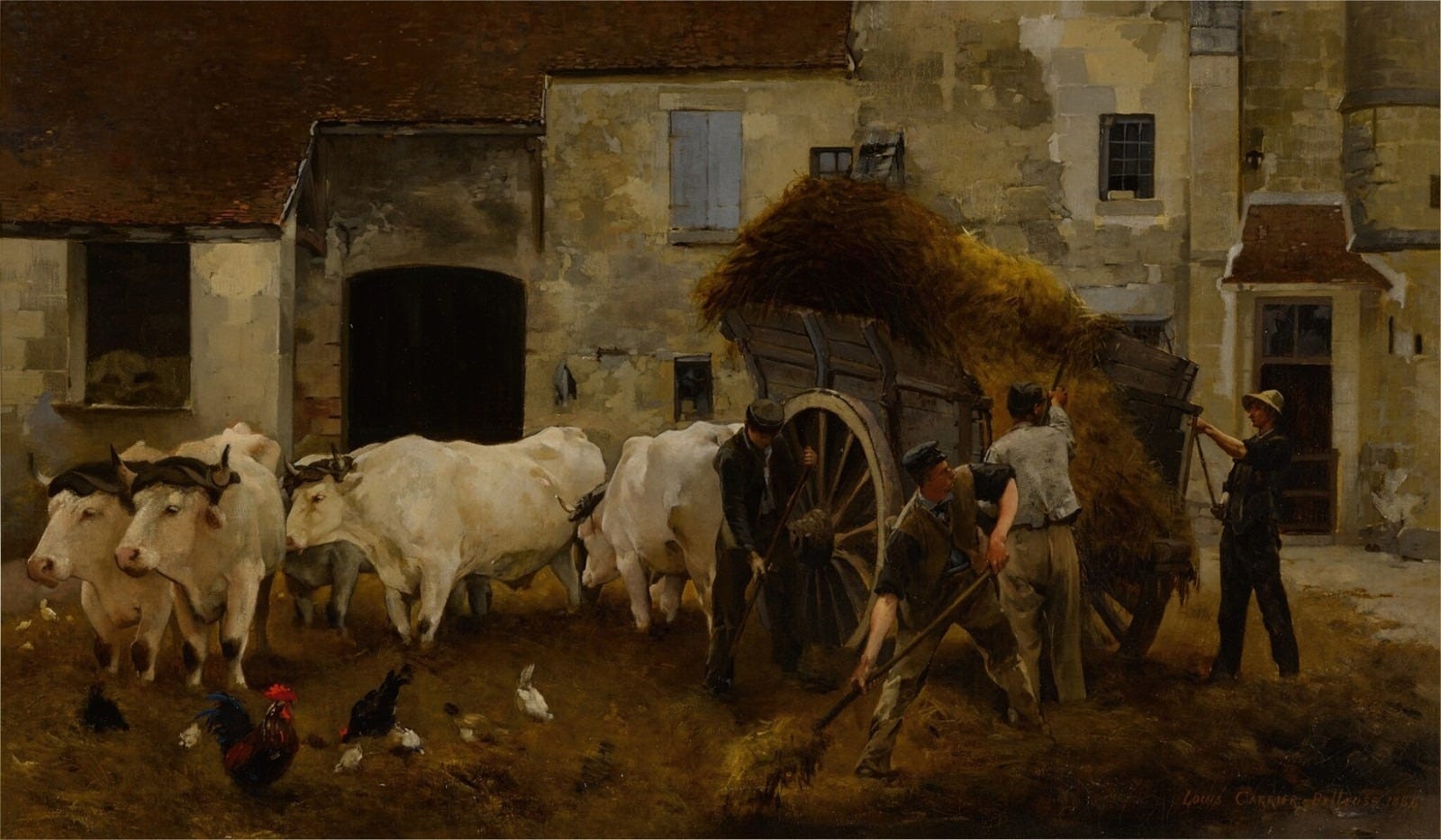
The arrival of the tractor on these small farms marked a turning point in agricultural history. With its ability to perform ploughing, tilling, and hauling faster and more powerfully than horses or manual labour, the tractor dramatically increased productivity. Tasks that once required entire teams of workers and days to complete could now be done in hours by a single operator. This mechanisation made it feasible to farm larger areas with fewer people and to cultivate heavier soils that had previously been difficult to manage.
However, the tractor also reshaped the social fabric of rural life.
As machines displaced workers, the demand for seasonal and hired hands declined. This contributed to a gradual depopulation of the countryside, as younger generations migrated to towns and cities searching for employment. Traditional skills associated with animal husbandry, hand tools, and communal labour practices began to fade. The economic model of farming shifted from self-sufficiency to market orientation, where investment in fuel, spare parts, and maintenance became part of the farm’s operating costs.
In time, the tractor symbolised the modernisation and industrialisation of agriculture. It allowed for the integration of chemical fertilisers, monoculture cropping, and intensive land use. Small farms were consolidated into larger ones. All of which increased short-term yields but also introduced ecological pressures, such as soil degradation and dependence on fossil fuels.
The scale of ecological damage is sobering, with an estimated one-third of global arable land degraded by erosion, pollution, and overuse in the past 40 years. Scientific assessments from organisations such as the United Nations Food and Agriculture Organisation (FAO) and the Intergovernmental Science-Policy Platform on Biodiversity and Ecosystem Services (IPBES) support the claim that land degradation is a major global concern, with substantial portions of arable land affected.
The FAO has warned that if current trends continue, 90% of Earth’s topsoil could be degraded by 2050. A 2017 UN-backed study estimated that about one-third of the world’s land is already moderately to highly degraded, a figure often interpreted as including arable land.
Soil degradation includes erosion, salinisation, compaction, nutrient depletion, and chemical pollution from overuse of fertilisers and pesticides. All these factors reduce soil fertility and productivity affecting yields and, in the extreme, lead to abandonment of farmland or the need for costly remediation. However, not all degraded land is permanently lost as some farms remain viable with diminished yields, notably through subsidies, while other areas can be restored through regenerative practices, though at great effort and cost.
The impact of intensive agriculture on soil health is particularly severe. The application of synthetic nitrogen fertiliser decreases the soil’s microbiological diversity and can lead to soil acidification. Excessive fertiliser use leads to salt buildup, heavy metal contamination, and nitrate accumulation that pollute water systems. Agriculture has caused massive biodiversity losses globally through habitat conversion, pesticide and fertiliser pollution, and soil degradation.
Agriculture accounts for approximately 50% of anthropogenic methane production and 80% of anthropogenic nitrous oxide production. When natural land is converted to farmland, it removes essential nutrients and reduces the soil’s carbon storage capacity by 50-75%. In other words, agriculture generates a third of global greenhouse gas emissions.
And it is not just greenhouse gases. Agriculture is the leading source of pollution in many countries, with pesticides, fertilisers and other toxic farm chemicals poisoning fresh water, marine ecosystems, air and soil, often remaining in the environment for generations. Applying pesticides and fertilisers has increased heavy metal levels in soil, especially cadmium, lead, and arsenic. Some of this gets into the crops.
Feedback loops are especially troubling, where the consequences of an action reinforce the original problem. In the context of soil health, over-tilling, monocropping, and heavy chemical use degrade soil structure and fertility. This degradation reduces the soil’s ability to retain water and nutrients, leading to increased runoff, erosion, and further loss of organic matter. As the soil becomes less productive, farmers may apply more fertilisers and intensify cultivation, which only worsens the underlying problem—a classic positive feedback loop.
These loops are crucial because they shift agricultural systems into unstable states, where recovery becomes increasingly complex without systemic change. For example, the loss of soil organic carbon reduces fertility and impairs microbial life, which in turn slows carbon regeneration and nutrient cycling. Likewise, erosion reduces root stability and vegetation cover, further exposing the land to erosion. This cycle depletes the ecological resilience of the land, reducing its ability to buffer shocks like drought or flooding.
Understanding and breaking these feedback loops is essential for sustainable agriculture. Without intervention, such as adopting conservation tillage, cover cropping, and organic amendments, these reinforcing cycles degrade ecosystems. Over time, they threaten productivity, food security, and long-term soil viability on a global scale.
We need to know, for now, that the evidence shows comprehensive ecological costs of intensive agriculture across multiple systems, with impacts extending far beyond farm boundaries. This suggests that intensive agriculture is precarious for other reasons…
Yield-focused systems rely heavily on high-energy and chemical inputs, making them susceptible to resource constraints, economic volatility, and climate disruptions.
Modern high-yield farming runs on purchased power. Synthetic fertilisers, chemical pesticides and herbicides, diesel and steel are all paid for inputs. Irrigation water is moved and delivered on schedule. This combination can produce extraordinary short-term output, but the whole thing is a tightly coupled machine that assumes fossil fuels stay cheap, mined nutrients like phosphorus and potassium continue to flow, and supply chains persist.
When any of that is pinched through geopolitical tension, an energy price shock, or simple depletion, production stops being efficient and starts being fragile. The system creaks.
The same logic shows up in the ecology.
Yield-first systems tend to simplify the landscape into monocultures, and monocultures are poor at improvisation. They adapt badly to shifting climate conditions, they invite pest outbreaks, and they struggle to hold water and nutrients when stress arrives. In a warming world, that interaction matters. Climate extremes like heatwaves, droughts, and floods don’t just reduce yields on their own. They collide with a rigid, high-input structure and amplify the downside. Without buffers like biodiversity, soil health, and flexible cropping systems, a farm can look productive right until conditions drift off-script. Then the losses can be brutal.
And then there’s the money.
High-input systems carry exposure to both the cost of inputs and the price of outputs. When energy and fertiliser prices rise, margins thin fast, especially for small- and medium-scale farmers. The response is predictable. More debt to stay in the game, or consolidation when they can’t. But even if the farm gets bigger, the risk doesn’t go away.
In 2022, disruptions linked to the war in Ukraine, especially sanctions-related constraints on Belarusian potash exports and wider trade, finance, and logistics frictions affecting Russian fertiliser trade, contributed to sharp fertiliser price spikes. Countries highly dependent on imported fertilisers, including Brazil and many low-income farming regions in sub-Saharan Africa and South Asia, faced acute affordability pressure, raising the risk of reduced fertiliser application and localised yield losses, with consequent increases in food insecurity risk. The episode underscored how tightly yield-focused agriculture is coupled to global input flows, leaving limited slack for adaptation when those flows are interrupted.
The 2007–2008 global food price crisis was driven by a convergence of factors including rising oil and energy costs, climate-related production shocks (including drought impacts on major exporters such as Australia), and amplifiers such as low global grain stocks and export restrictions. The price shocks produced extreme volatility and social unrest across dozens of countries. High-input systems, especially in the Global South, were exposed as financially fragile under volatile global markets, with smallholder farmers disproportionately affected because they lacked buffers against sudden swings in input costs and output prices.
During extreme events like the 2012 drought, the largely rain fed corn–soybean systems of the U.S. Midwest that are dominated by simplified corn–soy rotations and high fertiliser use, took major yield losses, with corn hit hardest. The drought made the mechanism obvious. Simplified, input-intensive systems lean on favourable weather timing and thin soil-moisture buffering, so as heat and rainfall variability increase, they become a predictable point of failure.
Long-term field experiments point to a different kind of strength. Greater crop-rotation diversity and soil-building practices can lift yield resilience in hot and dry years compared with simpler rotations, by improving water retention and adding ecological buffering against erratic rainfall and temperature extremes.
Much of this comes down to the fact that intensive agriculture, while designed to produce food energy, is a net energy sink. The process of producing food at high yield uses more energy than it returns.

Just how much of a sink?
A detailed energy analysis of Danish agriculture highlights the extent of its reliance on external inputs. Estimates suggest that for every joule of fossil energy used in farming, processing, and transport, only about 0.2 to 0.3 joules of food energy are returned—an energetically inefficient system by natural ecosystem standards. Furthermore, the majority of essential plant nutrients are sourced externally through commercial fertiliser and imported animal feed that supply approximately 84% of nitrogen, and around 90% of both phosphorus and potassium. Fertility is being maintained primarily by sustained external throughput, not predominantly by solar-powered energy capture plus tight nutrient cycling that happens in natural ecosystems.
Once you stop looking only at the farm gate, the energy maths gets ugly. Modern food production often looks efficient in narrow terms, then flips when you count the whole agri-food system. Fertiliser manufacture, mechanisation, processing, cold storage, transport, and, most of all, livestock feed conversion stack up as external energy subsidies. Add those in and many high-income agri-food systems end up as net energy sinks (EROEI < 1). They burn continuous external energy, mostly fossil fuels, to deliver food calories.
That makes industrial food provisioning energetically and strategically fragile under energy price volatility, decarbonisation constraints, and tightening ecological limits, even when some individual crops still come out net-positive at the farm level.
All this dependence and precarity when there are 8 billion people and their pets to feed, with no sign of this demand declining for a long time, begs a troubling question, phrased here as the following premise; how long can it last?
The emphasis on short-term output masks more profound questions about long-term system resilience, regenerative capacity, and ecological limits.
Imagine you are the Minister of Agriculture in a liberal democracy. Urban voters, typically the majority, want low food prices, high safety standards, and environmental responsibility. They rarely farm but vote in large numbers and carry real weight on climate, biodiversity, and animal welfare. Rural communities are smaller but disproportionately influential, working through lobbying groups, rural electorates, and a powerful sense of national identity. Farmers want income stability, protection from market volatility, and swift government support when input costs rise, weather turns, or trade shocks land. When frustrated, they drive their tractors into the city and cause almighty traffic congestion.
Above all of this sit the macro pressures. Food security, climate adaptation, trade agreements, and budget competition from health, education, and defence mean every agricultural dollar has to be justified twice. Voters expect resilient food systems, fair prices, and ecological responsibility, and they disagree sharply on which matters most. Electoral cycles run on years. Soil recovery runs on decades. The politics are charged, and the short-term horizon makes serious long-term planning feel like a luxury the portfolio cannot afford.
Amidst this chaos, a soil ecologist comes along and asks to brief you on what she says is a crucial, existential double risk, namely the overexposure of intensive agriculture to fossil fuels and the ecological consequences of maximising yield on soil health.
You instruct your PA not to find the time.
You just can’t deal with existential right now. And, anyway, agriculture is a market, one of the very first, so it will sort itself out.
The focus on maximising short-term outputs, primarily yield and economic returns, has become a defining characteristic of industrial agriculture. This is understandable, given the Minister’s response and within the context of market incentives, policy metrics (e.g., GDP, tonnes per hectare), and political timelines, which all favour immediate, quantifiable results.
However, this narrow framing can obscure the long-term costs that accrue silently. Add up the dependencies and externalities across landscapes dominated by intensive agriculture and ecological limits are reached, especially planetary boundaries such as those related to nitrogen use, land-use change, and freshwater withdrawal that are routinely transgressed by yield-driven systems.
The premise, therefore, rightly draws attention to a dangerous mismatch between the temporal scale of political-economic decision-making and the long-time horizons over which sustainability and resilience must be built.
And none of it is news. Precarity has been building for a long time.
What seems like success when yields trend upwards is weakening the ability of soils and the farmers that farm them to maintain them into the future.
It’s a true paradox, so let’s state it as a premise and see if it holds….
Soil degradation, water scarcity, and declining pollinator populations signal that current yield gains may be ecologically unsustainable and ultimately self-defeating.
UN-affiliated assessments warn that soil and land degradation could become widespread by mid-century if current trends continue. UNESCO, drawing on the World Atlas of Desertification, has reported warnings that up to 90% of the planet’s land surface could be degraded by 2050, while FAO synthesises evidence that roughly one-third of the world’s soils are already degraded.
These are not trivial claims. Degradation of this magnitude threatens food security not only through physical erosion, but through declining soil function, specifically loss of organic matter and soil carbon, disrupted nutrient cycling, compaction, salinisation, acidification, contamination, and the associated weakening of soil biodiversity.
The United Nations system also reports that land degradation is already extensive and accelerating. A widely cited UN-linked estimate is that around 24 billion tonnes of fertile soil are lost each year, largely through erosion, and that about a third of soils are moderately to highly degraded by processes including erosion, salinisation, compaction, acidification, and chemical pollution. These trends reduce productive capacity and resilience, increasing vulnerability to drought, heat, and other climate stresses.
This isn’t just an environmental problem; it’s undermining the foundation of agriculture itself.
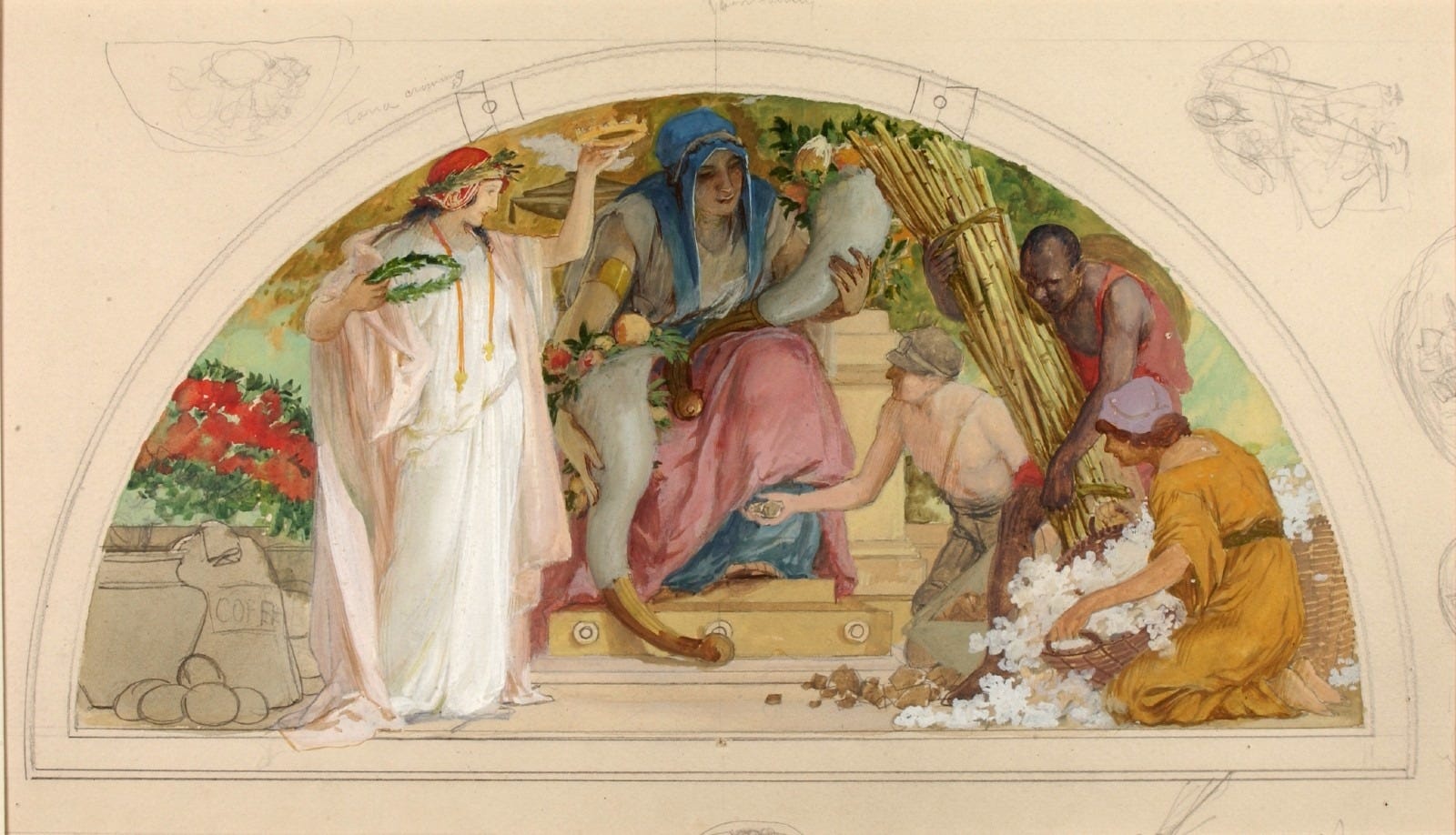
And, of course, there is more.
Water systems face parallel pressures. The agricultural sector consumes over two-thirds of the planet’s freshwater, and without innovative conservation measures, agricultural production uses excessive water and degrades water quality, thereby adversely impacting freshwater systems worldwide.
Over the past decade, pollinator numbers have declined due to the combined stress of parasites, pesticides, and habitat loss. Pollinators are essential for over 75% of the world’s food crops, particularly fruits, vegetables, nuts, and oilseeds. Their decline undermines agricultural productivity and increases dependence on managed pollination, which is costly and less reliable, illustrating a self-defeating feedback loop between farming practices and ecosystem services.
Increasingly, agriculture is running into negative feedback loops that look like mounting systemic stress. In many regions, holding yields steady now takes more fertiliser and pesticide, just to compensate for soil that is slowly losing function. The decline isn’t only nutrient depletion. It’s the long tail of intensive chemical use and the steady erosion of organic matter.
Heavy machinery doesn’t just speed things up. It leans on the soil until the pores collapse. Compaction shuts down infiltration and oxygen. Microbes slow. Nutrient cycling gets sticky, then starts failing in predictable ways.
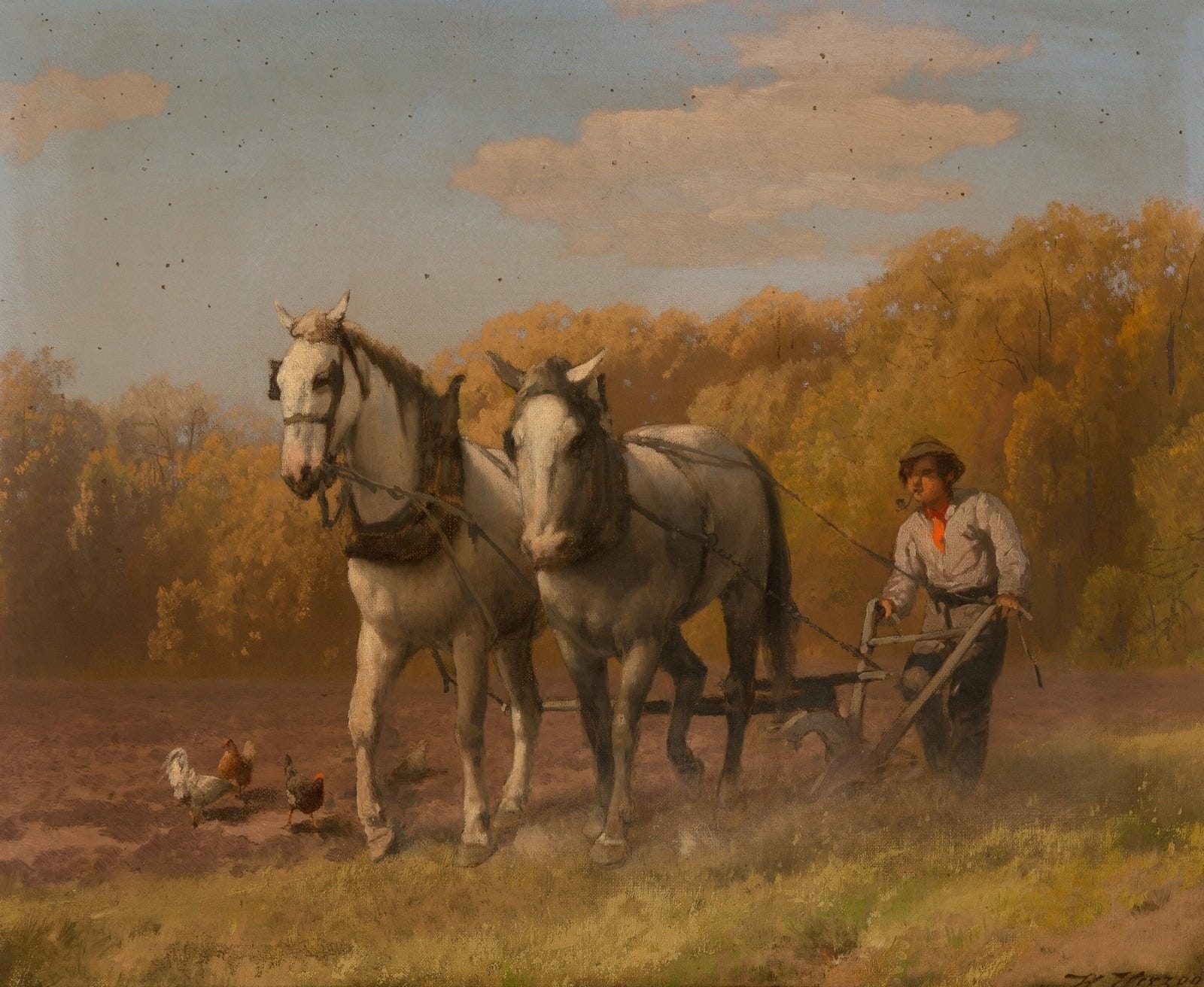
This is what limits to growth looks like when it arrives in a paddock. The same levers that drove expansion and control, mechanisation, synthetic inputs, intensification, start eating the foundation they rely on. And the evidence is not subtle. Current practice is degrading the ecological basics that sustained agriculture in the first place. That leaves an ugly constraint sitting in the middle of the conversation.
We still have to grow enough food to feed 8 billion people and their pets.

Agriculture began as a pantry. A way to store what the sun had grown, stay in one place, and outlast the lean season. For twelve millennia that logic held. The system was slow, imperfect, and hungry at the margins, but it ran on solar income. What came out of the ground had come in from the sky.
The Green Revolution broke that loop. Yields tripled, then quadrupled, and the population followed. The mechanism was energy. Colossal, cheap, fossil energy poured into fertiliser synthesis, mechanisation, irrigation, and transport. For every joule returned as food, modern agri-food systems burn several in. The pantry is still full. The fuel bill is what we don’t talk about.
At 8 billion people, there is no backup system. The soil that intensive farming has spent down over seventy years does not recover on electoral timelines. The phosphorus mined from rock to grow the grain does not return. The aquifers drawn down for irrigation do not refill. The process is already underway.
Our ancestors built the pantry to escape scarcity. We filled it with oil. The arithmetic leaves one question. How long the credit runs before the shelves show what is actually behind them.
Notes & Sources (for the curious)
Scale of the story (people + output)
Population totals & growth windows (1960s→today) — UN DESA World Population Prospects (2024); World Bank Data (population series, 2025)
Cereal yields/production since 1961 (and how much rose) — FAOSTAT (2025); Our World in Data (FAOSTAT-based summaries, 2025).
Energy: “oil into food” (system boundary matters)
Food-EROI / net energy sink framing for modern agri-food systems — Rasul et al. (2024); Markussen et al. (2013)
Danish system specifics (low food energy return; externalised N/P/K) — Markussen et al. (2013).
Why nitrogen fertiliser is an “embedded energy subsidy” (Haber–Bosch scale) — IEA Ammonia Technology Roadmap (2021); FAO soil/erosion key messages referencing soil degradation pathways (context for why fertiliser dependence matters).
Soil, water, biodiversity: the ecological balance sheet
Soil degradation scale (33% degraded; “>90% by 2050” warning) — FAO/ITPS (2015, as summarised by FAO Soil Erosion Symposium key messages); FAO newsroom soil erosion explainer (2019).
“24 billion tonnes of fertile soil lost each year” — UNEP / International Resource Panel (2016); UNCCD synthesis citing FAO estimate.
Agriculture’s share of freshwater withdrawals (~70%) — UNESCO World Water Development Report stats (2024); FAO “Water for Sustainable Food and Agriculture” (FAO brief).
Pollinators & food production dependence (“~75% of crop types”) — IPBES Pollination Assessment (2016)
Shocks, tight coupling, and volatility
Fertiliser price spike around the Ukraine war (2022) and supply-chain exposure — World Bank Commodity Markets Outlook (Apr 2022); USDA ERS overview of fertiliser market disruption (2023).
Food-price crisis drivers (2007–08) and volatility mechanics — FAO explainer on the 2007/2008 crisis; World Bank synthesis on price volatility (2011).
Weather extremes hitting simplified systems (2012 US drought example) — USDA ERS “Charts of Note” on 2012 corn yield impacts; NOAA drought reporting for 2012.
“Yield isn’t the only KPI” (regenerative / organic evidence)
Regenerative profitability vs yield; pest “paradox” (10× pests with insecticides) — LaCanne & Lundgren (2018)
Organic vs conventional energy-use efficiency (paired farm comparisons) — Chmelíková et al. (2024).
Primary Sources
Chmelíková, L., Schmid, H., Anke, S., & Hülsbergen, K.-J. (2024). Energy-use efficiency of organic and conventional plant production systems in Germany. Scientific Reports, 14(1), 1806.
Giller, K. E., Hijbeek, R., Andersson, J. A., & Sumberg, J. (2021). Regenerative agriculture: an agronomic perspective. Outlook on agriculture, 50(1), 13-25.
Harchaoui, S., & Chatzimpiros, P. (2018). Can agriculture balance its energy consumption and continue to produce food? A framework for assessing energy neutrality applied to French agriculture. Sustainability, 10(12), 4624.
LaCanne, C. E., & Lundgren, J. G. (2018). Regenerative agriculture: Merging farming and natural resource conservation profitably. PeerJ, 6, e4428.
Markussen, M. V., & Østergård, H. (2013). Energy analysis of the Danish food production system: Food-EROI and fossil fuel dependency. Energies, 6(8), 4170–4186.
Pretty, J., Benton, T. G., Bharucha, Z. P., Dicks, L. V., Flora, C. B., Godfray, H. C. J., ... & Wratten, S. (2018). Global assessment of agricultural system redesign for sustainable intensification. Nature Sustainability, 1(8), 441-446.
Rasul, K., Bruckner, M., Mempel, F., Trsek, S., & Hertwich, E. G. (2024). Energy input and food output: The energy imbalance across regional agrifood systems. PNAS Nexus, 3(12), 524.
Woods, J., Williams, A., Hughes, J. K., Black, M., & Murphy, R. (2010). Energy and the food system. Philosophical transactions of the Royal society B: Biological Sciences, 365(1554), 2991-3006.