


TL;DR… Modern farming is being paid to produce this year’s yield by quietly liquidating next decade’s soil, water, and biodiversity. That’s the mindful farmer’s dilemma. How can a farmer survive financially while watching the asset base erode? Regenerative approaches can square the circle, but only if we stop pretending better farming can outvote the incentives and the constraints.
Imagine for a moment that you have no salary, no permanent home, and there are no supermarkets in the neighbourhood.
You can’t imagine this for too long because it is scary and well outside modern experience for those with access to this sentence. But this was the situation for all our ancestors for close to 300,000 years. Thousands of generations of people gathered, foraged and hunted for food, or they starved. When you think about this scenario, it will evoke deep-seated survival instincts shaped by humanity’s long pre-agricultural past, triggering anxiety, hypervigilance, and a reorientation of priorities toward immediate needs.
Today, in Western democracies at least, our self-worth, social identity, and sense of control are heavily tied to economic roles, home ownership, and consumer access. These are all recent developments in human history that, for most, removed the fear of physical harm and stripped the scaffolding that supported personal and social meaning.
While risks from real dangers were normal for our ancestors, their social and psychological frameworks were adapted to them. They had communal food sharing, deep local knowledge, and culturally embedded resilience strategies that reduced existential stress. Modern individuals often imagine such a life without the social cohesion or survival skills their ancestors had, which makes the mental image feel like a free fall. We easily ignore the reality that the resilience of our ancestors was as much psychological as it was material.
Now imagine life for humans 10,000 years ago in, say, the most culturally advanced societies of the Fertile Crescent, notably those of the Levant, such as Jericho and Göbekli Tepe. These people combined large-scale architecture, symbolic art, and organised food production in ways unmatched elsewhere at the time. No supermarkets perhaps, but they had food they could store.
We tell the story as if farming were about producing more food. That’s only half the truth, and not even the most interesting half. For most of human history, the bottleneck was preservation. A successful hunt or a big berry patch meant a temporary glut followed by spoilage. Without storage, abundance was a fleeting accident. Agriculture changed that.
By domesticating grains and pulses, which are foods that dry, store, and travel, humans created the first real surplus you could bank against the future. A sack of barley was a source of calories, security, insurance, and currency. Stored food allowed you to bridge the hungry season, feed more children, and trade for tools or alliances.
Suddenly, power could be accumulated in granaries, not just in muscle or charisma.
Whoever controlled the stored grain, and later the domesticated livestock, controlled the terms of existence. The field and the sickle mattered, but the sealed jar and the locked storeroom transformed human society. Agriculture gave us the first capital, the first inequality, and the first reason to stay put.
Grains and pulses were the magic trick. A clay jar of wheat was surplus that could smooth over lean months, feed more mouths, and be traded for alliances or favours. And once food could be stored, it could be guarded, taxed, and stolen.
The more comforting angle is that agriculture was a tale of human ingenuity and progress, giving me a warm feeling inside that spreads to every extremity. I think it’s called pride. Anthropologists are astute individuals who are not so easily swayed. They established that sedentary living and dense populations made early agricultural communities more vulnerable to disease, nutritional deficiencies, and social inequality.
Agriculture wasn’t a panacea, but as an invention, it remains one of the most significant transformations in human history, laying the groundwork for the modern world.
But here is the thing.
This initial form of agriculture was patchy, low-yielding, and prone to crop and livestock losses due to weather and disease. It wasn’t all sweetness and sourdough rolls. However, it did create a new value. Land suitable for food production became a critical resource to defend or acquire, leading to territorial conflicts and organised warfare. Spiritual and cultural systems evolved to reflect the rhythms of planting and harvest.
And it changed the frame for that psychological resilience.
Agriculture redefined what it meant to be human, laying the economic, political, and cultural groundwork for all later civilisations and marking one of the most consequential turning points in our species’ history.
And so it went for over 10,000 years, with incremental progress here and there, some civilisations more successful than others, inventions generally making things better. Then, about 200 years ago, everything changed.
First came coal in commercial quantities, then oil and gas, giving humans sudden access to massive amounts of energy. Naturally, they applied this energy and materials to, among other things, agriculture.
This surge of exogenous energy fueled widespread mechanisation, introducing tractors, harvesters, and irrigation pumps that drastically reduced manual labour and enabled the cultivation of vast tracts of land. Crucially, it enabled the industrial-scale production of synthetic fertilisers, pesticides and herbicides that significantly boosted crop yields. Large-scale irrigation projects became possible, bringing previously unfarmable land into production and ensuring more consistent harvests.
Beyond the fields, fossil fuels built and powered the ships, trains, and trucks that established interconnected supply chains to move the extra production around, not least into cities that could grow in size now that food could arrive from far away in good time. Transport systems also enabled food to be grown where it grew best and then distributed worldwide, increasing availability and variety. Energy-intensive processes for food processing and packaging extended shelf life, reduced spoilage, and were a product marketer’s dream. In a historical instant, humanity became reliant on an agricultural system shaped by fossil fuels, now spreading across six continents.
And so it went: in a few generations, agriculture in large parts of Europe and North America, and later all around the world, was industrialised.
Then, in a blink, the world was staring at famine.

One of the things that happens if you provide an organism with exogenous energy, from outside its internal system, is that it does well. It tends to have a better chance of growing, surviving, and reproducing, and it produces more biomass by converting energy. Crude but true.
Then, what appears as success is often just a delayed breakdown. Thermodynamically, injecting low-entropy energy into a system doesn’t eliminate disorder; it accelerates it elsewhere. Agriculture supercharged by fossil fuels increases yields not by solving ecological constraints but by temporarily outrunning them, leaving entropy markers in the soil, water, and atmosphere.
And the energy injection from the industrial revolution is colossal.
One hundred years after the first public railway in Great Britain to use steam locomotives, the Stockton and Darlington Railway, which opened on September 27, 1825, the global population had doubled from 1 to 2 billion. Then, 100 years later, it was a little over 8 billion.
Nobody wanted to believe Thomas Malthus, but many knew he had a point, even if his solutions to the problem were heinous. By the mid-1900s, feeding all these people had already become a concern. Something had to be done, or famine was inevitable.
The “Green Revolution” was the answer.
It was a technological sprint from the 1940s to the 1970s to squeeze more grain from the same soil. Led by scientists like Norman Borlaug, it bred high-yield, disease-resistant wheat and rice and paired them with synthetic fertilisers, pesticides, and irrigation on a scale never before seen.
The results were dramatic. India and Mexico, once staring down famine, became self-sufficient and, in some years, net exporters. Grain ships that once carried aid were replaced by those carrying surplus.
The impact was undeniable. Famines were averted, billions were fed, and rural economies in parts of Asia and Latin America surged. More food meant more people, and for a time, it seemed as if technology had outsmarted nature’s limits, the oldest constraint of all. Malthus was mistaken. In the glow of this success, intensive, industrial agriculture became the default setting for modern farming, its methods exported, imitated, and entrenched.
But every gain came with a hidden cost. The Green Revolution locked farmers into a system dependent on fossil-fuelled inputs and chemical fixes. Soils eroded, water tables dropped, and the gap between the land-rich and the land-poor widened. The very path that fed billions also deepened our dependency on a fragile, energy-hungry system.
And here we are today, with a commercial farmer on the horns of a dilemma, under pressure to be productive and deliver high yields at low cost, while he knows that achieving this will mean heavy inputs and pressure on soils.
The Green Revolution did feed many people, but it didn’t solve the farmers’ dilemma. Instead, it gave us a 70-year vacation from dealing with it.
But before we get any further along, let’s name the dilemma and begin with this premise…
Modern agriculture generates contradictory demands for productivity and sustainability
There is no doubt that modern agricultural systems built around tractors have achieved significant increases in food production through the use of advanced technologies, chemical inputs, and high-yielding crop varieties. A plethora of innovations have enabled farmers to meet the demands of a rapidly growing global population and respond to market pressures for increased efficiency and profitability.
However, they achieve this through intensive monoculture, heavy use of fertilisers and pesticides, and large-scale irrigation practices that drive productivity but come with high environmental costs. Intensification is associated with soil degradation, water pollution, biodiversity loss, and increased greenhouse gas emissions, all of which threaten the long-term sustainability of agricultural landscapes.
This tension between productivity and sustainability is at the heart of many contemporary agricultural policy debates.
On one hand, there is an urgent need to produce more food to ensure food security, especially as the world’s population is expected to grow by around 8,000 people an hour for generations, despite what the media in Western liberal democracies say. And in case you skipped that number, 8,000 an hour becomes 5.76 million more people a month and 70 million a year. Sweden, the most populous of the Nordic countries, has a population of 10.6 million.
And an increasing proportion of these people live in cities.
On the other hand, there is widespread recognition that the environmental impacts of current agricultural practices cannot be ignored, as they compromise the healthy soils, clean water, and stable climates upon which future food production depends.
This creates a real and persistent dilemma for farmers.
Maximising short-term productivity often undermines the ecological foundations necessary for long-term sustainability, while prioritising sustainability can sometimes mean accepting lower yields and other opportunity costs in the short run.
Promising approaches exist that reconcile these competing demands. Innovations such as precision agriculture, integrated pest management, and agroecological practices aim to increase efficiency while minimising environmental harm. Some countries and regions have demonstrated that it is possible to “decouple” productivity from environmental degradation through targeted policies, technological advances, and investments in sustainable practices. However, these solutions require careful management, significant investment, and often a willingness to rethink traditional agricultural models. They remain in the small minority.
Modern agriculture is indeed caught between the dual imperatives of boosting productivity and ensuring sustainability. While these demands can be contradictory, they are not necessarily irreconcilable.
But before we rush to solve world hunger with regenerative practices, let’s take a closer look at this premise…
Short-term yield optimisation undermines long-term resilience in agricultural systems
When a farmer is successful, he generates food or fibre for consumption. That delicious lamb shank is typically enjoyed away from the farm, in an urban setting. Nutrients from the soil are transferred to the meat, which leaves the farm. It’s an export system. Keep doing this for long enough, and the soil becomes depleted. The only way to maintain production without moving the farm onto fresh land is to replace the lost nutrients or at least subsidise the soil with the equivalent amount of nutrients in the form of fertiliser.
Farmers know they run an input-output system. Their mindset is that they have to put in energy, nutrients and effort to get out a salable crop or animals for slaughter. They might not like being input-driven, but they understand that they are. They are also experts in managing those inputs, not least because they know their land better than anyone else and are on first-name terms with their bank manager.
When the phone rings and it’s Jason just checking in, farmers are reminded that the business they run not only must be liquid but also carries a heavy debt burden. That’s just a consequence of an input system. Diesel for the tractor, seeds, fertiliser, a thresher the size of a house, all cost money that can’t always be paid for in cash.
Farmers also recognise that the consequences of relying on inputs is they have both short-term and long-term obligations to the bank. They might want to combine immediate yield improvements with practices that enhance soil health and water retention, especially to help maintain productivity while building resilience against climate change and other disruptions. They know they need to look long… but then the phone rings again.
The evidence from science is blunt and supports the ecological timeframe. Resilient farming systems are built on diversity, healthy soils, and the ability to adapt. Strip those away, and you’re gambling with the future. But the quick route to bumper harvests is monocultures, heavy fertilisers, chemical pest control, and irrigation on tap. It works until it doesn’t.
Push the land like this, and you drain its capacity to bounce back because soil life collapses, biodiversity thins, and pests and diseases find an open door. Add climate extremes into the mix, and the whole system starts to wobble.
What appears to be efficient today is, in reality, fragility. Producers are buying false stability through inputs that decay the system’s capacity to self-organise. The more tightly a farm is engineered for yield, the less slack it has to absorb shocks, making it brittle beneath the surface. All this is entirely consistent with the Second Law of Thermodynamics.
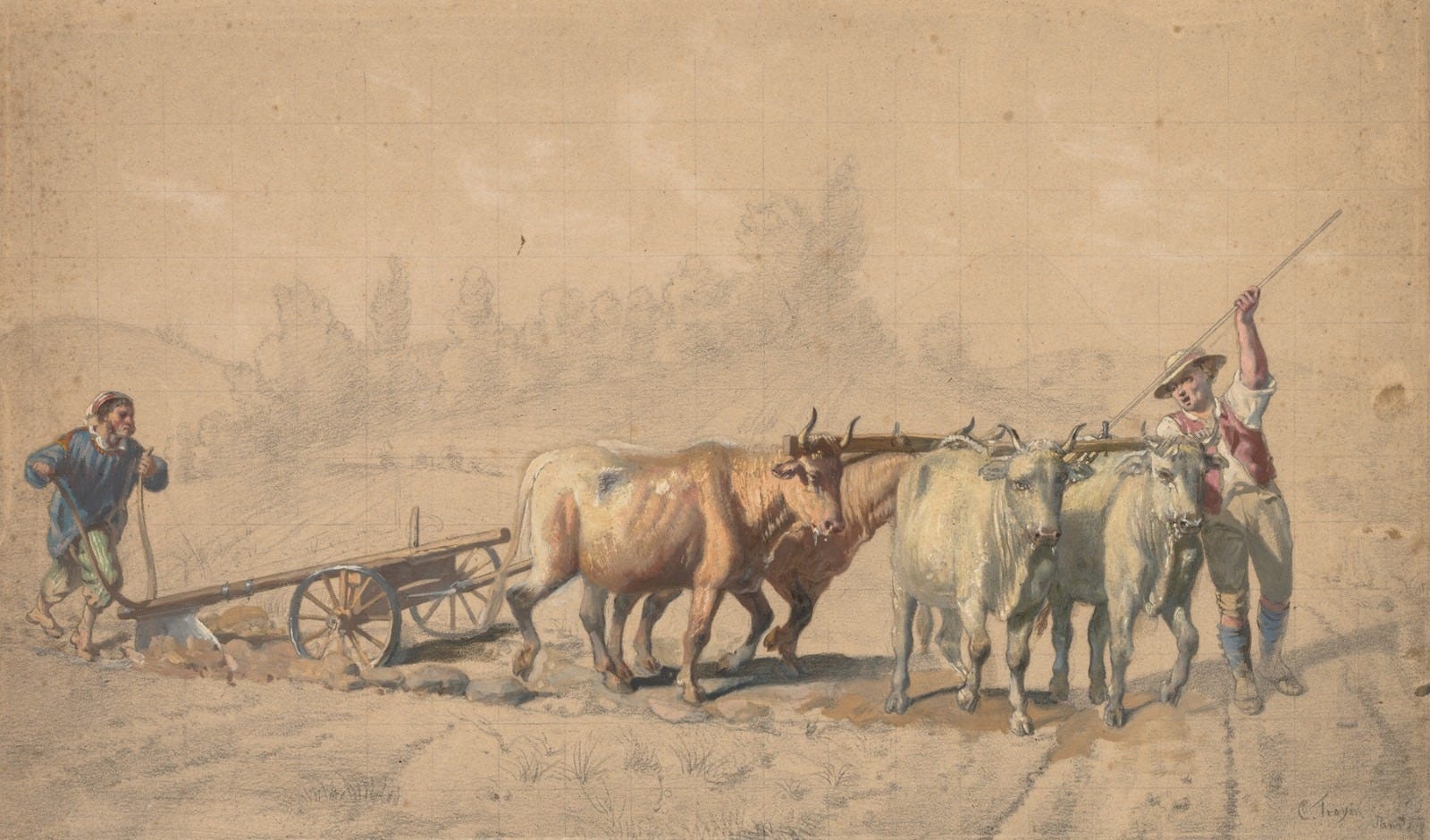
Systems built for short-term gain rarely bother with the scaffolding that makes them last. They mine the soil, burn through water, and call it efficiency—until the bill arrives.
Intensified livestock operations are a case in point. Across the US Midwest, studies link concentrated animal feeding to nitrogen and phosphorus runoff that poisons waterways and drives harmful algal blooms. In parts of Europe, overgrazing and manure overload have stripped soils of organic matter, reducing their ability to hold water and recover from drought, even the FAO admits it.
The pattern is consistent across multiple examples.
In northern India, relentless wheat–rice monocultures boosted yields for decades, but groundwater extraction now outpaces recharge by more than 50%, threatening both crops and communities.
In Brazil’s Cerrado, soy expansion delivered export surpluses while driving deforestation, eroding topsoil, and releasing vast stores of carbon.
Degraded soils lose fertility and structure; polluted water undermines both ecosystem health and farm productivity. By the time the system starts to fail, the resilience it needed to adapt has already been spent. Chase today’s yield and you erode tomorrow’s capacity.
But it doesn’t have to be this way.
To achieve resilient yields over time, farmers can moderate inputs, incorporate technological innovation, engage in ecological management, get out of monocultures, and work more closely with their stakeholders. In short, they can diversify.
But diversification takes guts. The convention and the pressure are to maximise yield, and for most situations, that is a treadmill of increasing intensity of energy and material inputs.
This brings us to the next premise…
The mindsets and metrics driving agricultural decisions are inadequate
As we have hinted already, farmers are under pressure. The typical approach to agricultural decision-making is to prioritise short-term productivity and efficiency, often measured by metrics that describe the inputs and the outputs. And it is not made by the farmer.
Total Factor Productivity is meant to measure how efficiently land, labour, capital, and other inputs are combined to produce output. In practice, the scoreboard most people fixate on is the much simpler yield per hectare. Neat. Comparable. And it’s dangerously incomplete because depletion doesn’t show up as a cost until it’s too late.
This blind spot has consequences. In the US Corn Belt, decades of yield-focused optimisation have eroded topsoil at rates far above natural replenishment, slashing long-term productivity potential even as TFP numbers looked healthy.
In Australia’s wheat belt, salinisation from land clearing has compromised millions of hectares, a legacy cost absent from conventional output metrics. And in sub-Saharan Africa, short-term fertiliser-driven gains have often masked declines in soil organic matter, leaving farmers more vulnerable to drought and nutrient loss over time.
The deeper issue is mindset.
Economic incentives, cultural traditions, and risk perceptions shape farmer decisions as much as rainfall or soil type. If success is defined purely as higher yields today, practices that erode tomorrow’s capacity can still look like wins if today’s yield is good.
Transformative change demands measures that count reproductivity, the system’s ability to sustain itself, alongside profit and yield. Until then, we’ll keep optimising for the wrong future.
Then there is increasing recognition that effective agricultural decision-making should be participatory, involving the farmer, his backers, the local communities, advisors, and policymakers. It should even include the consumers of the food. But when was the last time you thought about a farming decision?
This is a tricky one.
Whilst there are a lot of people who want metrics to include productivity and environmental impact, resilience and social outcomes, most of them don’t get up before dawn to grease the tractor bearings. There is some help for farmers. Frameworks such as the Sustainable Livelihoods Approach, Agroecological principles, and tools like the Sustainability Assessment of Food and Agriculture Systems (SAFA) by the FAO encourage the evaluation of soil health, biodiversity, water use, greenhouse gas emissions, and community well-being. These metrics were historically sidelined in conventional cost-benefit analyses. This expansion of metrics is not only more aligned with sustainability goals but also helps farmers future-proof their operations against economic and ecological shocks.
One prominent example is the use of decision-support tools like the “FarmDESIGN” model, which allows farmers and advisors to simulate different management scenarios and assess their trade-offs. For instance, a farmer might compare a conventional maize monoculture with an agroforestry system that includes intercropped legumes and fruit trees. The tool enables them to evaluate each system’s profitability, labour demands, carbon footprint, and resilience to drought.
All this feels a bit like that scary scenario of gathering food on the savanna, the way we currently think about and measure farming isn’t built for the 21st century. We’re still chasing narrow definitions of success while ignoring the bigger ledger of how systems perform for people and planet, now and decades from now.
Perhaps we need to redefine what counts, bringing in more perspectives, and using metrics that track both the quick wins and the long game.
That’s easy to say, and from the wrong voice. It sounds like another top-down sermon. In my experience, farmers don’t respond well to edicts. They know their land better than anyone. They walk, work, and read it every day. And they’re right to bristle when someone rolls in with a clipboard to pronounce on them that they’ve been doing it wrong. Change that ignores this lived expertise rarely survives first contact with the paddock.
The bridge is trust and relevance.
If sustainability metrics can show farmers how to make their land more resilient, profitable, and adaptable, they stop being an imposition and become a tool. The conversation shifts from “do this because we said so” to “here’s how you keep this place productive for your kids.” That’s when data becomes knowledge, and knowledge becomes a reason to act.
So here is the next premise to counter the well-known imposition phenomenon…
Farmers themselves hold key insights often overlooked in agricultural policy discussions
Farmers work on the sharp edge of agriculture, making daily decisions that tangle with ecosystems, weather, markets, and community life. They’re observers, experimenters, and problem-solvers. The knowledge they hold is often more precise, adaptive, and relevant to their land than anything that comes out of a distant policy office or research lab.
A good farmer can read microclimates that vary within a single paddock, know how a certain slope drains after a heavy rain, anticipate the timing of pest outbreaks, or recognise which traditional practice still holds under modern pressures.
Yet, policy frameworks have a habit of brushing past this nuance, defaulting to generalised scientific models and economic metrics that iron out local variation. The drive for “scalable” solutions flattens the complexity that makes each farm unique and strips away the ingenuity that comes from living with the land.
The evidence backs this.
Participatory workshops and farmer interviews across diverse regions show a consistent gap between local priorities and official agendas. In Tanzania’s Northern Kilombero Valley, smallholders identified land ownership, crop diversification, and water access as key to their future priorities, which are currently missing from national plans and private-sector roadmaps. Similar disconnects have been documented in Latin America and Southeast Asia, where farmer-led adaptation strategies have outperformed top-down interventions but struggled to gain recognition. Ignoring this embedded, place-based expertise all but guarantees agricultural transformation will be less just, less effective, and less resilient than it could be.
But the critical distinction is between policy-ready knowledge and land-ready knowledge. The first fits neatly into a report or a funding cycle; the second keeps a farm alive through a failed monsoon or a pest outbreak no one predicted. Until we design transformation around the latter, the former will continue to produce plans that look good on paper but fail in practice.
Participatory research methods such as farmer field schools, co-design of technologies, and community-based monitoring programs are designed to reverse this marginalisation. Still, they often retain the top-down feel that farmers dislike. One notable exception is the Participatory Plant Breeding (PPB) initiative, in which farmers collaborate with scientists to select and develop crop varieties tailored to local conditions. In Ethiopia, for example, smallholder farmers have collaborated with researchers to breed teff varieties that are both high-yielding and drought-tolerant, integrating formal science with farmer preferences.
And if this were a traditional essay, there would be a lengthy list of initiatives like this, local, effective and rarely scaled up into a substantive threat to the input-driven status quo.
What we, the folk who eat the food, have to understand is this.
Most farmers know what they are doing. They have learned the hard way on the land, from their peers and from the generations who ran the farm before them. Experience is invaluable, even as the conditions change, making farmers’ knowledge not just valid but essential for crafting effective agricultural policy and innovation pathways.
However, this premise that farmers themselves hold key insights is fraught with social difficulties and can upset everyone in an instant.
I wrote with Chris a Mindful Sceptic Guide to Farmers, which was brave, but we hope it provides more details with care and objectivity.
Mindful farmers’ dilemma is about tensions between productivity, sustainability, and economic survival in modern agriculture, the type that you or I might see as we drive through the countryside.
However, over 500 million farms worldwide are run by smallholders who grow food and cash crops for themselves and their families. Typically, they use traditional farming systems and methods that are often thousands of years old, designed and honed without energy and nutrient inputs made possible by fossil fuels and machinery.
The next premise assumes that these farmers have something to offer in resolving the dilemma…
Knowledge systems of traditional farming contain crucial insights for future food systems
Traditional and Indigenous knowledge systems have long provided more sustainable approaches to agriculture than the industrial model. In the beginning, farming had to be relatively closed systems, where energy and nutrients are recycled more or less on-site, because farmers learned early that the soil cannot support export for long. Nevertheless, soils were depleted by agricultural practices, and so farmers were often forced to move on to pastures new.
Shifting agriculture, also known as swidden or slash-and-burn farming, is practised mainly in tropical forest regions by smallholder and Indigenous communities. Farmers clear a plot of land, often by cutting and burning vegetation, and then grow crops on it for a few years until the soil fertility declines. They then move to a new plot, leaving the previous one to lie fallow. During the fallow period, natural vegetation regrows, restoring nutrients, improving soil structure, and controlling pests and diseases through ecological succession. This cycle can range from a few years to several decades, depending on land availability and population pressures.
What makes shifting agriculture effective is its alignment with natural ecological processes. It requires minimal external inputs and relies instead on biodiversity, fallow regeneration, and localised knowledge of landscape dynamics. In areas with abundant forested land and low population density, this method can be sustainable and resilient, supporting both food security and ecological regeneration. It is also culturally embedded in many Indigenous knowledge systems that emphasise stewardship and cyclical resource use.
However, shifting agriculture becomes less viable when fallow periods are shortened due to land pressure, leading to soil degradation and deforestation. When practised within its ecological limits, though, it represents a low-energy, adaptive form of land use that integrates food production with ecosystem restoration. Its success lies in its flexibility, ecological sensitivity, and deep local knowledge, making it an essential model for sustainable land management in many parts of the world.
The point of this premise is not that shifting agriculture works. It’s that traditional farming methods are built from generations of observation, adaptation, and community-based experimentation, and so offer valuable lessons for building resilient and sustainable food systems.
For example, agroecology, which draws heavily on traditional practices, integrates ecological principles into agriculture. It treats a farm as an ecosystem rather than a factory. So instead of relying mainly on external inputs (synthetic fertilisers, pesticides, purchased feed), it tries to make the system work through biological processes such as nitrogen fixation (legumes), composting and organic matter buildup, integrated crop–livestock systems, and natural pest control.
In practice, agroecology often shows up as diversified cropping (rotations, intercropping, agroforestry), soil-cover strategies (mulches, cover crops, reduced tillage where suitable), and landscape thinking (hedgerows, riparian buffers, habitat for pollinators and beneficial insects). The aim is not just yield, but stability that will reduce vulnerability to drought, pests, input price shocks, and long-run soil decline.
It also emphasises farmer knowledge, local adaptation, fairer value chains, and food sovereignty because how food is produced is inseparable from who benefits, who bears risk, and how land and labour are organised.
In coastal Bangladesh, smallholder farmers grow rice during the monsoon season and raise fish, such as carp or tilapia, in the same paddies. This method reduces the need for chemical inputs, as fish help control pests and weeds, oxygenate the water, and contribute natural fertilisers through their waste. Farmers may cultivate aquatic plants or raise ducks, creating a diversified and mutually reinforcing ecosystem. Rooted in generations of experiential knowledge, this technique reflects a holistic understanding of local water cycles, soil conditions, and species interactions.
Beyond environmental benefits, these systems preserve local fish and rice breeds adapted to the region’s saline-prone, flood-prone environment. The dynamic coastal delta, subject to tidal flows, storm surges, and salinity intrusion, is navigated through adaptive strategies honed over time. These include strategic placement of bunds and sluice gates, and seasonal adjustments to the rice-fish calendar. As climate change intensifies weather extremes and sea-level rise in the region, these Indigenous practices are proving remarkably resilient, offering low-cost, low-impact alternatives to intensive aquaculture and monoculture rice farming.
A critical common feature of almost all traditional systems is the need to regenerate soil, typically through regenerative methods and a focus on closed systems, in short, ecological knowledge.
The following premise suggests that regenerative practices would solve the farmer’s dilemma…
Regenerative approaches can resolve these contradictions but require systemic change
Regenerative agriculture is less a set of techniques than a different contract with the land. It works to rebuild soil, boost biodiversity, and restore ecosystem services through cover crops, reduced tillage, diverse rotations, and agroforestry. Done well, it builds resilience to climate shocks, cuts dependence on synthetic inputs, and solves environmental and economic problems in the same breath.
Gabe Brown’s farm outside Bismarck, North Dakota, is the case study that is often cited as an example of what is possible. In the 1990s, back-to-back crop failures forced him to question every assumption about conventional farming. He ditched the plough, planted multispecies cover crops, rotated more widely, and folded livestock into the mix so nutrients cycled naturally. Year by year, he stepped away from fertilisers and pesticides, replacing them with nitrogen-fixing plants, biological pest control, and organic matter built by soil organisms. The result was not a return to the past, but the creation of a living system with its own self-reinforcing productivity.
The numbers tell the story.
Soil organic matter up from under 2% to over 6%, water infiltration so fast it shrugs off droughts and floods, and fields alive with pollinators, birds, and beneficial insects. His cover crop cocktails that can be 15 species deep, shield the soil, feed the biology, and keep habitat continuous all year. Diverse rotations have broken pest and disease cycles without a drop of pesticide. Holistic grazing moves cattle like wild herds once did, spreading fertility, building pasture health, and making feedlots irrelevant.
Economically, Gabe Brown runs his operation lean with low input costs, direct marketing, and no dependence on subsidies. While outperforming many neighbours locked into conventional systems, his land is now both more productive and more resilient, and the model has drawn scientists, policymakers, and farmers from around the world.
Most regions have a Brown Farm where an intrepid farmer has bucked the local trends and practices to use and benefit from regenerative practices. However, the transition to regenerative agriculture is not straightforward. It involves initial financial and knowledge barriers, as farmers may face upfront costs for new equipment, the risk of short-term yield declines, and a lack of access to markets that value regenerative products.
Solutions require collaboration across the entire value chain, from input suppliers to food companies and consumers, so that farmers have secure markets and incentives for regenerative products. Risk-sharing mechanisms, such as innovative financial products and shared investment in infrastructure and training, are also crucial to make the transition attractive and feasible for farmers.
Bottom line, it needs consumers to vote with their wallets.
So far, at least in the U.S., this is not working well. Less than 1.5% of U.S. farms practice fully regenerative agriculture, while an estimated 15% employ some regenerative methods but have not fully transitioned. For instance, cover crops, a key component of regenerative agriculture, were planted on just 7% of Midwest farmland as of 2021, despite their environmental benefits.
The limited adoption can be attributed to economic concerns, such as the potential for reduced short-term yields and the costs associated with transitioning to new practices. Maybe it’s a lack of technical support and knowledge about regenerative methods. Perhaps farmers fear that such practices may negatively impact the yields of their primary cash crops, such as corn and soybeans. Or maybe it’s those forward contracts and cheap food at the supermarket. But I digress.
The good news is that regenerative farming is no longer just a fringe movement. Public agencies and private investors are putting money and training into farmer support. As the evidence piles up for healthier soils, more climate resilience, stronger margins, so more farmers are starting to see it not as an experiment, but as a better bet.
Regenerative agriculture is one of the few approaches that can hit the twin targets of productivity and sustainability. But it won’t scale on goodwill or a handful of policy options. It needs a redesign of the whole food system. That means policy, finance, markets, knowledge networks and, crucially, consumers, so the people restoring the land get paid for more than just what they harvest.
And that means rewiring subsidies, building real markets for ecosystem services like carbon storage and biodiversity gains, funding demonstration sites that prove the model works, and making sure consumers understand what they’re buying.
And consumers who can will have to pay more for their food. But we will save that can of fertiliser irradiated worms for another essay.
The real shift to regenerative agriculture comes when farming income is tied to ecological performance as much as yield. When farmers get realistic prices for their produce, can sell tonnes of carbon stored in their soils, biodiversity credits for restored habitat, and verified improvements in water quality. When they stop being treated as commodity producers and start being recognised as ecosystem managers. That’s when regenerative agriculture stops being a sideline and becomes the backbone of a new rural economy.
But today and tomorrow, the farmer still has to service his debts and purchase inputs and energy to grow next year’s crops because the debt has accumulated and isn’t paid off in any one season.
This is a deep economic trap that prompts the final premise of this essay…
Economic pressures and market incentives often discourage long-term, regenerative practices.
The transition to regenerative practices often requires a lot upfront. It needs money and a willingness to let go of sunk costs in the old infrastructure. It means profound changes in farm management, which typically entail more work and higher labour costs. And until the ecology settles down into a new, more stable rhythm, it means a willingness to accept potential short-term yield fluctuations. The farmer has to change his methods, which he most likely inherited from his grandfather, who learned it all in the 1940s when he got his first tractor and passed it down the paternal line.
Current market structures and economic incentives do make it difficult for farmers to justify the transition to regenerative methods, which may not deliver financial benefits immediately and often lack adequate market premiums or policy support. And, of course, it’s not what grandpa would have done.
Additionally, the lack of measurement and verification systems for regenerative outcomes make it hard to reward farmers for ecosystem services and long-term stewardship. What we know about how regenerative systems work can be buried in the research literature and it is not in the interests of the companies that sell the inputs and the machinery for such expertise to become general knowledge. You are unlikely to see a soil ecologist on morning television. Inevitably, economic realities and market players reinforce conventional, extractive practices and discourage the widespread adoption of regenerative approaches. Again, a topic worthy of its own essay.
While regenerative agriculture offers clear long-term benefits for productivity, resilience, and environmental health, prevailing economic pressures and market incentives often act as significant deterrents. It is unlikely to dominate as it should without changes in policy, market structures, and consumer engagement.
It’s a problem.

In his book Collapse: How Societies Choose to Fail or Succeed, Jared Diamond investigated the reasons behind the disintegration of once-thriving societies such as the Easter Islanders, the Ancestral Puebloans, the Maya, and the Norse in Greenland. He identified five key factors that contribute to collapse: environmental damage, climate change, hostile neighbours, loss of trade partners, and a society’s response to its environmental problems.
Not all societies faced all five, but their vulnerability often stemmed from how they managed or failed to manage these interconnected pressures.
Diamond also argued that many ancient civilisations undermined their survival by depleting or misusing their soil resources. Through deforestation, overgrazing, and poorly adapted agricultural practices, these societies caused severe soil erosion and fertility loss, ultimately leading to food shortages, economic decline, and social disintegration.
He had a good point.
Settled science tells us that soil is a non-renewable resource on human timescales because its formation takes centuries to millennia, while it can be destroyed in decades through mismanagement.
Science, and the eyes of every farmer who sees it, tells us that soil erosion reduces agricultural productivity, which in turn destabilises economic and political structures. For example, the deforestation of the Haitian highlands, which resulted in massive soil loss, can be easily compared with the Dominican Republic’s better forest and soil management practices, illustrating how policy choices and cultural attitudes influence outcomes.
However, for the farmer, the dilemma remains.
Should he grow the food to feed himself and his family either directly or via the market when he knows production depletes the soil, or should he retire or go work in the city?

And the farmer has always had the dilemma.
For 10,000 years, humans have grappled with the fundamental challenge of feeding themselves without depleting the land that sustains them. Our ancestors developed sophisticated crop rotation systems, fallow periods, and integrated livestock management not through abstract environmental philosophy, but through the harsh teacher of necessity. When soil failed, communities failed. When harvests consistently declined, civilisations collapsed.
The knowledge encoded in traditional farming practices represents millennia of trial and error, of societies learning to read the subtle signals their land was sending them.
What is profoundly different today is our temporary escape from these constraints through fossil fuels and industrial chemistry. The Green Revolution gave us the illusion that we could transcend ecological limits indefinitely, that productivity and sustainability were permanently decoupled from one another.
What some call an “escape” is really a lease on borrowed order, paid for by increased entropy elsewhere. Fossil energy let us suspend the consequences of depletion, but the second law remains unamused and demands its due in collapsing soil, vanishing aquifers, and heat-trapping gases. Soil doesn’t negotiate with economic theory, and natural systems don’t suspend the laws of physics for quarterly profit reports.

The 10,000-year agricultural story reminds us that every civilisation that ignored these signals eventually faced a reckoning. The question isn’t whether we’ll return to regenerative farming practices that work in harmony with natural systems, because that’ll be forced on us either way. The big question is whether we’ll choose this transition consciously or have it imposed upon us by depleted soils and destabilised climates.
Perhaps most importantly, this long emergency perspective offers hope alongside its warnings. Humans have navigated agricultural transformations before, often emerging with more resilient and productive systems. The rice terraces of Asia, the polycultures of pre-Columbian America, and the integrated farm systems of traditional Europe all demonstrate that high productivity and environmental regeneration can coexist when we design with ecological principles rather than against them.
Today’s regenerative farmers aren’t abandoning the lessons of the past. They’re updating ancient wisdom with modern understanding, creating farming systems that honour the 10,000-year story of agriculture and the urgent needs of our current moment.
The farmer’s dilemma, viewed through this lens, becomes not a crisis to solve but a transition to navigate, guided by the accumulated wisdom of every generation that has successfully fed itself while caring for the land.
But here’s the thing.
Regenerative agriculture won’t save industrial food. It will replace it slowly, painfully, and only after collapse has priced denial out of circulation. The transition will not be led by government initiative or consumer choice. It will be an attrition event. Soil exhaustion, aquifer depletion, and energy volatility will take more land out of play than we admit, and in the cracks, new modes of production will grow because they have to.
Meanwhile, the existing system, measured in yield and Total Factor Productivity, gives the illusion of efficiency while the asset base erodes. Land that can no longer hold water. Crops that no longer respond to fertiliser. Farmers who know it’s getting harder each year while their spreadsheets insist it’s fine.
If your metric ignores depletion, you are not measuring agriculture. You are accounting for entropy as if it were profit.
And yet the fundamental contradiction isn’t on the farm. It’s in the culture. Consumers want ethical food that costs less than the fuel to deliver it. They demand soil stewardship with their strawberries, animal welfare with their $8 steak, and planetary health without changing breakfast.
This is not a policy dilemma. It’s a people problem.
And until that changes, regenerative agriculture will remain a proof-of-concept waiting for the system to fail.