TL;DR
We like to think of civilisation and living systems as builders of order, but they are specialised entropy engines that must degrade energy and increase global disorder to keep their internal structure intact. By burning ancient, low-entropy fossil fuels, humanity triggered a Great Acceleration that temporarily cheats ecological limits while creating a spike in disorder that destabilises the planet’s natural management systems. Mainstream sustainability is fundamentally flawed because it ignores this Second Law of Thermodynamics, which makes perfect balance or zero impact a physical impossibility. To survive, we have to drop the comfortable myth of returning to a static historical baseline and move to a physics-consistent strategy that manages the rate and pattern of inevitable entropy increase.
“Entropy is the price of structure.”
Ilya Prigogine
According to classical thermodynamics, entropy always increases in closed systems, suggesting an inevitable slide into equilibrium and disorder. Any ordered object from an ant to an automobile contradicts this law of nature. Ilya Prigogine (1917–2003), who won a Nobel Prize in Chemistry, studied complex systems and argued that order and complexity do not violate the second law of thermodynamics. Instead, they arise because of it in open systems.
While entropy increases globally, local pockets of order, including life, can form as long as overall disorder increases, challenging the prevailing view that entropy only leads to disorder. Prigogine’s insight was to show that in open systems, which exchange energy or matter with their environment, entropy could increase in a way that creates new levels of order.
In other words, life makes sense, even when a cursory glance at the laws of physics suggests it shouldn’t.
But let’s back up a moment.
Do you know what entropy is?
No? Well, you are not alone. I have been carrying around a rudimentary understanding of it for years. Unless you take physics in high school or college, entropy isn’t studied by the general student or discussed much at dinner parties, for reasons that will become clear. However, you probably need to know what entropy is and how it structures nature if you are at all curious about the human condition and how 8 billion people are acting on a finite planet.
Here is a standard definition…
Entropy is a measure of disorder, randomness, or the number of possible microscopic configurations within a system. It reflects the natural tendency of energy and matter to spread out over time.
In thermodynamics, entropy is often described as a measure of a system’s disorder. A more precise way to think about it is as a measure of how many ways the parts of a system can be arranged without changing its overall observable state. The more possible arrangements there are, the higher the entropy.
For example, a neatly stacked pile of blocks has low entropy. There are a small number of ways to keep it orderly and recognisable as a stack of blocks. In comparison, a pile of randomly scattered blocks has high entropy because there are countless ways to scatter them without any noticeable order.

The Second Law of Thermodynamics states that entropy tends to increase over time in an isolated system, which is a closed one that exchanges neither matter nor energy with its surroundings. This doesn’t mean that order can’t appear locally, but that creating local order, such as an ant’s body, requires expending energy and increasing entropy elsewhere. This universal trend toward higher entropy explains why processes naturally move toward equilibrium; why hot things cool down, gases spread out, and structures decay unless maintained.
Entropy is a description of chaos and a profound principle governing the arrow of time and energy flow.
Entropy also captures the idea that systems left alone tend to evolve toward more probable, less structured states. It is one of the fundamental pillars underlying the behaviour of the universe. It is why perpetual motion machines are impossible, why aging happens, and why energy resources degrade.
This was something close to my rudimentary understanding. I would mention entropy as explaining why the leaf breaks down when it falls from the tree, why the rock becomes soil, and why anything ordered and organised needs maintenance.
Entropy is a measure of the tendency of order to break down, hence the quote… Entropy is the price of structure.

I used this basic understanding to build my core explanations for the Malthusian trap, biodiversity loss, climate change, geopolitical instability, economic disruption, and technological upheaval, which became the topics of the Mindful Sceptic Guides.
In this mindful sceptic view, energy, specifically fossil energy, is why the human experiment has resulted in 8 billion individuals and their livestock making up 96% of the mammal biomass, why 100 million barrels of oil a day are used to power the process of keeping all these people fed and busy, and why so many people feel overwhelmed, powerless, and alienated in the face of complex, converging global disruptions.
Humans are heterotrophs that must consume, or the complex order of the chemical engines that give us life will collapse, and we decay because the laws of nature want entropy to increase.
And it is tempting to stop there. But if we do, the conclusion is that we need more energy, preferably from a clean source, to maintain the human experiment. The systems that rely on oil, coal and gas are refitted to work with the alternatives, currently some combination of solar, wind, geothermal, hydro and nuclear fission. In short, we have to have an energy transition from fossil fuels to renewable energy, requiring technological innovation, supportive policies, and global cooperation.
Conventional wisdom assumes that this shift is not only an environmental imperative but also economically advantageous eventually, as renewable energy costs decline and climate-related damages mount. Key enablers include the electrification of transport and industry, improvements in energy efficiency, and investment in smart grids and storage technologies.
More assumptions follow. Policy frameworks are essential to managing this transformation, with carbon pricing, subsidies for clean energy, emissions standards, and international agreements like the Paris Accord serving as standard instruments. The private sector is expected to provide green finance, technological innovation, and corporate sustainability targets. Governments must balance market mechanisms with regulatory frameworks to drive innovation while ensuring energy security and social equity. Public support, primarily through democratic processes and consumer behaviour, is often considered a cornerstone of success.
Critics emphasise the oversimplification, underestimation of systemic inertia, geopolitical complexity, material constraints, and uneven disruptive social consequences of such a transition.
In other words, the focus is on the practicality of such a shift rather than the shift itself.
I was caught up in this, too. For many years, I advised on carbon offset projects and methodologies because I thought that decarbonising the human enterprise was a good idea, even essential. This may still be true, but I had a nagging doubt.
Something was off.
In the real world of humans making more, we were all up against the natural tendency of energy and matter to spread out over time.
But I didn’t fully understand entropy. And neither did almost all the humans thinking about the environment. They agreed with this…
Current environmental thinking promotes concepts like carbon neutrality, circular economy, and sustainable development, assuming that human systems can eventually reach a state of perfect balance with minimal entropy increase.
As we now know, the Second Law of Thermodynamics states that entropy inevitably increases in isolated systems because energy and matter spread out over time.
While local order can be created, as happens in living organisms, this always comes at the cost of generating greater disorder elsewhere. Human existence, like all life, fundamentally requires energy conversion that accelerates entropy.
Even the most efficient, sustainable systems still degrade energy and increase overall entropy. This physical reality contradicts simplistic sustainability narratives that suggest we can achieve perfect balance or zero environmental impact. Instead, we must recognise that our existence necessarily participates in entropy increase.
Carbon neutrality, circular economy, sustainable development and a whole paradigm of sustainability share the common goal of achieving a better alignment of human activities with Earth’s ecological limits. This desire is underpinned by systems thinking, which seeks to reduce waste, optimise resource use, and mitigate environmental damage. They are aspirational models that aim to slow or stabilise unsustainable trends like emissions and resource depletion.
But here is the flaw in the assumption.
In thermodynamic terms, human activity will always generate entropy because all physical processes do, particularly those involving energy transformations from burning fuels, to manufacturing and food production. No real-world system can avoid this entirely. Instead, strategies like the circular economy might limit unnecessary entropy by designing closed-loop systems that reuse materials, extend product lifespans, and prioritise renewable energy. Carbon neutrality similarly does not eliminate emissions entirely, but offsets them elsewhere in an attempt to reduce net impact.
Current environmental thinking implies that human systems should approach ecological equilibrium, even if a state of minimal entropy or complete balance is unrealistic.
Not many people think like this, but these ideas are best understood as guiding principles rather than scientifically or thermodynamically achievable end states. The real aim is to create systems that are more resilient, adaptive, and regenerative—not ones that are entropy-free.
Such a caveat is a nod to the laws of physics, but is it enough?
If we make entropy explicit, does it change the focus? Let’s test this assumption…
The Second Law of Thermodynamics makes perfect balance physically impossible because all real processes in the universe, including biological and economic ones, must increase entropy. Living systems can only maintain local order by accelerating entropy production elsewhere, meaning perfect sustainability violates fundamental physical laws.
Life appears paradoxical from an entropy perspective. Organisms maintain highly ordered structures despite thermodynamics dictating increasing disorder. However, this misunderstands life’s relationship with entropy. Living systems don’t oppose entropy; rather, they are specialised structures that accelerate it.
When a tree grows or an animal develops, they create local order but at the cost of greater disorder in their surroundings. The metabolic processes that maintain life’s complex structures release waste heat and degrade matter, increasing overall entropy more efficiently than if the energy had been left unused.
Ecosystems like fertile soil appear more ordered than bare rock, but they actually accelerate energy dispersal through countless biochemical pathways, microbial activities, and nutrient cycles. This reveals life’s fundamental thermodynamic function to create temporary pockets of order, precisely because these structures help energy spread and degrade more rapidly.
Why does life increase entropy?
Life increases entropy because, while living organisms maintain internal order, they do so by consuming energy and resources, releasing more waste heat and disorder into their surroundings than the order they create.
This is counterintuitive but a critical concept.
At first glance, life defies the Second Law of Thermodynamics because plants grow, animals build complex bodies, and ecosystems form intricate networks, all highly ordered structures. However, life does not violate the law; it operates within it. Living systems maintain and even increase their internal organisation by taking in energy (like sunlight or food) and using it to build and maintain their complex structures. But in doing so, they release waste energy, primarily as heat, and degrade matter into less ordered forms (like carbon dioxide, water, and other waste products). This waste increases the total entropy of the environment more than the local decrease in entropy inside the organism.
For example, a growing tree absorbs sunlight and uses it to assemble carbon atoms into elaborate cellulose molecules, reducing internal entropy. But the process of capturing and converting solar energy is inefficient, and much of the energy is lost as heat into the surrounding environment. The tree also releases oxygen and water vapour, increasing disorder around it. From a whole-system view, the tree’s local order is more than compensated for by a net increase in entropy in the environment, entirely in line with the Second Law.
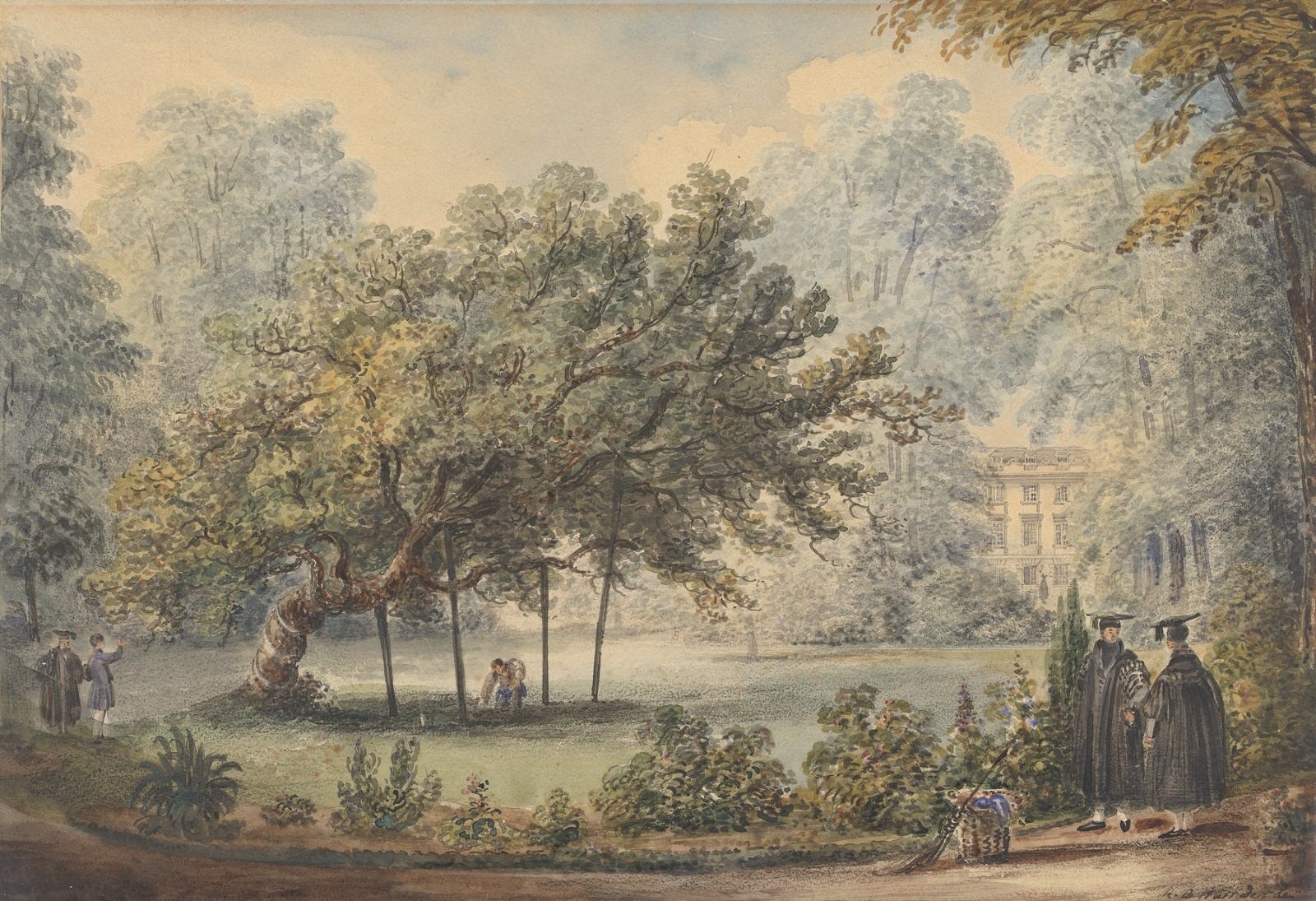
Evolution, metabolism, and ecological interactions are all ways life channels energy flows, converting useful energy into less practical, more randomised forms. Life thrives by temporarily capturing order, but must pay the unavoidable cost of contributing to the universe’s broader journey toward higher entropy.
Let’s take soil as an example.
Soil, which is full of life, has higher entropy than the rock it was made from, conforms to the second law because its living processes and structure disperse energy more effectively than rock and contribute to a greater overall increase in entropy.
Soil represents one of nature’s most remarkable transformations. The rock it is derived from is like a locked vault of energy. As soil forms, the weathering process constructs a porous, chemically reactive environment where energy can flow through countless channels. Water moves through networks of spaces. Organic compounds fuel microscopic communities. Plant roots establish underground highways for nutrient transport. Gases facilitate chemical reactions that are impossible in solid rock.
Each component multiplies the system’s capacity for energy dispersal. Sunlight powers photosynthesis, drives evaporation, and triggers thermal cycles that influence soil chemistry. Microbes orchestrate decomposition processes that release stored energy from organic matter. Earthworms engineer soil structure while redistributing materials throughout different layers.
Soil is busier energetically.
Rock holds energy like a patient miser, slowly absorbing sunlight and gradually releasing warmth. Soil, however, hosts a constant party of activity. Microbes feast on organic matter, accelerating chemical reactions that would crawl along at a geological pace in bare stone. It is a highly efficient method for increasing overall entropy. What looks like increasing order represents the universe’s fundamental drive toward energy dispersal, just happening through biological pathways rather than simple thermal radiation.
This illustrates a crucial subtlety of thermodynamics… local increases in complexity (like fertile soil) can and do arise naturally, but they are always accompanied by greater entropy increases elsewhere in the system.
Here’s the thing.
When humans use soil to channel that energy dissipation into crops and livestock, we speed up the energy degradation. Again, this sounds paradoxical until we give it some thought.
When farmers add synthetic fertilisers to soil, it dramatically increases the availability of nutrients that drive plant growth. This turbocharges the system’s productivity so that crops grow faster, biomass increases, and short-term yields rise. But this accelerated biological production is also a form of faster entropy increase. The soil system, now flooded with concentrated energy in the form of bioavailable nitrogen and phosphorus, for instance, breaks its usual pace of slow, layered cycling of matter through microbes, fungi, and invertebrates. Instead of organic matter being decomposed gradually and nutrients being recycled through food webs, the system bypasses these slower, life-building steps and becomes a simplified pipeline…
input → rapid plant growth → output.
In thermodynamic terms, the farmer has increased the energy gradient. Adding more energy and nutrients into the system speeds up flows but in doing so, also breaks down the internal structures (microbial networks, fungal hyphae, humus formation) that buffer, store, and moderate energy release. The result is a system that becomes more brittle and leaky as microbial diversity falls, organic matter oxidises and erodes, and the soil’s ability to retain water, resist pests, and self-regulate declines. Over time, this leads to declining fertility, requiring even more fertiliser to maintain yields. This is a well-known, if often ignored, positive feedback loop driven by entropy acceleration.
It’s also a wicked paradox.
By forcing biological production to go faster to yield more grain or fatten livestock, intensive agriculture also accelerates entropy increase, not just through energy dispersion, but through the breakdown of complex, evolved systems that normally modulate it. Fertile, living soil is a masterpiece of slow entropy management; synthetic inputs override this and burn through complexity for short-term gains. What follows is a degradation of the very systems that kept entropy in check, leading to long-term disorder despite short-term productivity.
We often think of The Great Acceleration as being about technology, wealth creation and human population growth, but really it was energy dissipation.

Now it is time to expand this example from soil and apply the following premise to the entire human experiment…
The exponential growth of human population and industrial activity represents an unprecedented acceleration of entropy production, burning through millions of years of stored solar energy in mere centuries and destabilising Earth’s previously stable energy flows.
When humans extract and burn fossil fuels, we are releasing in mere centuries energy that was captured and concentrated over millions of years. These fuels exist in extraordinarily low-entropy states as tightly bound carbon-hydrogen compounds that formed through geological processes over vast timescales, buried deep in the Earth.
By combusting them rapidly, we dramatically accelerate entropy increase, releasing this stored energy as heat and converting ordered chemical compounds into more disordered gases like CO₂. This acceleration overwhelms Earth’s natural entropy management systems, especially the carbon cycle, causing atmospheric and oceanic disruption. Industrial civilisation essentially functions as a massive entropy engine, depleting concentrated energy reserves and producing high-entropy outputs at unprecedented speed.
Humans are the embodiment of the Second Law.
So, before we start blaming the fossil fuel companies for their negligence and profiteering, burning fossil energy isn’t unnatural in principle. It follows thermodynamic laws. However, the rate and scale of this energy pulse and its associated entropy spike are unparalleled in Earth’s history, pushing planetary systems into new and often unstable states that threaten the conditions that support complex life.
Human appropriation of fossil energy and conversion of that energy into food and then more people (an additional 6 billion in less than 100 years) just increases entropy and makes low-entropy states less likely. In other words, we should expect disorder to increase.
Unlocking and burning fossil energy at an unprecedented rate, humans created agricultural surpluses, cities, machines, and infrastructure that are all forms of temporary order that require constant inputs to maintain. The global food system, in particular, is a prime example of how this fossil energy has been funnelled into producing enormous quantities of biomass (mostly as human bodies and livestock that now make up 96% of the mammal biomass on the planet) through fertilisers, mechanised farming, irrigation, and transport which are all systems that would be impossible to sustain at current scales without this energy subsidy.
From a thermodynamic perspective, this is a massive entropy engine. We are rapidly converting low-entropy fossil fuel into waste heat, carbon dioxide, degraded soils, polluted water systems, and simplified ecosystems.
I know, I am repeating myself, but I must.
While the human population and its support systems appear to be a form of complex structure, they are built on and dependent upon accelerated degradation of the Earth’s biophysical systems. The more people there are, and the more energy each person consumes, the more the biosphere is pushed into higher-entropy states, where systems lose resilience, feedback loops spiral out of control, and the ability to recover or sustain complexity diminishes.
This process doesn’t make lower-entropy states like intact forests, rich soils, or stable climates impossible, but it does make them less probable. Stability is less likely to re-emerge or be maintained without deliberate restraint and energy redirection.
In thermodynamic terms, we’ve moved the system away from a self-organising equilibrium and into a state where high-entropy outcomes like desertification, biodiversity collapse, atmospheric instability are more likely simply because the energy gradients driving order have been flattened or exhausted.
Thus, our appropriation of fossil energy has let us cheat the limits for a while. But it only works as long as we keep burning through the planet’s stored order. Unless we transition to systems that can sustain complexity on renewable flows, the defiance ends.
And there it is, the fundamental truth… unless it uses renewable flows rather than drawing down the planet’s stored order.
We hear the renewable part from sustainability orthodoxy all the time. What we don’t hear said is anything about the stored order or the self-organising that happens to maintain lower entropy.
Most of the time, we are subject to the following…
Popular measures like carbon footprints, ESG scores, and renewable energy targets focus on relative improvements while ignoring the absolute thermodynamic impossibility of maintaining complex systems without continuous entropy production.
Conservationists in Australia are all familiar with the year 1788. For them, it represents the beginning of large-scale European colonisation, which dramatically altered the continent’s ecosystems. With the arrival of the First Fleet, traditional Aboriginal land management practices were rapidly displaced, and European farming, grazing, and urbanisation began to degrade native habitats.
1788 represents the baseline, what the landscape was like before the profound ecological changes that followed European land use. It is a symbol of the need to protect what remains of Australia’s unique biodiversity, much of which had evolved in isolation for millions of years before the colonial impact.
The overwhelming temptation is to use the 1788 baseline as a historical reference point to assess the extent of ecological change since European colonisation and to guide restoration efforts toward pre-colonial biodiversity and land management practices. Scientists and policymakers use it to identify which species and habitats have been most affected and to set restoration goals that aim to recover elements of pre-colonial ecosystems. For example, reintroducing native species, controlling or eradicating invasive species, and restoring fire regimes that reflect traditional Indigenous practices are all strategies informed by the 1788 benchmark.
At first glance, this is reasonable logic. Triage the landscape and decide on where limited conservation effort goes by using past conditions as a guide for what are tricky, value-laden decisions.
It also neatly sidesteps thermodynamics by assuming that it is possible to reorder the landscape to its lower entropy state that was present before the new energy dissipation practices arrived.

But it’s not just about saving koala habitat.
There is a logic gap that appears throughout mainstream sustainability advocacy, which promotes valuable practices like renewable energy, circular economies, and conservation. However, it often implicitly frames sustainability as the potential elimination of human environmental impact or a return to a static balance with nature.
This framing misunderstands or ignores the thermodynamic foundation of all systems—that entropy inevitably increases, and perfect equilibrium is impossible. Even the most, so called, sustainable practices still degrade energy and increase entropy; they simply do so more slowly or within Earth’s regenerative capacity.
Remember, life is an energy dissipation system pretending to be in order.
This misconception partly stems from how human culture naturally conceptualises problems and solutions, preferring narratives of restoration and balance over acknowledgment of constant change and degradation. But by failing to integrate thermodynamic principles, sustainability movements risk setting unrealistic expectations and designing strategies that don’t account for system dynamics.
A more honest and effective approach would acknowledge that sustainability isn’t about preventing entropy, but about managing its inevitable increase in ways that preserve living possibilities over the longest timeframe. This thermodynamic understanding would strengthen sustainability education and advocacy by grounding it in physical reality rather than idealistic but ultimately unattainable notions of perfect balance or retreat to some historical baseline.
What we like to think of as the balance of nature suggests a stable, self-regulating equilibrium where ecosystems maintain harmony unless disrupted. The pre-1788 conditions. However, from the perspective of thermodynamics, such a balance is inherently temporary and constantly subject to change. Natural systems are always dissipating energy, degrading over time, and moving toward thermodynamic equilibrium, which, in practical terms, is a state of maximum entropy and minimal usable energy.
While ecosystems can exhibit periods of relative stability, these are dynamic, not static. They are far-from-equilibrium systems that survive by dissipating energy. The thermodynamic view reframes the balance of nature as a process of continuous adaptation and flux, not a fixed or ideal state. This is radical for conservation orthodoxy that has stability baked into it, even in the name.
A more effective conservation paradigm would focus less on preserving a perceived historical balance and more on sustaining the energy flows and diversity that allow ecosystems to maintain their dynamic structure in the face of inevitable change.
It’s got nothing to do with 1788 other than at that time the energy system was relatively stable, although it had already been disrupted by 80,000 years’ worth of fire-stick management. But we’ll leave that sacred cow grazing in the paddock.
I have elaborated on the reasons for biodiversity loss in these terms at length, and even wrote a book on why rare things might not matter…

But before we reach the heretical conclusion of entropy’s brutal truth, we should review some of the alternative frameworks that at least give a nod to the Second Law.
Alternative frameworks like ecological economics (Georgescu-Roegen), steady-state economics (Herman Daly), and bioeconomics provide intellectually honest alternatives that work with entropy constraints rather than against them.
The foundational insight of thinkers like Nicholas Georgescu-Roegen is that economic systems are not closed loops of abstract transactions, but open systems embedded in and dependent on the physical environment. Energy and matter flow through economies from low-entropy, high-quality resources to high-entropy waste. Mainstream economics largely overlooks this fact, treating the environment as an externality or assuming infinite substitutability of resources, which leads to unrealistic growth expectations. And it is easy to see why.
More making is innate, both ingrained in our biology and part of the energy dissipation, making growth foundational. Growing, creating, and being more is difficult to avoid, especially when the reality of energy dissipation can happen somewhere else as an externality to your economic action. And so, like the conservation orthodoxy, capitalism ignores thermodynamics.
So, what would and should sustainability look like through the lens of the Second Law?
Economic throughput, the material and energy used and wasted, has to sit inside ecological limits, and GDP growth cannot be decoupled indefinitely from environmental impact. Building on Georgescu-Roegen’s work, Herman Daly framed steady-state economics as a normative project with a simple target to stabilise population and resource consumption at sustainable levels. Steady-state economics treats energy, material and waste constraints as non-negotiable and shifts attention to qualitative development rather than quantitative expansion.
Similarly, ecological economics already puts the economy inside the environment and keeps the focus on energy and material flows. Mainstream models often treat nature as an externality, or lean on the idea of infinite substitutability. This framework recognises the one-way movement of low-entropy, high-quality resources into high-entropy waste through irreversible transformation. Consequently, GDP growth cannot be indefinitely decoupled from environmental impact. Economic activity is constrained by non-negotiable physical limits and the natural pace of regeneration.
Bioeconomics, emerging from Georgescu-Roegen’s thermodynamic critique and later developed through Daly and others, tightens the lens further onto the reproductive and regenerative capacities of ecosystems. How fast can forests regrow, soils replenish, fish stocks recover, or water tables recharge if they are given the chance? These questions are used to change what performance means as something closer to the natural pace of regeneration, not outputs or market efficiency. Harvest timber faster than a forest can regrow, or fish beyond the reproductive rate of a species, and collapse is the predictable outcome, regardless of price.
Bioeconomics treats these biological limits as core constraints that must shape planning from the outset, and it calls for policies and practices that mimic natural systems in their circularity, resilience, and adaptive feedback loops.
Both ecological economics and bioeconomics are intellectually honest because they begin with finite energy, irreversible transformations, and ecological interdependence, rather than abstracting them away. They at least give a nod to thermodynamics. While not politically dominant, they provide rigorous, systems-aware alternatives to the growth-centric paradigms of conventional economics and remain crucial to any sustainable long-term vision.
What they tell us is critical.
True sustainability, aligned with physical laws, requires a fundamental shift in thinking from trying to stop degradation to intelligently managing the inevitable increase in entropy.
This means designing human systems to operate primarily within Earth’s daily energy budget, mainly solar radiation and its derivatives, rather than depleting ancient reserves. It requires embracing dynamic equilibrium rather than static balance and building flexibility, redundancy and adaptability into our systems to accommodate constant change.
A physics-aware sustainability strategy would focus on three key principles:
Living within current energy flows rather than stored ancient energy;
Designing for constant change and adaptability rather than rigid stability; and
Actively regenerating natural systems that effectively dissipate and process energy flows.
There is an acceptance here that entropy will always increase, but recognises that human choices can shape the speed, pattern, and consequences of that increase.
The goal becomes not zero impact, which is thermodynamically impossible, but rather developing systems that increase entropy at rates and in patterns that Earth’s systems can accommodate while maintaining conditions conducive to complex life.
It is hard to state just how radical a shift this is from orthodoxy. Also how extremely unlikely it is to gain any traction in capitalist economic systems.
But we should state it as a premise anyway.
Rather than pursuing impossible sustainability, effective environmental policy must focus on optimising the rate and pattern of entropy increase to maintain conditions conducive to complex life while operating within Earth’s daily energy budget from solar radiation.
Truly effective environmental policy should acknowledge that sustainability does not mean halting entropy, but rather managing its rate and distribution within the biophysical limits set by Earth’s solar energy income.
This is a radical reframe of the sustainability debate to align it with thermodynamic and ecological reality. Rather than chasing the illusion of zero-impact or perpetual equilibrium, or even some nominal ecological state in centuries past, it recognises that all complex systems necessarily produce entropy as they transform energy and materials.
The key insight here is that the goal should not be to eliminate entropy because that is impossible. Instead, the goal is to optimise how and where it occurs, to sustain the planetary conditions that support complex, adaptive life.
By rooting environmental policy in Earth’s daily solar energy budget—roughly 174,000 terawatts received by the planet, of which only a fraction is usable by ecosystems—it imposes a clear and physical ceiling on what is feasible. This is a critical correction to mainstream development models that either ignore energy limits or assume substitution and efficiency gains can overcome them. Solar energy is the primary engine of ecological regeneration, from photosynthesis to climate regulation, and aligning human activity with this budget is a rational and biophysically grounded principle.
But it’s counterintuitive if you’ve been trained by an economy that treated fossil energy as an unlimited cheat code.
And it reframes what we mean by sustainability.
We don’t mean to keep things the same or even going forever. The job is to design social and economic systems that dissipate energy and increase entropy without automatically stripping the biosphere of the nutrient cycling, biodiversity maintenance, and climate regulation that keep it liveable.
The hard part is implementation because the constraints are spatial and temporal. Which activities can be sustained where, and for how long, given local energy flows and ecosystem resilience?
This thermodynamic framing heightens the case for environmental stewardship.

A simple critique of the mainstream sustainability narrative is that it smuggles in technological determinism and an economically linear storyline.
We invent our way out and somehow overpower the fossil fuel incumbents, the political inertia of nation-states, and the rebound effects of economic growth. In a blink, decarbonisation arrives as a technical fix without the necessary political, cultural, and economic transformations.
Critics might also argue that solar panels, wind turbines, and batteries lean hard on critical minerals like lithium, cobalt, and rare earths. Each have critical deposits concentrated in politically unstable or environmentally fragile regions. The mining, processing, and global trade required raise environmental justice issues and can replicate, or even intensify, the extractive dynamics associated with fossil fuels.
And the assumption that demand can be met by swapping inputs misses the intermittent, diffuse, and infrastructure-intensive constraints of renewables. They also come with different but equally challenging spatial, temporal, and material bottlenecks as fossils.
Socially, the transition can deepen inequality unless it is explicitly designed to be just. Job losses in fossil fuel sectors, rising energy prices during the transition period, and weak support for affected communities can produce backlash and political polarisation.
The worry, then, is governance.
Without robust mechanisms for inclusion, transparency, and democratic control, the energy transition risks becoming a technocratic project run by elites and corporations—rather than a genuinely transformative movement grounded in ecological limits and social justice. In short, the transition is essential, but the counterpoint insists it cannot be a green version of business-as-usual. It has to be a rethinking of energy, equity, and ecology.
This is all true.
The billion or so people who live in the Global North are in thrall to any option that maintains business as usual because we are good with it. Even the critics approach sustainability with a first-world mindset, assuming it is possible, were it not for a few political, social, and technical barriers.
But here is the thing.
If human actions comply with the second law of thermodynamics, then sustainability is impossible.
Humans are part of the universal tendency to degrade concentrated energy and increase entropy. Just like microbes breaking down organic matter or forests absorbing and reradiating solar energy, humans are an agent of energy flow, only vastly more powerful and accelerated by technology. Every breath we take, every meal we eat, every building we erect or car we drive, converts energy into more disordered, less usable forms. There is no way around it. Being alive means participating in the increase in entropy.
Sustainability, therefore, cannot mean stopping or reversing this natural process; it can only mean modulating it.
Sustainability, when properly understood, is about shifting how we increase entropy. Instead of explosively depleting long-stored, low-entropy fossil fuels in a few centuries, causing massive ecological and atmospheric disruption in the process, we can choose to use energy sources like sunlight, wind, and biological cycles, which already enter the Earth’s systems constantly and which naturally increase entropy at a manageable rate. It’s about living within the existing energy flows that Earth’s systems can absorb and reprocess, rather than digging deep into ancient reserves and overloading the system’s capacity.
Entropy will always increase, but the speed, scale, and side effects of that increase can be shaped by human choices.
Sustainability should not be about defying thermodynamics; it’s about working with it to build systems that are resilient, adaptive, and that spread energy more gradually and harmoniously. Absolute stasis is impossible, but intelligent moderation is not only possible, it is necessary if we want to maintain a complex civilisation without collapsing the natural systems we depend on.
Reducing carbon emissions, protecting biodiversity, conserving water, promoting renewable energy, and building circular economies are crucial and commendable efforts. However, sustainable practices like organic farming, renewable energy harvesting, or reforestation, still involve ongoing energy use, resource transformation, and ultimately contribute to the gradual spread of entropy. They simply do it more slowly and within the regenerative capacity of Earth’s systems.
The danger is that when sustainability is sold as a return to a static, balanced harmony with nature, it sets unrealistic expectations. Nature itself is dynamic, constantly balancing on the edge of growth and decay, construction and destruction.
Truly sustainable strategies would acknowledge this and build resilience into systems, accepting ongoing change, and focusing not on preventing entropy, but on smoothing, slowing, and redirecting its inevitable increase in ways that preserve living opportunities for as long as possible.
How could this be done?
A physics-consistent version of sustainability would start from the recognition that energy degradation and entropy production are unavoidable.
The goal would not be to preserve a static balance, but to manage the flows of energy and materials so that ecological and social systems can remain adaptive, resilient, and regenerative over long periods. The core principle would be to operate within the daily and seasonal influxes of energy, instead of relying on tapping ancient fossil or mineral reserves at a much faster rate than they are replenished. This means maximising the use of renewable energy, enhancing soil fertility naturally, cycling water wisely, and building infrastructure that is durable, repairable, and recyclable; all designed to work within the rhythms of natural inputs and outputs.
A physics-consistent version would emphasise building systems that are open, flexible, and capable of dynamic equilibrium, rather than rigid or overly engineered solutions that assume a stable environment. Since entropy means that all systems will eventually break down or change, sustainable design must assume disruption and embed redundancy, diversity, and modularity. For example, decentralised energy grids, mixed-crop agriculture, local food webs, and distributed water systems would all be more ‘entropy-aware’ approaches because they accept and adapt to variability rather than trying to impose a fragile order.
Finally, a physics-consistent strategy would focus on regenerating and expanding the capacity of Earth’s natural forests, soils, oceans, and the atmosphere. These entropy buffers which absorb, process, and recycle energy and material flows are the natural mechanisms by which Earth smooths the energy inputs from the sun and maintains a liveable environment. Rather than just reducing harm, the goal would be active stewardship of systems that naturally handle entropy at the planetary scale.
In short, the real sustainability strategy would be:
Live within current energy flows, not stored ancient energy.
Design for constant change, redundancy, and adaptability.
Actively regenerate natural systems that dissipate and absorb energy.
Accept that entropy will always increase, and focus on managing how it increases.
A thermodynamic reframing of sustainability forces a cleaner kind of honesty about the objective. We’re not trying to stop the universe’s drift toward disorder because that is impossible. Instead, we’re negotiating the terms of our participation in entropy’s march.
The conventional sustainability narrative of green growth and technological salvation with some rare species conservation thrown in for good measure, can read like a polite attempt to have our thermodynamic cake and eat it too.
Sure, we can keep burning through Earth’s ancient energy stores like reckless heirs squandering an inheritance. Or we can learn to live within our planetary allowance, with some grace. And that shift from an energy transition story to an energy conservation ethic may be the deepest cultural transformation since the Agricultural Revolution.
It asks us to redefine progress itself, moving from the industrial logic of more, faster, bigger toward the art of thriving within natural limits. A pivot to a more sophisticated relationship with the physical world that sustains us is a magnificent human ambition.
Coming Soon