


Standing in the dairy aisle of your local supermarket, you’re faced with a choice. On one shelf sit blocks of butter, the same golden fat that has graced kitchen tables for thousands of years, each created through the patient churning of cream.
The bright packaging declares that butter earns half a star out of five on the food star rating system.
On an adjacent shelf are tubs of “buttery spread” that gleam with four stars and heart-healthy benefits figured out by modern nutritional wisdom.
The choice prompted by this simple rating system seems obvious. All you have to do is trust the stars.
Food star ratings arrived as a solution to nutritional confusion. The one in my supermarket was developed by the Australian government in collaboration with the food industry and health groups. The Healthy Star Rating system promised a quick, standardised way to compare packaged foods. The more stars, the healthier the choice.
No need to decode complex nutrition panels or understand the biochemistry of fats. Just follow the stars to better health.
It’s democracy applied to nutrition, giving every shopper the power to make informed choices in seconds.
This sounds reasonable until you consider what those stars actually measure and who benefits from the measuring.
Core Idea
The star rating scandal becomes clear when you examine what earns those coveted stars. Butter, made from a single ingredient that humans have consumed and thrived on for millennia, scores poorly because it contains saturated fat.
Meanwhile, highly processed spreads made from industrially extracted canola oil, artificially solidified through hydrogenation and enhanced with synthetic additives, score well because they contain less saturated fat per serving.
And, of course, the system is fundamentally dishonest. The ratings don’t measure food quality or historical human nutrition. They measure compliance with current nutritional orthodoxy, an orthodoxy that has shifted dramatically over recent decades and may shift again.
More troubling, the stars measure compliance with guidelines that favour processed food manufacturers over traditional food producers.
Watch how canola oil is made and you’ll witness an industrial process that would be unrecognisable to any human from the past 99.9% of our species’ history.
Seeds are crushed, heated, treated with hexane solvents, refined, bleached, and deodorised. The resulting oil requires hydrogenation to become spreadable, creating trans fats or artificial textures that our bodies never evolved to process.
Yet this spread receives stars for its compliance with current fat guidelines.
Butter, by contrast, emerges from a process any dairy farmer could explain to a child. Cream from grass-fed cows, agitated until the fat globules clump together, then shaped and salted.
No solvents, no industrial chemistry, no laboratory-designed additives. This food receives half a star because it doesn’t align with dietary guidelines written by committees influenced by food industry lobbying.
The Voluntary Deception
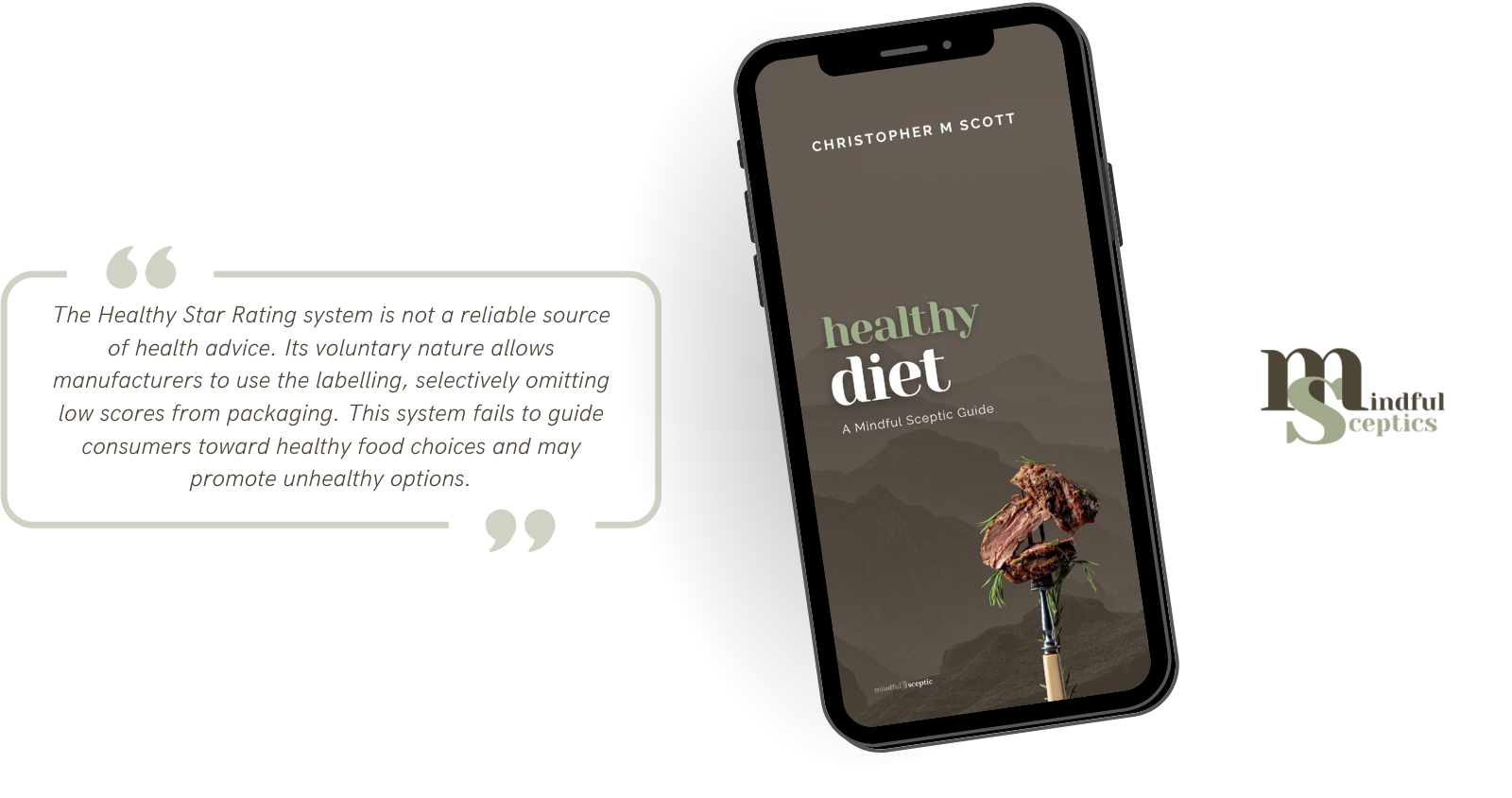
The voluntary nature of star ratings makes the deception even more insidious. Manufacturers can choose when to display their scores, conveniently omitting low ratings while prominently featuring high ones. This creates a selection bias where only foods that game the system well become visible to consumers seeking healthy choices.
Food companies employ teams of nutritionists and food scientists specifically to engineer products that score well on rating systems while maximising profit margins. They understand that most shoppers won’t read ingredient lists or nutrition panels. The stars become a marketing tool disguised as health advice, allowing ultra-processed foods to masquerade as healthy choices.
What should be neutral, evidence-based guidance becomes a vehicle for corporate interests and a fundamental corruption of public health messaging.
The same companies that spend millions marketing hyper-palatable, calorie-dense processed foods now benefit from a government-endorsed system that validates their products as healthy choices.
The Evolutionary Mismatch
Step back from the supermarket shelf for a moment.
For roughly 300,000 years, humans ate foods that occurred naturally or required minimal processing. Animal fats, including butter and other dairy products, provided essential nutrients that supported brain development and general health.
Our ancestors didn’t suffer from the metabolic diseases that plague modern populations despite, or perhaps because of, their consumption of natural fats.
The star rating system ignores this evolutionary context entirely. It treats foods as collections of isolated nutrients rather than whole foods with complex nutritional profiles shaped by millions of years of co-evolution with human physiology. This reductionist approach allows food technologists to create products that appear nutritionally superior on paper while being fundamentally alien to human biology.
Now we see modern Australians suffering from rising rates of obesity, diabetes, and metabolic syndrome despite following dietary guidelines that the star system reinforces.
Thought Challenges
Compare and contrast… Next time you shop for food, ignore the star ratings completely. Instead, read the ingredient lists of competing products. Count how many ingredients you recognise versus how many require a chemistry degree to understand. Now consider if your great-grandmother would recognise the product as food.
Follow the money... Research who funds the organisations that develop dietary guidelines and food rating systems. Notice the revolving door between food industry executives, regulatory bodies, and nutrition research institutions. Consider whether conflicted interests might influence what gets recommended as healthy.
Beyond the Stars
The star rating system fails because it confuses marketing with medicine. It reduces the complex relationship between food and health to a simple scoring system that favours industrial food production over traditional practices.
Worse, it provides the illusion of informed choice while actually limiting real choice through systematic bias.
Real food doesn’t need stars to validate its worth. It needs only the test that humans have applied for thousands of years, does this nourish me over time?
Butter passes that test. Industrial spreads remain unproven by any meaningful historical standard.
Trust your evolutionary inheritance over corporate-designed rating systems. The wisdom embedded in traditional foods has been tested across centuries.
Star ratings have been tested across marketing departments.
Choose accordingly.
Evidence Support
Hasni, M. J. S., et al. (2025). Health Star Rating Labels: A systematic review and future research agenda. Food Quality and Preference, 116, 105457.
TL;DR… synthesises evidence regarding the Health Star Rating (HSR) system’s effectiveness in helping consumers make healthier food choices. The results indicate while HSRs increase nutritional awareness, their impact on actual consumer choices is modest, and several studies report consumer confusion and industry-led inconsistencies in label application.
Relevance to insight… while labels can potentially inform, voluntary participation and label manipulation undermine the intended health guidance, confirming the concerns that the system can mislead or confuse consumers about the nutritional value of processed and ultra-processed foods.
Pelly, F. E., Schrader, G., & Waterworth, P. (2020). Consumers’ Perceptions of the Australian Health Star Rating Labelling Scheme. Nutrients, 12(3), 816.
TL;DR… Australian consumers expressed scepticism about the Health Star Rating scheme, with several stating that the algorithm overrated discretionary foods such as sweet biscuits and artificially sweetened beverages. Consumers wanted more transparency about how ratings were calculated and noted distrust for HSR when it appeared on heavily processed products.
Relevance to insight… real-world, consumer-derived evidence that current star ratings on processed and ultra-processed foods are seen as potentially flawed and confusing, directly supporting concerns that such schemes may mislead rather than clarify for health-conscious shoppers.
Shangguan, S., Afshin, A., Shulkin, M., Ma, W., Zheng, P., Micha, R., ... & Mozaffarian, D. (2019). A meta-analysis of food labeling effects on consumer diet behaviors and industry practices. American Journal of Preventive Medicine, 56(2), 300-314.
TL;DR… food labelling, including front-of-pack systems, leads to small improvements in consumer purchasing patterns but very modest improvements in actual intake and product reformulation. The review highlights that industry selectively applies voluntary labelling to healthier products, diluting the system’s effectiveness and potentially creating a ‘health halo’ for some processed foods.
Relevance to insight… labelling systems—particularly when voluntary—are inconsistently applied and sometimes strategically used by industry to shift perceptions of product healthfulness, substantiating key criticism that manipulated ratings can mislead rather than inform.
Ganderats-Fuentes, M., & Morgan, S. (2023). Front-of-Package Nutrition Labeling and Its Impact on Food Industry Practices: A Systematic Review of the Evidence. Nutrients, 15(6), 1298.
TL;DR… how food manufacturers respond to front-of-pack labelling with strategic behaviour: e.g., selectively labelling only healthier products, minor reformulations to cross rating thresholds, and leveraging voluntary labels as marketing tools. There is a limited effect on making unhealthy products healthier.
Relevance to insight… a mechanism by which front-of-pack star ratings and similar systems end up misleading the public. Instead of universal clarity, manufacturers can ‘game’ the labels, especially with processed foods, underscoring the need for cautious trust in star ratings.
Barrett, E. M., Pettigrew, S., Neal, B., Rayner, M., Coyle, D. H., Jones, A., ... & Wu, J. H. (2025). Modifying the Health Star Rating nutrient profiling algorithm to account for ultra‐processing. Nutrition & Dietetics, 82(1), 53-63.
TL;DR… analysis of >25,000 packaged products found that when the HSR algorithm was modified to penalise ultra-processing, the median star rating for processed foods dropped substantially. The current HSR system often assigns high ratings to products that are technically ultra-processed, whereas revised algorithms offer ratings more in line with actual dietary recommendations.
Relevance to insight… the current Health Star Rating system can assign misleadingly high scores to ultra-processed foods, reinforcing the argument that star ratings in their present form risk confusing consumers and promoting less healthy options as “good choices.”
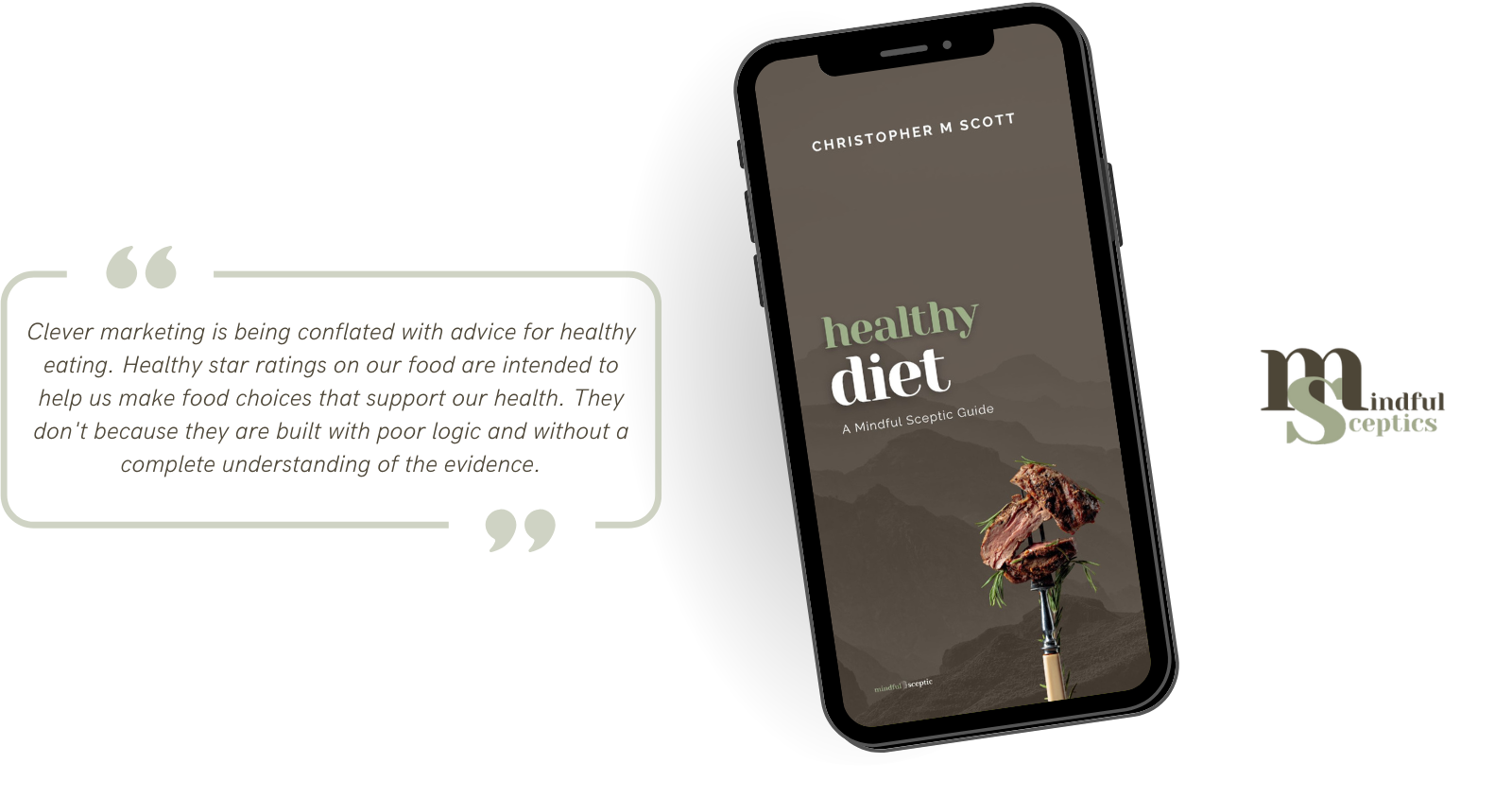
These papers collectively demonstrate, with peer-reviewed rigour, that front-of-pack star-rating systems can confuse or mislead consumers when applied to processed and ultra-processed foods, due to industry manipulation, algorithmic issues, lack of transparency, and the voluntary nature of label application. They reinforce the need for critical scepticism about the face-value nutritional meaning of such simplified rating schemes.