


When I can’t get to sleep at night, which is thankfully rare, I replay my last golf round in my head. The great drive down the first, followed by the chunked 8-iron short of the green and the duffed chip, rescued with a putt that, for once, didn’t lip out.
It seems that just a minute or two recounting my happy place is enough to turn off any internal chatter, and I am off.
As an Australian, it is sensible of me not to count sheep.
At a normal mental pace of articulating every word clearly in my head it would take me roughly 11 years of continuous, non-stop 24/7 thinking to count all the sheep in the country in 2026. And if I actually fell asleep for 8 hours a night, highly likely, but carried on mental counting for 16 hours a day, it would take approximately 16 years to count them all.
The Hard Number
As of 2026, Australia is running roughly
75 million sheep
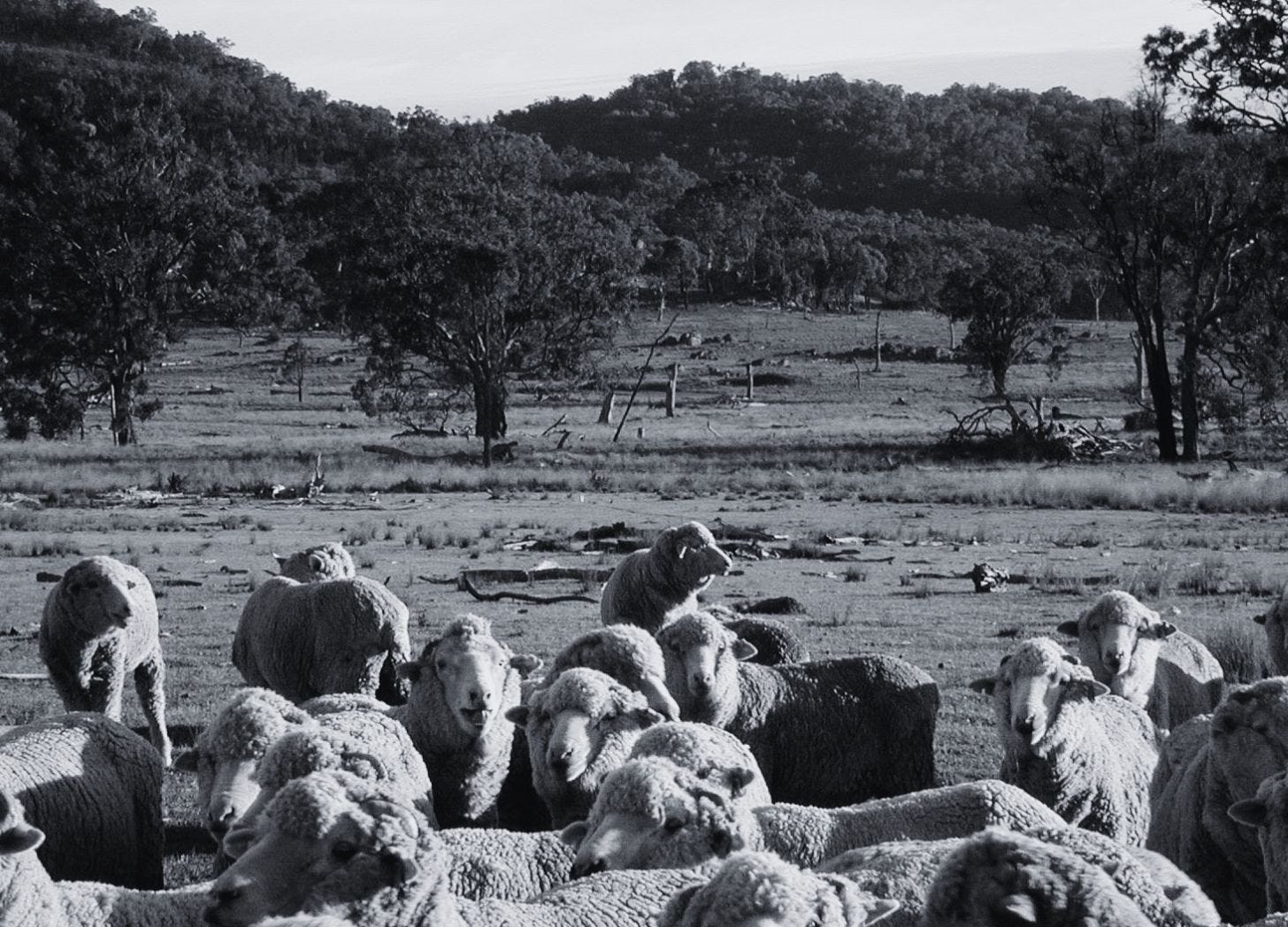
That is three sheep for every person, a biological fleet of herbivores distributed across outback stations, wheat belts, and high rainfall paddocks, turning grass, legumes, and labour into wool and meat.
About half of the total population leaves the system every year through slaughter or natural death, only to be replaced by a fresh crop of lambs.
While 75 million sounds like a lot, it is far below Australia’s historical peak in the early 1970s, when the flock reached nearly 180 million head, and there were 14 sheep for every person. The industry has since shifted from a focus on wool to a more balanced meat-and-wool production model.
Despite having fewer sheep than in the past, improved genetics mean that individual sheep today produce more wool and reach higher meat weights faster than they did 30 years ago.
Australia is the world’s largest exporter of sheep meat at 942,000 tonnes in 2025, two thirds of it lamb. Australia also produces about 90% of the world’s fine wool for clothing, although the total volume has trended downward as the industry has prioritised quality, measured as finer microns, over raw quantity.
The 2025 volume of 280,000 tonnes of greasy wool is significantly lower than the 1990s peak which exceeded one million tonnes, reflecting the long-term shift from wool-only Merino sheep to meat-producing crossbreeds, but it still has a high market value at approximately A$2.9 billion or roughly 3% of Australia’s total Gross Value of Agricultural Production (GVAP) in 2025.
The reality is that a flock of this size is a lot of animals on land. And the production system has a high demand for feed, water, fencing, freight, shearing sheds, abattoirs, and a steady drawdown on soil fertility.
Framing the hard number
Seventy-five million is difficult to feel. It is a enormous number on a huge continent. You certainly can’t count it out.
Let’s see about moving sheep around to get some idea of the scale.
While a cattle truck is often limited to 2 decks due to the height and weight of the animals, sheep are typically transported on four levels, called quad-decks. This stacking means a semi-trailer might carry 400 and a B-Double 850 animals.
So for a thousand sheep you would need at least a dozen lorries.
Try to move a million sheep down the road, and you would need 12,000 truckloads. More than one a minute, night and day, for a week.
Move a million sheep 100km and the trucks would burn through roughly 660,000 litres of diesel assuming a conservative 55 litres of diesel per truck per 100km. Your average grey nomad, one of the half a million+ retired Australians with an urge to get on the road, with his Ford Ranger pulling his caravan to the coast for holidays might use 2,000 litres a year. The average Sydney commuter, dreaming of his nomad years, uses 750 litres of fuel per year driving to and from work.
Perhaps it is easier to imagine the land area needed for 75 million sheep.
Land needed for sheep isn’t an easy number to pin down. Some sheep are reared on rangeland and others in mixed farming operations, but sheep producers are said to manage about 65 million hectares across Australia.
That is a continent-wide footprint of land area that is almost the same size as Afghanistan. France is slightly smaller.
Behind the hard number
Sheep look benign on a hillside. You can almost imagine the grass in, wool and meat out. But the chemistry is less pastoral.
Wool and muscle are rich in nitrogen. Wool at ~15% nitrogen is significantly more nitrogen-dense than meat (~3.5% nitrogen) because it is composed almost entirely of keratin, a tough, insoluble structural protein.
So every bale of wool or truckload of lambs that leaves the farm carries nitrogen with it. Sheep farming, in that sense, is a quiet act of mining. The grass pulls nitrogen from the soil, the sheep pull it from the grass, and the farmer sells it down the road.
Remove nitrogen year after year and the soil is depleted and productivity slides. What leaves the gate has to be replaced, or the system runs down.
That is why Australian sheep pastures are rarely just grass. They are mixed with clover or lucerne, legumes that fix nitrogen from the atmosphere and return it to the soil. These legumes can fix between 50 and 150 kg of Nitrogen per hectare per year from the atmosphere. The pasture rebuilds the nitrogen pool to provide the high-protein diet sheep need to grow fibre and muscle, without forcing the farmer to pour on massive amounts of synthetic nitrogen fertiliser.
In the outback stations where sheep graze native vegetation the soil is typically covered with a biocrust that, depending on the health of the crust and rainfall, this can fix nitrogen at rates from 0.5 kg per hectare per year in degraded or very dry soil to 10+ kg in healthy, moss-and-lichen-dominated zones. While low compared to clovers, biocrusts provide 15% to 50% of the total nitrogen required by native grasses in the outback. It’s why it is still possible to rear sheep out there.
In 2026, wool production is forecast at 245,000 tonnes of greasy wool and total sheep meat at about 872,000 tonnes.
Nitrogen exported in these products is about 67,350 tonnes of nitrogen per year across Australia.
Set against 65 million hectares, that becomes about 1 kg of nitrogen per hectare per year on a national average.
That national average can seem like a small and a soothing number because it is diluted by vast rangelands with very low stocking rates and the legumes on the pastures. In the higher rainfall and wheat belt country where most sheep actually earn their keep, the per-hectare ledger gets tighter, faster. The system becomes less about having sheep and more about continuously maintaining the pasture engine that feeds them.
What is missing from the popular sheep story with its head counts and tonnes of product is that natural sheep production is still a managed nitrogen economy.
Australian farmers often replace nitrogen via legumes in pasture and rotations rather than heavy synthetic nitrogen use in sheep systems, which is not magic, it is a biological subsidy. Nitrogen is so valuable that waste wool that is too dirty or too coarse for clothing is now being processed into pellets and sold as a premium, slow-release organic fertiliser.
Pasture rotation that has its own conditions and failure modes. If rainfall fails, or pasture composition shifts, or a paddock is pushed too hard, the replacement side of the ledger gets shaky.
Behind the hard number of 75 million sheep is a nitrogen economy run on biology.
And there is a deeper pattern
Headcount, in this case of sheep, is an easily recognised and agreed metric, as is tonnes of meat or wool that the system generates.
Export value becomes the justification for the national herd just as earnings are to the individual farmer. For both the constraint stays out of sight.
Institutions like this because it makes reporting tidy. A single national number can be put in a media release and repeated without anyone having to argue about mixed farming boundaries or regional stocking rates.
It looks transparent while protecting the system from awkward questions about inputs, depletion, and what must be true next season for the story to stay flattering.
There is also a second-order effect that comes with better productivity narratives. As sheep get more productive, it becomes easier to justify running the system harder.
Efficiency tends to make constraints feel less onerous. That can lift total throughput, and then the nutrient and land pressures reappear one level up, shifted into a new baseline that looks normal until the season turns. A version of Jevons paradox.
This deeper pattern of failing to acknowledge, communicate or even recognise constraints and externalities of the hard number is common to the industrial human enterprise.
Don’t worry, she’ll be right.
Being a Mindful Sceptic
A mindful sceptic uses curiosity and critical thinking to rigorously question ideas and demand evidence, while being aware of what matters, when it matters, and how to avoid the trap of cynicism.
Treat headcount, especially national numbers, as a headline. Figure out what’s behind it, what the flock implies for land, feed, freight, and fertility before you discuss virtue or vice.
Keep a ledger mindset. Every tonne that leaves a pasture or paddock is an outflow. Ask what replaces it, when, and under what rainfall and management conditions.
Refuse clean boundaries. Mixed enterprises blur sheep land and crop land. Demand the boundary before you accept the conclusion.
Look for the theatre, especially the ‘ever so tidy’ reporting that forgot to mention the messy constraints.
Watch for displacement. When one part of the farm system looks improved, check whether pressure was shifted into another paddock, another season, or another input.
This hard number of 75 million is significant, dramatic even, and big enough to go way beyond everyday comprehension. But this does not make it or what represents bad.
It just tells us that people need to eat high-quality protein and that wool is a desirable product for clothing. That the land can produce these products at scale is one way of using it… and humans use land. We constantly do this.
Is it the best use, the most productive or the most sustainable? These are the slippery questions worth asking.
Mindful Momentum
Pick one sheep product you buy regularly, lamb or wool. This week, write down what you actually know about its origin in three lines, region, production system, and what replaces soil nutrients there. If you cannot fill the lines without guessing, label the gaps, not the product.
If you have friends in mixed farming, ask a single precise question. In your rotation, which paddocks are doing the nitrogen work this year, and what would break if you lost one wet season. Then stop talking and listen for the constraint.
Key Points
Australia currently runs about 75 million sheep across 65 million hectares down from an early 1970s peak of nearly 180 million.
Australia is the world’s top exporter of sheep meat and supplies ~90% of global fine wool, relying on improved genetics to achieve higher wool yields and faster meat growth per animal than 30 years ago.
Wool and muscle represent a continuous nutrient drain, removing approximately 67,350 tonnes of nitrogen from Australian soils every year.
Instead of heavy synthetic fertilisers, the production system relies on biological nitrogen fixation from pasture legumes (like clover and lucerne) and native soil biocrusts to replace lost nutrients.
National headcounts and export values hide messy environmental constraints and efficiency paradoxes, better is a ‘ledger mindset’ that tracks nutrient outflows and replacement conditions rather than output alone.
Back to the front
Australia has produced a lot of sheep. The order of magnitude estimate for the total head count reared since the first sheep arrived in 1788 is around 5 billion.
Counting this many sheep would take me 919 years of non-stop, continuous 24/7 thinking. Because I would be asleep faster than reminiscing over golf shots, if I counted for 16 hours a day, it would take roughly 1,378 years.
That is a lot of sheep.