


Think of Africa in pre-colonial times, say around 1800, when in Europe, James Watt’s steam engines were transforming the textile industry and mining, people were flocking from rural farms to the smoke stacks of growing cities like Manchester and Birmingham, and the French Revolution had cooled into the Napoleonic era.
Africa in 1800 was anything but empty. Usman dan Fodio was consolidating the Sokoto Caliphate from fragmented city-states in West Africa, the Asante Empire had reached a pinnacle of wealth and military organisation in the forest regions of modern-day Ghana, and further south the pressures of population growth and tightening resources were producing the military innovations that would ignite the Mfecane and redraw the region’s demographics entirely.
On the eastern coast, the Omani Sultanate ran a commercial empire out of Zanzibar built on ivory, cloves, and an intensifying slave trade, while on the west coast the Transatlantic Slave Trade was entering its final legal decade under British law. The European Scramble had not yet begun. The continent was already in motion, and there were plenty of people.
Whilst there were no continent-wide censuses, most historical demographers agree on a range of 90 million to 100 million people in Africa in 1800, roughly 10% of the total global population which hit 1 billion around 1804.
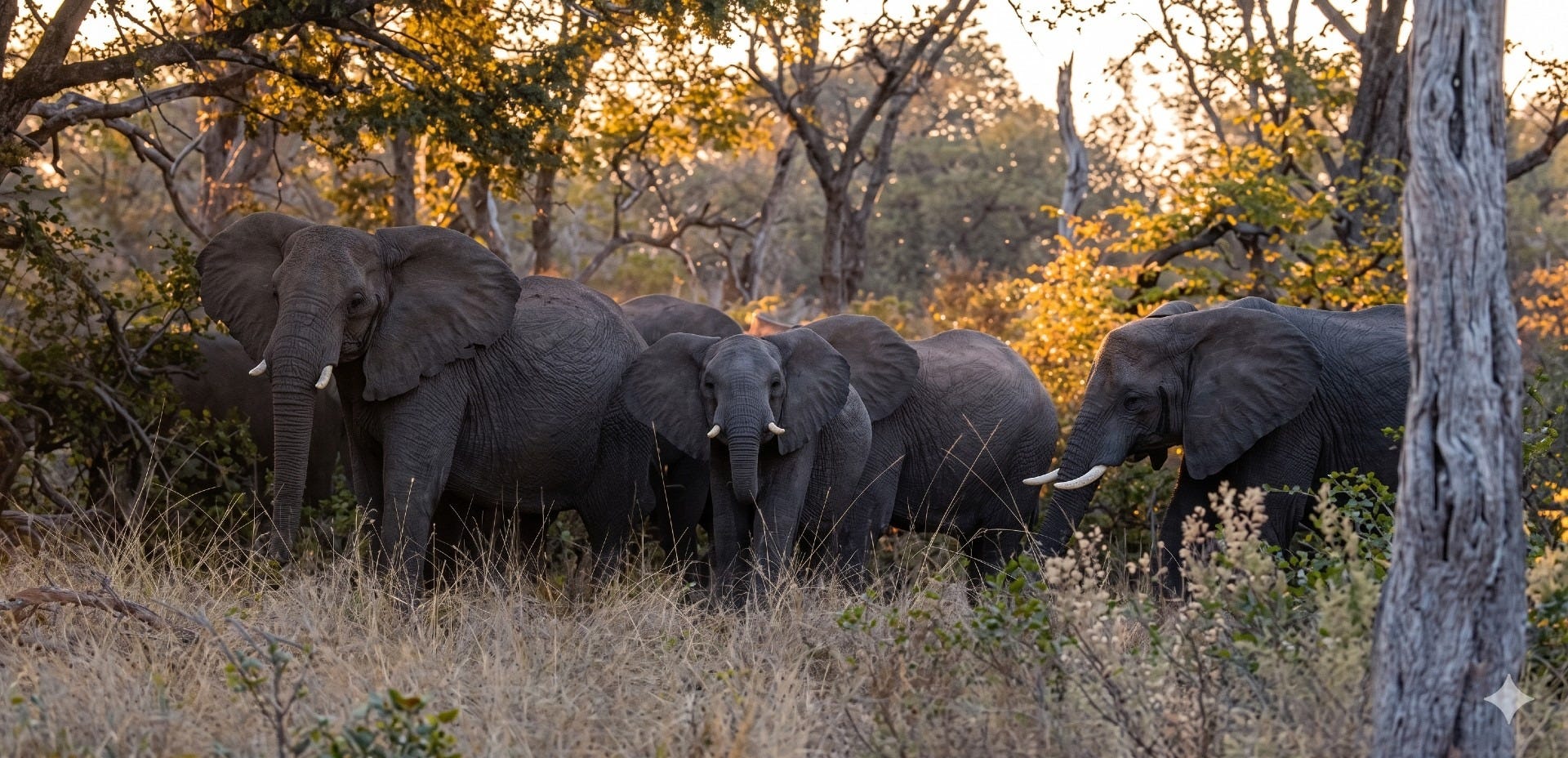
At this time the African continent was also home to between 25 million and 40 million elephants, making the ratio of humans to elephants at the lower end of elephant numbers roughly 4 to 1.
Estimating elephant populations from the 18th century demands a forensic approach to ecology. Systematic aerial surveys did not exist until the 1960s, so scientists rely primarily on back-projection modelling, combining historical ivory export data with estimates of available habitat and carrying capacity. Analysing customs records from major trade hubs like Zanzibar, London, and Antwerp allows researchers to calculate the extraction rate. From the tonnage of ivory recorded, they determine how many elephants were killed, factor in the species’ natural reproductive rate, and work backward to the minimum standing population required to sustain those losses without the species collapsing entirely.
For the year 1800, before the height of the industrial ivory trade and the widespread introduction of modern firearms to the continent, populations were at their peak. Modelling based on the total available elephant range, covering nearly the entire continent south of the Sahara, produces an estimate of 25 to 40 million. Elephants were not yet confined to protected pockets. They functioned as ecosystem engineers across vast savannas and dense forests, and the sheer scale of the population meant that the early ivory trade had a relatively negligible impact on total numbers.
This abundance was possible because much of the continent remained a pristine wilderness. Human settlements were concentrated, leaving vast, connected ecosystems where herds could roam, shape the landscape. The herds moved along ancient migratory paths that often doubled as human trade routes.
But as the century progressed, ivory transitioned from a rare luxury to a material used for mass-produced items like piano keys, billiard balls, and combs. This skyrocketing global demand, paired with the introduction of more accurate firearms, sparked an era of intensive hunting.
By mid-century, the elephant population had already begun to slide toward 18 million before the surge in exploration led by figures like David Livingstone, Richard Burton and John Hanning Speke who, although nominally on epic journeys of scientific discovery, effectively mapped the landscape to professional hunters. This coincided with the arrival of long-range, breech-loading rifles that made hunting exponentially more efficient and deadly. By the 1860s, the moving frontier of ivory extraction was clearing out entire regions of elephants to feed the insatiable warehouses of ports like Zanzibar and Khartoum.
By the time of the “Scramble for Africa” in 1884, the hunting had reached its peak, often inextricably linked to the slave trade. Enslaved people were frequently used as human pack animals to carry heavy tusks through thousands of miles of jungle to the coast, where both the ivory and the carriers were sold.
By 1900, the African elephant population had been reduced to between 5 and 10 million. In just one hundred years, over half of the continent’s elephants had been lost, leaving behind a scarred landscape and a surviving population that had learned to fear human contact, forever altering their migratory behaviours.
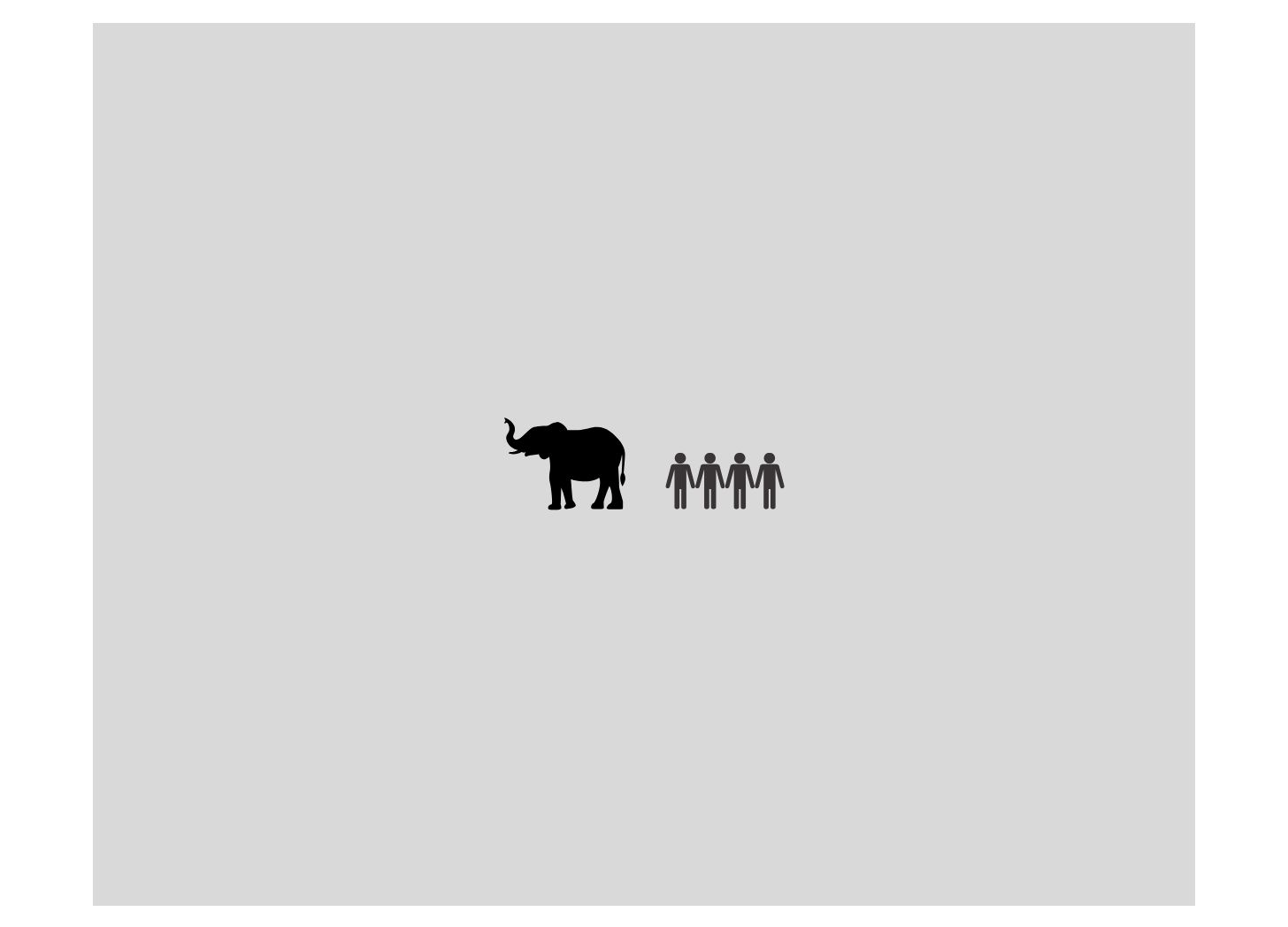
Despite the ravages of slavery, colonialism and disease, the human population had grown slightly, the elephant population had been cut by more than half so there were now 20 people for every elephant.
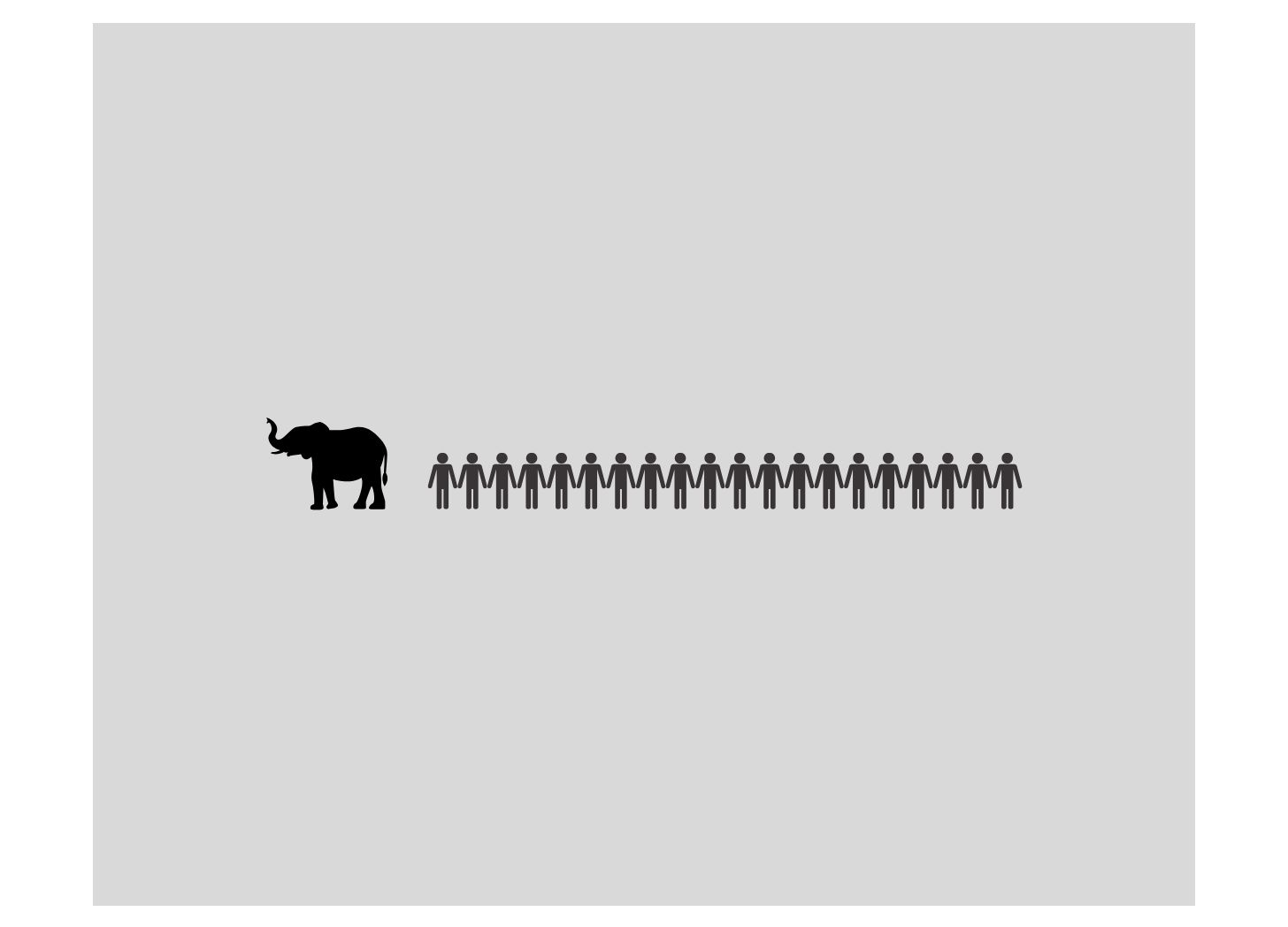
In what was then Southern Rhodesia (now Zimbabwe), the situation was even more extreme. Because the region was a primary target for professional big game hunters and early white settlers, the elephant population had been nearly wiped out, down to a few thousand individuals. Here, the ratio was 1 elephant for every 250 people.
From 1900 to 1945, African elephants received a rare reprieve. The 19th-century population reduction prompted colonial governments to respond with early conservation rules, including the 1900 London Convention. Hunting shifted from a free-for-all to a regulated system of permits, reserves, and enforcement. The motive was often to protect European hunting privileges rather than wildlife for its own sake, but these measures slowed the slaughter and allowed battered herds to stabilise.
Between 1920 and 1940, elephant numbers began recovering in specific regions. The establishment of new parks, including Kruger and Albert (now Virunga), provided sanctuaries. Outbreaks of rinderpest and sleeping sickness inadvertently assisted the recovery, pushing human populations and livestock out of vast areas and leaving behind accidental wilderness where elephants could move freely. The Great Depression then crushed the global luxury ivory market, and commercial hunting pressure dropped sharply as prices bottomed out.
By 1945, the African elephant population was estimated at between 3 and 5 million. With a human population of roughly 180 million at the time, the ratio sat at approximately one elephant for every 40 to 60 people. Wartime travel restrictions had also stalled international trophy hunting, providing a brief window of relative peace. The stability was fragile. The end of the war brought surplus military firearms, a booming global economy, and an ivory market poised to restart the cycle.
In the post-war era of the 1950s, elephants appeared to surge, though this was largely a compression effect. Elephants were being pushed out of developing land and into the newly created national parks of East and Southern Africa, and while local densities reached a 20th-century peak inside these refuges, the total continental population likely remained within the 3 to 5 million. As independence movements swept the continent through the 1960s, many new governments kept conservation zones intact, recognising their value for tourism and national revenue.
Elephant numbers remained relatively stable through the mid-century, but the human population was expanding rapidly, reaching 285 million by 1960. That demographic shift began tilting the competition for land and resources. It set the stage for the range contractions and poaching crises that would follow in the 1970s and 1980s.
The 1970s broke the temporary equilibrium.
A global ivory rush took hold. Demand in Asia and the West sent prices soaring, and ivory became white gold, funding civil wars and militias across the continent. The AK-47 changed the economics of killing. One gun could take out a whole herd. What had been scattered poaching turned into industrial slaughter.
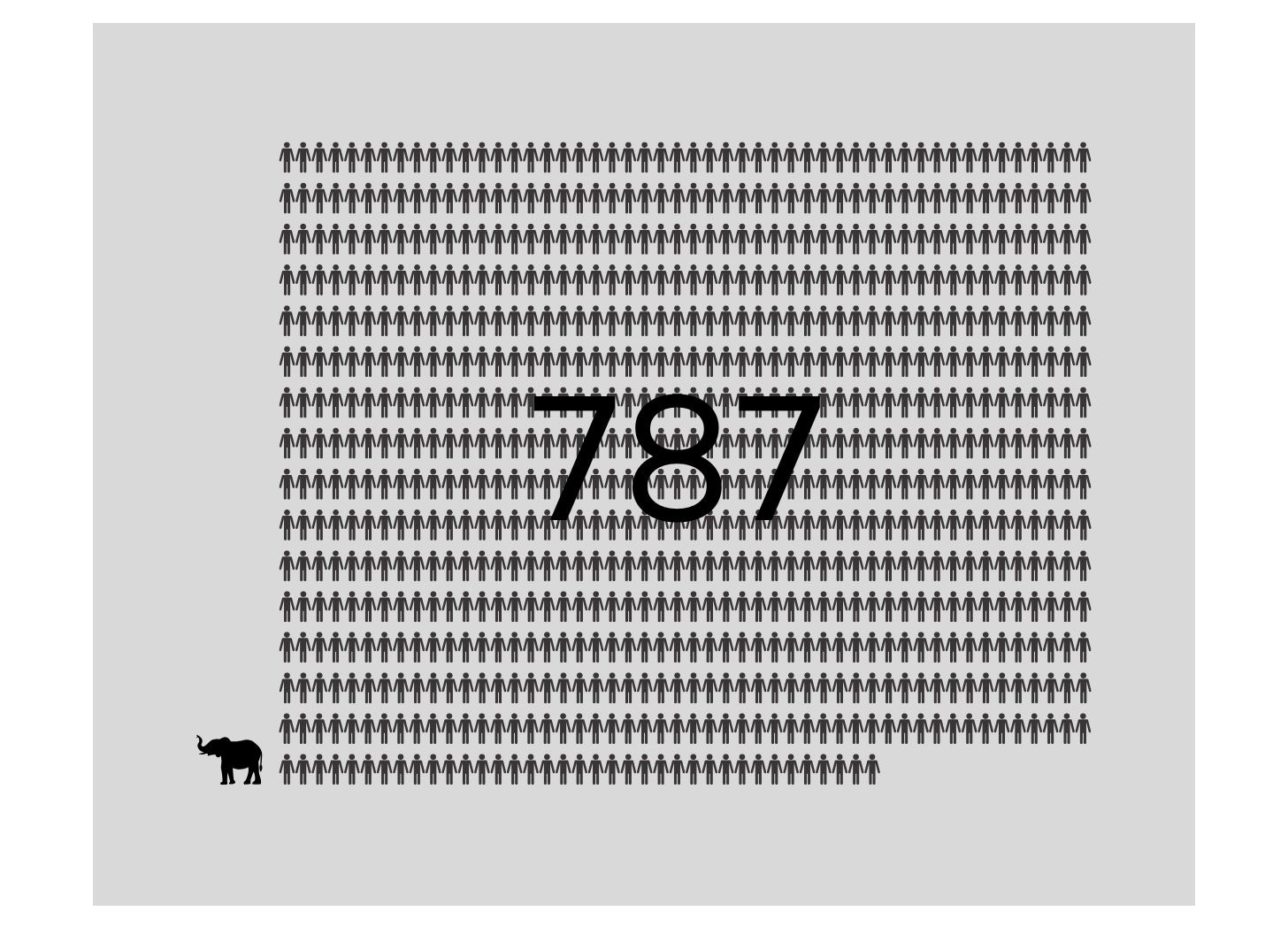
By 1987, the elephant population had collapsed from millions to around 750,000. The speed of the decline was unprecedented for a large mammal in modern history. The ecological landscape of Africa had been fundamentally transformed, with the ratio of elephants to people reaching one elephant for every 787 humans.
It is hard to imagine the change to 750,000 animals from perhaps 25 million, not just in the numbers but in what the reduction meant for the vegetation. Elephants are truck sized throughput machines moving through habitats at will, until they weren’t. This was the condition of the landscape I stepped into in 1988, though I did not yet know how to read it.
I met my first wild elephant when I was 27 years old.
It was early 1988 at Ruckomechi Tsetse Research Station in the Zambezi valley, Zimbabwe. The station had long served as a base for figuring out how to stop African trypanosomiasis—sleeping sickness—caused by Trypanosoma parasites transmitted through tsetse fly bites. A close variant hits livestock too (often called nagana), dragging down animal health and productivity and putting real pressure on agriculture across parts of sub-Saharan Africa. The newest eradication bet at the time was a blue target trap, dosed with pheromones and impregnated with insecticide, drawing flies in and killing them.
I had just embarked on an idyllic postdoctoral fellowship, and was in Ruckomechi with my late friend and colleague Dr Steven Telford running a field trip for a group of behavioural ecology students from the University of Zimbabwe.
It is easy to teach students about ecology in such an astonishing natural laboratory. And I was still awed by the bush, a total greenhorn, having been in Africa for just 6 months.
I had seen elephants on a safari to Hwange National Park and Victoria Falls a couple of months earlier, but here it was different.
Walking across the camp from my rondavel to the mess hall, I saw a young female elephant browsing a Bauhinia bush less than 100m away. I stopped and just watched for several minutes. She knew I was there but seemed happy to keep browsing. I edged closer. I was on my own and had no protection, but I kept stepping slowly towards her.
At about 40m my courage was used up, and I just stood still. I listened to her feed, taking in the sight, smell and feel. Awe is a good word, but barely covered what I was feeling.
My first encounter on foot, a privilege I will never forget. I was young, probably about the same age as the elephant. Yet, I was buzzing like an infant in kindergarten.
The elephant was very much at home in her skin and her place. I was a guest, she owned the habitat. As young as I was, I could feel her presence.
I later learned that there was a herd that regularly wandered through the camp. Humans on foot were part of what this herd knew, so they were relaxed. Not all elephants are so accommodating, but in the same way that herds get used to safari vehicles, so these elephants were with people wearing khaki shirts.
Something about that encounter in Ruckomechi has stayed with me. I think it was how much a part of nature I was in that moment. Not separate from it. Although this explanation has only made sense to me recently.
Even now, I can recognise the smell of an elephant. Anyone who has been on an Africa wildlife safari can.
But in 1988, the African elephant was in the throes of a continent-wide crisis, with the total population plummeting past the estimated 750,000, roughly half of what it had been just eight years prior. The massive surge in illegal poaching to satisfy a global ivory market, claiming tens of thousands of animals annually across East and Central Africa.
Zimbabwe stood as a stark exception to this trend. Through a strict, state-managed conservation model that treated elephants as a renewable resource, the country maintained a stable and growing population of roughly 52,000 at a time when its neighbours were seeing their herds decimated.
During this poaching crisis, the ratio in the rest of Africa was still 1 elephant for every 787 humans. However, in Zimbabwe, the ratio remained significantly tighter at 1 elephant for every 178 people.
In 1989, I moved to neighbouring Botswana to a lectureship at the newly minted University of Botswana. I saw many elephants in my seven years in that wonderful country. I even had a lower jaw bone in the corner of my office after stumbling across it on a field trip to Tuli Block in the far east of the country.
Botswana had roughly 90,000 elephants in the early 1990s, a significant proportion of the total on the continent. Or was it 100,000? The exact number was unknown, but it became hugely contentious because whatever the number, it was increasing.
This was a conservation challenge almost no one else had. The elephant population was booming while the rest of the continent was declining. Across Africa, attention was fixed on the 1989 international ivory ban and stopping poachers. But in Botswana, there was a problem of plenty and a risk of too many.
At the time, I argued that elephant densities were getting high enough to drive real habitat degradation, especially in riparian woodlands. And I pushed for a shift away from purely emotional or protectionist instincts toward a more pragmatic, science-based management strategy.
Dangerfield J.M. (1994) Renewed dialogue on elephant management in Botswana. Kalahari Conservation Society Newsletter 44: 1-4
The following year, I pushed back on the obsession with total elephant counts. I argued that raw census numbers are a dangerously shallow measure of success because a single headline figure means little without details of ecological impact and local distribution.
Dangerfield J.M. (1995) What is in a number? Kalahari Conservation Society Newsletter 47: 9
I pointed out that high-density hotspots can turn into localised ecological deserts, even when national totals look healthy. And I challenged the idea of a fixed carrying capacity, arguing instead that elephant numbers have to be balanced against the whole system—vegetation, soil health, everything.
My critique of the emotional, hands-off approach was that in places like Botswana, high numbers aren’t just a win. They’re a trigger for active management before the landscape tips into crisis.
A version of this warning played out.
In Botswana, the refusal to actively manage elephant numbers, shaped by international pressure and a long-standing hunting ban, resulted in ongoing elephant induced habitat conversion. Along the Chobe and Okavango systems, large stretches of riparian woodland shifted into elephant-impacted scrub, with mature trees pushed over faster than they could regenerate. Biodiversity took the hit. Elephant numbers stayed high, while specialist species tied to dense canopy and specific woodland structure, including the Chobe bushbuck and some giraffe populations, declined.
By 2025, Botswana and Zimbabwe had moved away from late-20th-century passive protectionism toward pragmatic management, including the return of trophy hunting and community-led culling. In a fragmented landscape where elephants cannot simply migrate away from degraded areas, human intervention becomes part of protecting the broader ecosystem. The conversation has shifted from saving the elephant to managing a landscape where 130,000 ecosystem engineers (a trendy ecological term at the time), must coexist with a human population that has grown nearly six-fold since 1960.
While all this was going on, human numbers across the continent surged, further steepening the ratio of humans to elephants.
It is tempting, and wrong, to read the human side of this ratio as an African story. However, the population expanding rapidly through the 1960s and beyond was following the same logic as every other human population that gained access to fossil energy, modern medicine, and agricultural intensification. James Watt’s engines, which opened this account, did not stay in Birmingham. The thermodynamic windfall that has briefly and dramatically inflated the human carrying capacity of the planet was not a gift selectively offered. The appetite for development is universal once the door opens.
Africa’s demographic surge is not the cause of the elephant’s predicament. It is the same engine, arriving later, running on the same fuel. The ratio is a civilisational fingerprint, not a racial one.
So now it is 2026 and there are over 8 billion humans on Earth.
Africa’s elephant population is estimated to be approximately 415,000 to 550,000 individuals, and we are still not sure exactly how many. We do know that Botswana has a crowded elephant population, predominantly in and around the Okavango Delta, that comprises a quarter of the total. We also know that continent wide, there are fewer wild elephants than in 1988.
But what about the ratio?
In 2026, the gap between the human and elephant populations in Africa has reached a staggering historical extreme. We are now living in a reality that would have been unimaginable to the people of 1800 or even 1960.
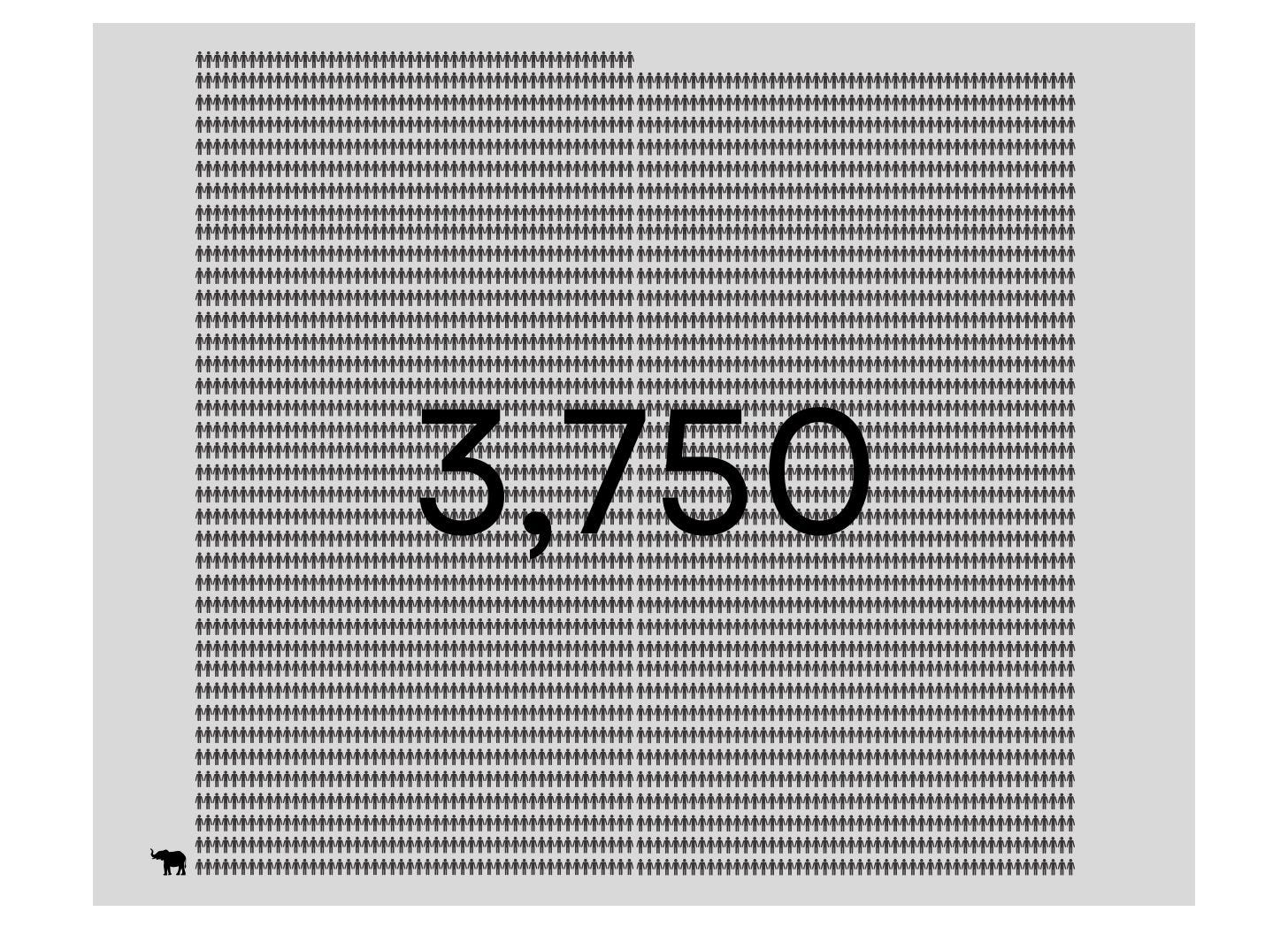
Today, the roughly 415,000 elephants that remain are not wild in any complete sense of the word. They exist within boundaries we drew, under management plans we wrote, their survival contingent on decisions made in capitals and conference rooms far from the Chobe floodplain.
We call this conservation.
It is, more accurately, the final act of administration over something that was once simply alive on its own terms.
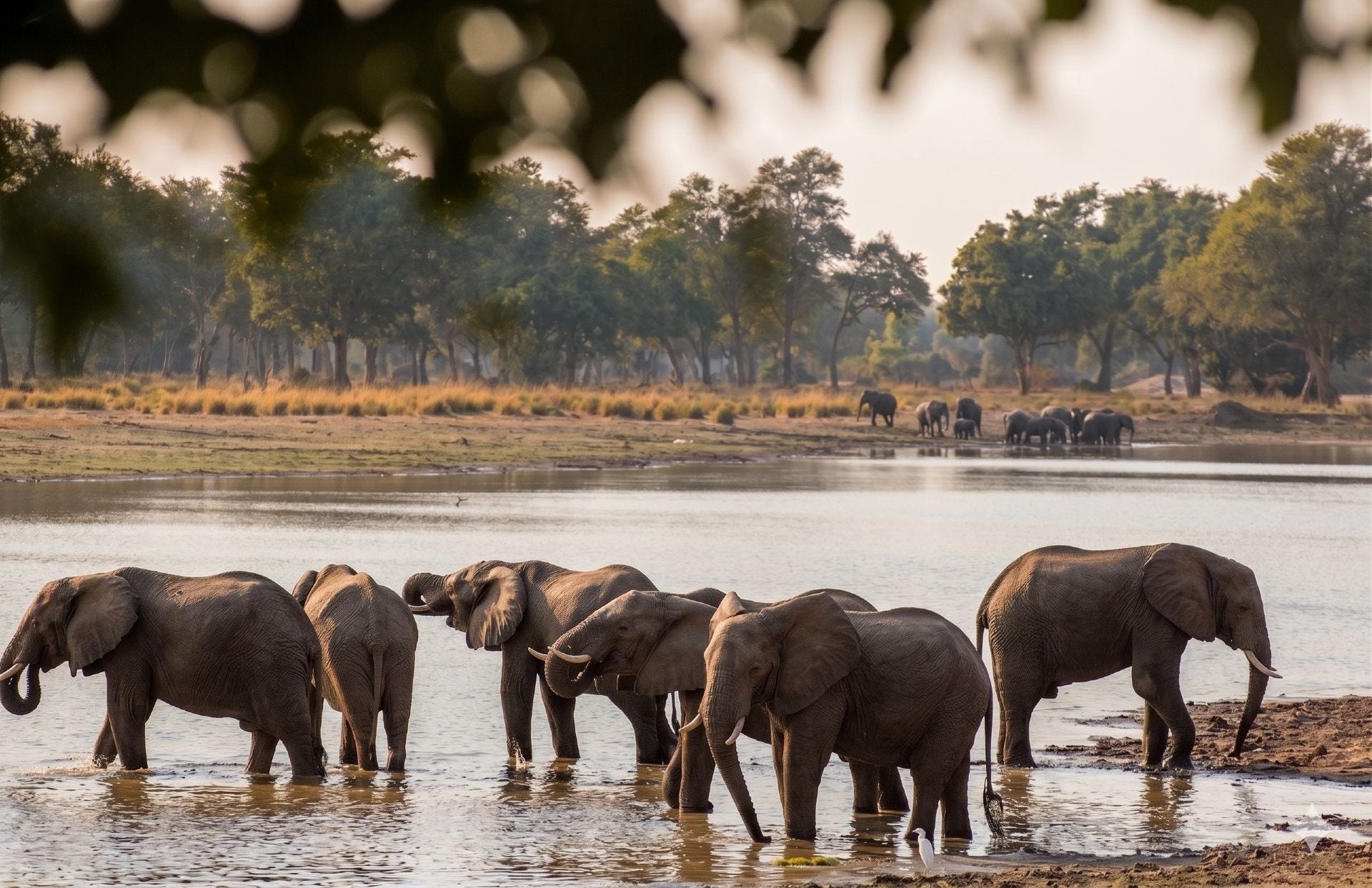
I think about the young female at Ruckomechi, browsing her Bauhinia bush, entirely at home in her skin and her place. She was living not surviving.
What the ratio records — humans up 1,460%, elephants down 98.4% — is not a conservation failure. It is a precise measurement of what one species does when a thermodynamic windfall removes the usual constraints. The elephants did not lose. The windfall happened and the ratio is what that looks like in the flesh of another animal.
We humans are the governors of elephant survival now.
Only we didn’t earn that responsibility, it just happened. The question is whether we are honest enough about how we came to hold it, to own the reality, and then make a decision on what to do next. Whether we abdicate or decide to determine the outcome.
The elephants, for their part, had very little say in their story.